
About Yoel Bin-Nun
Born 1946. Yoel Bin-Nun is an Israeli rabbi.
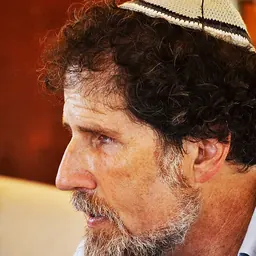
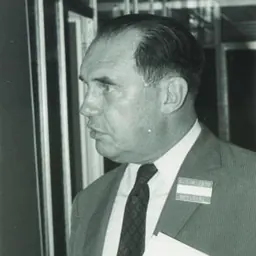
Yoel Bin-Nun (Hebrew: יואל בן נון; born May 9, 1946 CE; 8 Iyar 5766 AM) is an Israeli religious Zionist rabbi and one of the founders of Yeshivat Har Etzion, Gush Emunim, Michlelet Herzog and the settlements of Alon Shevut and Ofra. He is a scholar of Jewish thought, and a lecturer and expert on the Tanach.
Biography Bin-Nun was born in 1946 in Haifa to Yechiel Bin-Nun (Fischer) and Shoshana Bin-Nun (Rosa First), educators and researchers in Judaism and the Hebrew language. His brother, Elchanan Bin-Nun, is the rabbi of Shiloh and the past head of a Yeshiva in Beit Orot. Bin-Nun studied at the Kfar Haroeh yeshiva and, later, the Mercaz Harav Yeshiva, where he was close to Zvi Yehuda Kook. He received his Ph.D. from Hebrew University.
He fought in the Six Day War and was part of Israel's 55th Paratroopers Brigade that liberated Old City Jerusalem. He is one of the main characters featured in Yossi Klein HaLevi's Like Dreamers: The Story of the Israeli Paratroopers who Reunited Jerusalem and Divided A Nation. In 1986, he co-founded Megadim, the Torah journal for Tanach, with the team of Bible studies at the Teachers' Training Institute in Har Etzion (now: Yaakov Herzog College). Rabbi Bin-Nun published many articles in the journal and elsewhere. He also taught training courses for instructors of the Society for the Protection of Nature. Between 2000 and 2006 he served as Rosh HaYeshiva of Yeshivat HaKibbutz HaDati (Ein Tzurim). In October 2019, Tishrei 5780, he was awarded the Minister of Education's Award for Jewish Culture for Lifetime Achievement.
As of 2015, Bin-Nun has a daily column as part of Project 929: Tanach B'yachad. He also has a website containing many of his shiurim.
Philosophy A significant part of Bin-Nun's thinking revolves around Tanach and its study. Following Yehuda Elitzur, he strives to draw contemporary meanings from the Bible and to explain the text according to its simple meaning (Pshat). He was one of the prominent voices in the "תנ״ך בגובה העיניים" ("Tanach at Eye Level") debate, in which he criticized the approach of the rabbis of the Har Hamor yeshiva. Bin-Nun believed that it is important to see the nuances, complexity and even faults of the heroes of the Bible and as having a humanity that is not fundamentally different from those learning the text. According to him, only in this way can value and moral meaning truly be drawn from the stories of the Avot (patriarchs).
Bin-Nun also deals with the midrashim of Chazal, focusing on the principled controversy between the midrashim of Rabbi Akiva and Rabbi Ishmael, as well as an original interpretation of Rav Kook's teachings.
Similarly to his Rabbi, Rav Zvi Yehuda Kook, and Kook's father, Rav Abraham Isaac Kook, Bin-Nun strongly promotes the value of Achdut Yisrael, unity among the Jewish people.
Bin-Nun was very close with Prime Minister Yitzchak Rabin, corresponding with him frequently. Bin-Nun became much more well known after Rabin's assassination in November 1995, when he attacked the atmosphere in the Dati-Leumi public before the assassination, saying that he had information about rabbis who ruled that Rabin fell under "Din Rodef" (an active murderer) thereby legitimizing his murder (see: Assassination of Yitzhak Rabin). He did not provide details or evidence and his remarks were perceived by many in the religious Zionist public as illegitimate. At this point, he broke with the settlement movement and moved from Ofra back to Alon Shevut.
In Nissan 5772 (2002) he wrote at the point, on the occasion of the twentieth anniversary of the evacuation of Yamit (translated from Hebrew):
"... There was no chance in front of a national government. We had to reach an agreement between Jews and Jews. Between the right-wing parties and the public behind them and the Jewish left. The unity that was created as a result would change the picture ... We are clearly in a similar situation today. A right-wing leader stands as Prime Minister today, and he is the one who may lead us to the same trouble ... What we had to do then, we must do today: sit down for negotiations between Jews. An agreement between the settlers of Yesha, in all their political shades, and between the Jewish left ... There was no unity, and we did not gain the liberation of the land. In the Six Days [War] there was unity, and indeed we did gain liberation. Since the Lebanon War we have been deeply divided, and here the land is taken from us. The land does not stand on its own, it is a function of the people of Israel."
Bin-Nun did a lot of interviewing during the period surrounding the disengagement plan. About a month after the demolition of the permanent buildings in Amona, in a newspaper called HaTzopheh he published a scathing article titled "The New Satmar Community" in which he attacked the conduct of the religious Zionist community during and after the disengagement. He wrote that the approach of the sharp and violent resistance was only damaging, and emphasized that although democracy allows for "civil disobedience" it is precisely the Torah that forbids it. He signed his article with the line:
"Our flag is blue-and-white without any orange. Blue-and-white has its root in holiness, in the Tzitzit. Orange is the law of the Gentiles. I am not orange, nor stripe, nor stain and speck. Only blue-and-white and the unity of Israel."
On March 5, 2006, about three weeks before the elections to the 17th Knesset, Bin-Nun announced his support for the Kadima party, saying that "it seems, in the coming years all significant decisions will be made there. To save as much of the settlement movement as possible [it] must be there." He argued that the constant struggle of the settlement leaders over "everything" often caused them to be left with nothing. However, he refrained from calling on people to vote for the party.
On the events of the Beit HaShalom in Hebron, he wrote: "If the Jewish Hebron does not connect all the people of Israel to it, it may be destroyed. The key is in the hands of the people of Hebron themselves. If they act like David, they will connect the people of Israel to them. If they act like Avshalom, in violent bullying, they will even succeed here and there, the people of Israel will vomit them, and God will turn a blind eye to them, Chas v'Shalom. The promise of God hidden in Hebron is eternal, and precisely because of this it can be preserved for a worthy generation. There is no special promise for this generation, or for another specific generation."
In the run-up to the elections to the Eighteenth Knesset, he announced his support for the Jewish Home Party.
In his opinion, the Makom Hamikdash on the Temple Mount should be off-limits to people of all religions, until the people of Israel reach the level required for the construction of the Temple.
Notable students
Yaakov Medan Menachem Leibtag Nathaniel Helfgot Yonatan Grossman Tamir Granot Yitzchak Blau
Published works
Isaiah: Prophet of Righteousness and Justice (2019) Zachor Veshamor Ani Kohelet
Don’t just read it —
keep it.
Full-length biographies made to live with: read them, listen on the way to work, watch them tonight.
- E-book
- Audio
- Video
Instant download · yours to keep · every purchase keeps this site free
Important facts
more
Bin Nwn, Ywʾel, YoʼelPeople in Yoel Bin-Nun's life
Named in this biography and alive at the same time





Related people
Same field, nearest in time


Contemporaries
People whose lives overlapped Yoel Bin-Nun's


Frequently asked questions
Who is Yoel Bin-Nun?
Israeli religious Zionist rabbi
When was Yoel Bin-Nun born?
Yoel Bin-Nun was born on 9 May 1946 in Haifa.
What is Yoel Bin-Nun's occupation?
Yoel Bin-Nun is a rabbi.
What nationality is Yoel Bin-Nun?
Yoel Bin-Nun is Israeli.
Sources & further reading
Cite this page
APA: Biography.guide. (2026). Yoel Bin-Nun. https://biography.guide/yoel-bin-nun/
MLA: "Yoel Bin-Nun." Biography.guide, https://biography.guide/yoel-bin-nun/.
Chicago: "Yoel Bin-Nun." Biography.guide. https://biography.guide/yoel-bin-nun/.
Data last updated: 2026-09-20 · Spot an error? Report a correction.
Page generated 2026-09-27 05:17 UTC