
Yelü Chucai
Khitan astronomer, adviser to Genghis Khan ; chancellor to Ögedei Khan
About Yelü Chucai
Lived 1189 – 1243 (aged 53). Yelü Chucai was a Chinese and Mongolian writer, poet and politician.
Yelü Chucai (; "Longbeard", written in Chinese characters as "", July 24, 1190 – June 20, 1244 ), courtesy name Jinqing , was a Khitan statesman from the imperial Yelü clan of the Liao dynasty, who became a vigorous adviser and administrator of the early Mongol Empire under Genghis Khan and later his successor Ögedei Khan.
A trained Confucian scholar and court official, he served as scribe-secretary and court astrologer-astronomer during the reign of Genghis Khan, facilitating the latter's meeting with monk Qiu Chuji. Upon the enthronement of Ögedei, his influence increased, being put in charge in 1229 of taxation reform in North China, and being appointed Head of the Great Imperial Secretariat. His position weakened in the latter half of Ögedei's reign, but he was still treated with respect until his death in 1244 during the regency of Töregene Khatun.
Biography Yelü Chucai was born close in Zhongdu (modern day Beijing), capital of the Jin dynasty. He was a descendant of Yelü Bei and a member of the Yelü clan, former rulers of the Khitan Liao dynasty. After its overthrow by the Jurchen-led Jin dynasty in 1125, its members began to serve the new state, including his father Yelü Lu, who rose from a translator to becoming a minister during the reign of Emperor Zhangzong. After his father died when Yelü Chucai was 2 years old, his scholarly mother took care of his formal education. He was busy studying the Confucian classics by age thirteen, and despite being offered entry at age seventeen into the Jin civil service on account of his father's position, he opted to sit for the Imperial examinations, coming out first on the list. By 1213, he had been made prefect of Kaizhou prefecture. The Khitans and Mongols, as well as the Southern Song, were united by their common enemy in the Jin dynasty. This is shown in the well-known words spoken by Genghis Khan, when at the end of July, he met Yelü Chucai for the first time: "Liao and Jin have been enemies for generations; I have taken revenge for you." To which Yelü Chucai replied, "My father and grandfather have both respectfully served the Jin. How can I, as a subject and a son, be so insincere in heart as to consider my sovereign and my father as enemies?" The Khan is said to have been impressed by this frank reply, as well as by Yelü Chucai's presence - a man of tall stature, a long beard, and a sonorous voice. He was given the nickname "Urtu Saqal" (Long Beard) and placed him in his retinue as an adviser. He did his best to convince the Mongols to tax rather than slaughter conquered peoples. In Grousset's Empire of the Steppes, it is reported that Ögedei would mock him, asking "Are you going to weep for the people again?". The chancellor had the words to temper the Mongol practices, stating to Genghis Khan's son and successor to the throne, that while empires may be conquered on horseback, they could not be ruled on horseback. Yelü Chucai used his office to save other fellow Confucian scholars from punishment and mistreatment by Mongol rulers. He also helped them gain offices as bureaucrats and tutors to the Mongol princes.
While Northern China was capitulating to the Mongol onslaught, Yelü Chucai instituted several administrative reforms, like separating civil and military powers and introducing numerous taxes and levies. In response to the tough resistance the Mongol army faced while trying to conquer the Jurchen Jin's southern capital of Kaifeng, some Mongol officers in high command recommended the complete razing of Kaifeng and the deaths of all its occupants. But Yelü Chucai convinced Genghis Khan to rule and tax the people, and make use of their extraordinary talents instead of killing all of them in order to further their own riches.
Yelü Chucai was six feet and eight inches tall and had a waist-length beard. He was buried by Kunming Lake in Beijing, and a temple constructed in his memory stood until 1966, when it was razed during the looting of the Summer Palace by communist Red Guards as part of the Cultural Revolution. Yelü Chucai was the last recorded person to be able to speak the Khitan language and read and write the Khitan large and small scripts.
A statue of Yelü Chucai, located in the southeast corner of Guta Park in Jinzhou.
Don’t just read it —
keep it.
Full-length biographies made to live with: read them, listen on the way to work, watch them tonight.
- E-book
- Audio
- Video
Instant download · yours to keep · every purchase keeps this site free
Important facts
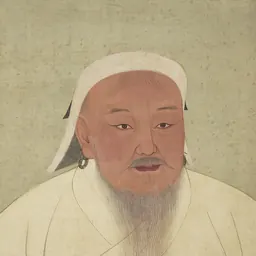
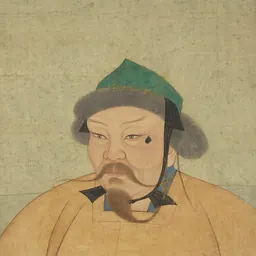
People in Yelü Chucai's life
Named in this biography and alive at the same time


Related people
Same field, nearest in time




Contemporaries
People whose lives overlapped Yelü Chucai's




Frequently asked questions
Who was Yelü Chucai?
Khitan astronomer, adviser to Genghis Khan ; chancellor to Ögedei Khan (1189-1243)
When was Yelü Chucai born?
Yelü Chucai was born on 3 August 1189 in Zhongdu.
When did Yelü Chucai die?
Yelü Chucai died on 2 June 1243 in Karakorum.
What was Yelü Chucai's occupation?
Yelü Chucai was a writer, poet and politician.
What nationality was Yelü Chucai?
Yelü Chucai was Chinese and Mongolian.
Sources & further reading
Cite this page
APA: Biography.guide. (2026). Yelü Chucai. https://biography.guide/yelu-chucai/
MLA: "Yelü Chucai." Biography.guide, https://biography.guide/yelu-chucai/.
Chicago: "Yelü Chucai." Biography.guide. https://biography.guide/yelu-chucai/.
Data last updated: 2026-09-20 · Spot an error? Report a correction.
Page generated 2026-09-27 05:24 UTC