
Yegor Prosvirnin
Russian blogger, journalist, and Russian nationalism activist
About Yegor Prosvirnin
Lived 1986 – 2021 (aged 35). Yegor Prosvirnin was a Russian journalist, blogger and activist.
Egor Aleksandrovich Prosvirnin (; 3 April 1986 – 27 December 2021), also known by his pen name Egor Pogrom was a Russian right-wing opinion journalist, political commentator and activist, best known as the founding editor-in-chief of the online outlet Sputnik and Pogrom, which was active from 2012 to 2018. He began his writing career in video game magazines before launching Sputnik and Pogrom in 2012, where he published articles on history, politics, and culture. Through his work in the 2010s, Prosvirnin became a prominent voice within Russia's nationalist and national-democratic movements, later shifting toward monarchist views.
A committed nationalist who was frequently critical of many state initiatives, Prosvirnin became, from 2014 onward, one of the most ardent supporters of Russia's annexation of Crimea and of comprehensive Russian backing for the separatist Donetsk People's Republic and Luhansk People's Republic in eastern Ukraine. However, in 2015, a criminal investigation was launched over a number of extremist statements published on the Sputnik and Pogrom website, Prosvirnin was named as a witness in the case. In 2017, the site was blocked within Russia, and the publication was shuttered for good in 2018. Following the closure of Sputnik and Pogrom, Prosvirnin continued his career as a blogger and commentator, hosting livestreams on his YouTube channel Czar where he discussed major socio-political issues.
Biography Early years Egor Prosvirnin was born in Vladivostok. His mother was a theater artist and set designer, while his father, was a theater actor and stage director.
Prosvirnin described himself as "a bookish homeboy who was given a thick children's encyclopedia at the age of seven". He began building his journalism career by contributing to various magazines on a wide range of topics, including video game coverage. His work appeared in gaming publications such as Strana Igr, Igromania, PC Gamer, and others. Overall, Prosvirnin spoke negatively about his time working in gaming media, hinting at rigid censorship.
Prosvirnin identified himself as part of the Moscow middle class that had "traded political rights to the authorities in exchange for prosperity", though at some point he was forced to reassess his views on life. On 13 April 2007, Prosvirnin took part in the Dissenters' March organized by Eduard Limonov's The Other Russia party and was detained (among 250 others arrested that day).
In 2013, the outlet's core readership consisted of middle-class individuals aged 25 to 30 who identified with neither liberalism nor communism. By 2017, the audience had shifted primarily toward educated urban youth. Prosvirnin eschewed populist rhetoric, viewing this as a key distinction between his outlet and other nationalist projects, and he staunchly defended the thesis that "nationalism is an urban phenomenon". Some content on the site was behind a paywall, as Prosvirnin argued that this business model was the only way to ensure both the prosperity and the independence of journalists. Prosvirnin himself maintained subscriptions to foreign periodicals such as Foreign Policy, Foreign Affairs, and The New York Times.
As of 2013, the publication had roughly 4,000 subscribers each on Facebook and Twitter, but about five times that number on its VKontakte page. Prosvirnin's project caught the attention of mainstream media: the Russian television channel NTV aired a segment describing the project as "nationalism with a human face". In 2014, the site garnered significant interest in Ukraine, with around 70,000 monthly visits originating from Ukrainian territory. By summer of that year, the outlet had 5,000 paid subscribers. In 2017, monthly unique visitors reached 750,000, with total visits amounting to 1.5 million. A standard news article on the site would garner roughly 15,000 views.
On 6 July 2017, the Prosecutor General's Office directed the Federal Service for Supervision of Communications, Information Technology and Mass Media to block the website Sputnik and Pogrom, accusing the outlet of promoting national and religious strife that incites extremism. Notably, the order did not specify which exact pages contained the alleged propaganda. Prosvirnin denounced the Prosecutor General's demand as unlawful, speculating that the site's closure might be tied to Vladimir Putin's presidential campaign ahead of the 2018 presidential race, a period during which pressure on certain media outlets intensified. He noted that there had been previous attempts to shut the site down. According to Prosvirnin's estimate at the time of the block, the site had enough subscriber funds to operate for another two to three months, but a steady monthly decline in subscribers threatened to slash its revenue.
Access to the site was subsequently blocked across Russia, Belarus, and Kazakhstan. The restrictions caused an immediate drop in traffic, halting a six-month period of organic audience growth achieved without any advertising spend, though in July 2018, the site's pages still registered 587,000 views. Prosvirnin explored several options for the site's future following the block, but his account with the payment platform Tinypass was soon suspended due to unresolved disputes. The closure drew criticism from Vladimir Zhirinovsky, the leader of the Liberal Democratic Party, though no public rallies were held in support of the outlet.
On 9 October 2018, the outlet was officially shuttered. Prosvirnin stated that the site had successfully fulfilled its primary mission of cultivating a community of followers who advanced the ideas of Russian nationalism. A significant portion of Prosvirnin's streams focused on the history of various national movements. For instance, he conducted a three-part series examining the causes of the Rwandan genocide. Written in a sharply anti-Soviet tone, the piece sparked significant public outcry. Prosvirnin was accused of justifying the crimes of the Third Reich against Soviet civilians, rationalizing the collaborationist Russian Liberation Army, and expressing support for Nazism. In 2013, journalist Israel Shamir publicly condemned the article in Komsomolskaya Pravda, demanding criminal prosecution of its author. Shamir speculated that had such a text ever fallen into the hands of General Andrey Vlasov himself, even Vlasov "might have wondered if it went too far". Shamir expressed outrage that the liberal intelligentsia had largely ignored Prosvirnin's article.
Prosvirnin, for his part, insisted that the text was strictly anti-communist in nature and targeted solely the organizers of the Red Terror and the Great Purge. An investigator later questioned Prosvirnin about the article, but a preliminary inquiry yielded no results, and the text was eventually removed from the Sputnik and Pogrom website.
In 2016, Konstantin Syomin of Russia-24 again leveled accusations of hate speech against Prosvirnin. Prosvirnin dismissed the charges but acknowledged that Syomin had inadvertently conceded an important point: Prosvirnin had succeeded in communicating with the younger generation and was "leading them away from the ideals of communism and socialism". Yegor Kholmogorov, meanwhile, asserted that Prosvirnin had categorically renounced any support for Vlasov's forces. In April 2015, a piece signed by Prosvirnin analyzed the Vlasov movement's program and condemned Vlasov as being closer to "liberal circles" and "more of a Trotskyist", fundamentally hostile to the ideas of nationalism and a "united and indivisible Russia".
The European Network for Anti-Fascist Monitoring included Prosvirnin in its list of 47 Russian organizations, events, groups, and individuals espousing far-right views. He remained on that list even after his death (as of June 2022).
In 2013, during his Moscow mayoral campaign, Alexei Navalny included in his platform a proposal to consider a visa regime with Central Asian countries. This stance provoked sharp criticism from liberals and accusations of fascist propaganda. Slogans like "For Navalny! For Hitler!" appeared on the Sputnik and Pogrom website on 8 September 2013. Notably, these did not send shockwaves through the liberal community in the way that the 2013 Biryulyovo riots did.
On 17 September 2015, Prosvirnin's lawyer announced that officers from the Investigative Committee of Russia and the Center for Countering Extremism had searched his client's apartment. The search warrant was issued in connection with a criminal case opened under Article 282, Part 1 of the Criminal Code (incitement of hatred or enmity) regarding a piece published on Sputnik and Pogrom under Prosvirnin's name. Prosvirnin was listed as a witness in the case. According to some reports, the article in question was "What We Stand For, What Will Be, and What Won't", in which Prosvirnin advocated for the annexation of Ukraine, Belarus, and Northern Kazakhstan by Russia. The case ultimately did not proceed, as no evidence of guilt was found, though the police confiscated a substantial amount of equipment, which had still not been returned to him as of late 2021. Kholmogorov believed this argument helped lead to the case being shelved. A few days after the search, Prosvirnin made a statement claiming the Russian state was the primary enemy of the Russian people. The event organizers, alarmed by his rhetoric, asked him to "behave more appropriately", later attributing his outburst to the "emotional strain" caused by the threat of criminal prosecution.
Death
On 27 December2021, Egor Prosvirnin died after falling from the balcony of an apartment building at 28 Tverskoy Boulevard in central Moscow. He was found unclothed, a knife and a canister of pepper spray were discovered near his body. Media reports cited either an accident or suicide as possible explanations for the incident. The following day, an official statement was released on Prosvirnin's YouTube channel and social media pages, posted by his associates, asserting that his death was a tragic accident. According to these statements, Prosvirnin had been "unwell, suffering from insomnia, and in a gloomy state of mind", but had no intention of taking his own life.
A posthumous toxicology report indicated the presence of traces of cocaine, MDMA, and the medication doxylamine (a sedating antihistamine) in his system, though at low levels. The online outlet czar.tv, where Prosvirnin had worked as editor-in-chief, claimed that the forensic chemical analysis had detected these substances in his urine but not in his bloodstream. It was also reported that shortly before his death, Prosvirnin had been taking nitroglycerin and the muscle relaxant tizanidine (Sirdalud) to treat heart pain and neuralgia. Members of Prosvirnin's YouTube team suggested that he had tried to "drown his physical pain and existential anguish in alcohol".
Egor Prosvirnin was buried on 4 January 2022, at the Troyekurovskoye Cemetery in Moscow. A total of 8.97 million rubles was raised through crowdfunding to cover funeral and related expenses. Several hundred people attended the funeral to pay their respects. Memorial services were held in his honor at the Alexander Nevsky Cathedral in Novosibirsk and the Church of Archangel Gabriel in Moscow.
Personal life On 28 September 2021, Prosvirnin married Marina Ivanova (Urusova), whom he had met in 2015. He noted that journalists from Russia's state-run Channel One attended the wedding. Prosvirnin claimed that before beginning a stable relationship with Marina, he had been living in Reutov and that the relationship helped him improve both his physical health and material circumstances. At one point, he said, his weight had reached 160 kg (approximately 350 lbs). He underwent a gastric sleeve resection, having two-thirds of his stomach removed, after which his weight dropped dramatically, from 164 kg down to 92–93 kg. Demushkin, for his part, claimed that Prosvirnin devoted an inordinate amount of time to discussing him during his livestreams. The newspaper Komsomolskaya Pravda suggested that such attitudes disqualified Prosvirnin from being considered a true nationalist, as he did not identify with the common Russian folk.
Above all, Prosvirnin considered himself an advocate for the idea of a "Russian National State" or a "nation-state of the Russian people", modeled on various state forms around the world, which would bring together all ethnic Russians. The core message of his ideology was that Russians should elect their own government and control their own tax revenues. He viewed contemporary Russian society as more atomized than that of an average European one.
Prosvirnin believed the ideal identity for Russians was the one that had existed in pre-revolutionary Russia, as it would allow Russians to become a "normal European people" characterized by a distinctly European sense of self-interest. He argued that the legitimacy of any new state should be drawn directly from pre-revolutionary Russia, thereby positioning Russians as a European people adhering to "normal civilized norms". He placed "Russian national interests" at the forefront of his ideological convictions, speaking critically of internationalism and expressing skepticism toward ideas of "universal world justice" or providing military or political aid to foreign states. Yet by 2017, he estimated that at most 10% of Russia's population took any interest in politics, while the rest preferred a life of private concerns.
Citing the United States as an example of a formed political nation, Prosvirnin pointed to the presence of primary and secondary social ties, the capacity for self-organization, and the ability to defend one's rights. He argued that the classic urban European bourgeois was a guild member who could count on the guild's protection "if something went wrong". In his view, the protection of property stemmed from a structured national society, not from a strong state. He considered the absence of these institutions in Russia to be not only a drawback but also an advantage, as it left Russians free to build a society according to their own rules. However, he also cited the lack of a landowning class as the primary elite as a serious shortcoming.
Despite these views, the articles published in Sputnik and Pogrom frequently employed anti-liberal rhetoric. Prosvirnin spoke negatively of modern liberal parties and liberal political figures in Russia, asserting that the idea of liberalism in contemporary Russia was championed by "scoundrels". This attitude was partly fueled by the numerous threats and insults directed at him due to his publications. He also believed that Russian liberals had been "duped" by Dmitry Medvedev, who, early in his presidency, had taken steps that appeared to align with liberal tenets. For accusing Russian nationalists of promoting neo-Nazism and neo-fascism, Prosvirnin dismissed the Russian liberal intelligentsia as "Soviet" in mentality. Finnish researcher Jussi Jussila has noted that such rhetoric from Prosvirnin bore similarities to the discourse of the American alt-right. He was "lukewarm" toward the philosophy of Ivan Ilyin, due to Ilyin's heavy emphasis on religion. He had begun actively advancing monarchist ideas around June 2021, although as early as the summer of 2014 he had named Peter the Great as Russia's principal national hero and had even made ironic remarks in favor of restoring a constitutional monarchy in Russia under Prince Michael of Kent, describing the Windsors as "the only more or less normal monarchy in the modern world". He repeatedly called for the public disclosure of the names of all victims of Soviet repression. Petr Aven, one of the architects of the Yeltsin economic reforms, recounted that Smirnova's husband, Anatoly Chubais, had actually recommended Prosvirnin's website to him, "which was surprising to hear from a man who was in our government in 1992".
According to Prosvirnin, at a November 2016 gathering of readers of the outlet Republic.ru, former Presidential Administration chief Alexander Voloshin claimed he didn't read Republic.ru, yet simultaneously maintained a paid subscription to Sputnik and Pogrom. Prosvirnin quipped that "the hosts of the evening stood there with red faces". Following the event, Prosvirnin suggested to Voloshin that they hold a Sputnik and Pogrom reader meet-up featuring cigars and whiskey. Voloshin agreed and gave him his business card, but the event never materialized due to Prosvirnin's self-admitted lack of organizational skills. Commenting on Voloshin's politics, Prosvirnin noted, "Of course, you couldn't call him a Russian nationalist, but it was clear there was some national feeling there, some understanding".
Prosvirnin was critical of many decisions made by Putin during his presidency, particularly those concerning domestic policy and the fight against extremism. He expressed frustration that Russian nationalist parties were routinely denied official registration and that the activities of nationalists were treated as a threat equivalent to international terrorism.
Views on foreign policy Prosvirnin described Russians as an "old European people", regarding the "European path" as the only acceptable course for Russia's state development. In his view, only the countries of Western Europe and the United States practiced a "sensible nationalism". According to him, an ideal Ukraine would position itself as the "real Russia", a place that would attract people of Russian culture, entrepreneurs, scientists, and young intellectuals. He asserted that "in Transnistria, under Krasnoselsky's leadership, the only state formation currently in existence is being built that is remarkably close to the policies Russian nationalists would implement". Prosvirnin also highlighted that Krasnoselsky was constructing a Russian identity in Transnistria rooted in the Russian imperial past rather than the Soviet one.
Anti-Ukrainianism Prosvirnin's attitude toward Euromaidan was initially ambivalent. Before Russia's annexation of Crimea in 2014, he spoke positively about the Euromaidan supporters and even noted the successes of the Right Sector, despite the fact that when they met him in person, they accused him of Ukrainophobia.
Soon after, Prosvirnin admitted that his expectations had not been met. He claimed to have discerned an "openly Russophobic disposition" among the Euromaidan participants, who made deeply insulting remarks about Russian culture, Russia, and its citizens, while openly ignoring the interests of the 10 million Ukrainian citizens who identified as ethnic Russians. He described the ensuing armed conflict as a "war of Russian national insurrection against the Ukrainian state" and a "Russian national liberation uprising".
Readers of Sputnik and Pogrom began providing active assistance to the pro-Russian separatists. Additionally, Prosvirnin's team provided humanitarian aid to hospitals and orphanages.
However, subsequent developments in the war, including the deaths of several separatist commanders and the departure from Donbas of Girkin, whom Prosvirnin ideologically backed, ultimately led him to become completely disillusioned with the Russia's official position on the conflict. One of Prosvirnin's texts was quoted on Channel One's news program by anchor Irada Zeynalova. However, Prosvirnin accused the anchor of plagiarism, and she was ultimately forced to apologize for quoting the article without proper context.
In 2017, Prosvirnin appeared on air for the radio stations Govorit Moskva (Sergey Dorenko's program) and Echo of Moscow. He also made appearances on programs hosted by Sergey Minaev and Mikhail Svetov.
Yegor Kholmogorov called Prosvirnin "one of the voices of the Russian nation", a man possessed of visual and literary talents who knew how to invent "new formats for conveying old ideas", while also being capable of saying "terrible things for the sake of a catchy phrase".
Don’t just read it —
keep it.
Full-length biographies made to live with: read them, listen on the way to work, watch them tonight.
- E-book
- Audio
- Video
Instant download · yours to keep · every purchase keeps this site free
Important facts
People in Yegor Prosvirnin's life
Named in this biography and alive at the same time
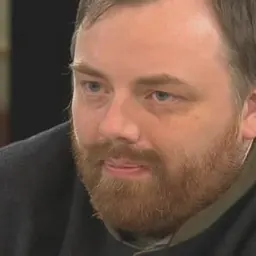
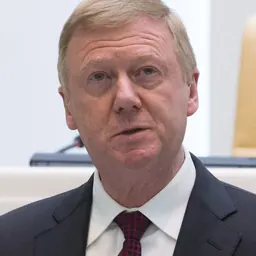
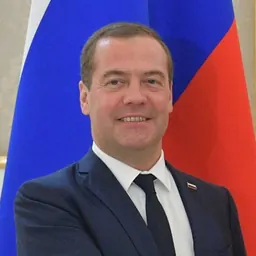

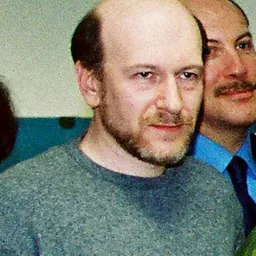



Related people
Same field, nearest in time



Contemporaries
People whose lives overlapped Yegor Prosvirnin's


Frequently asked questions
Who was Yegor Prosvirnin?
Russian blogger, journalist, and Russian nationalism activist
When was Yegor Prosvirnin born?
Yegor Prosvirnin was born on 3 April 1986 in Vladivostok.
When did Yegor Prosvirnin die?
Yegor Prosvirnin died on 27 December 2021 in Moscow.
What was Yegor Prosvirnin's occupation?
Yegor Prosvirnin was a journalist, blogger and activist.
What nationality was Yegor Prosvirnin?
Yegor Prosvirnin was Russian.
Sources & further reading
Cite this page
APA: Biography.guide. (2026). Yegor Prosvirnin. https://biography.guide/yegor-prosvirnin/
MLA: "Yegor Prosvirnin." Biography.guide, https://biography.guide/yegor-prosvirnin/.
Chicago: "Yegor Prosvirnin." Biography.guide. https://biography.guide/yegor-prosvirnin/.
Data last updated: 2026-09-25 · Spot an error? Report a correction.
Page generated 2026-09-27 05:11 UTC