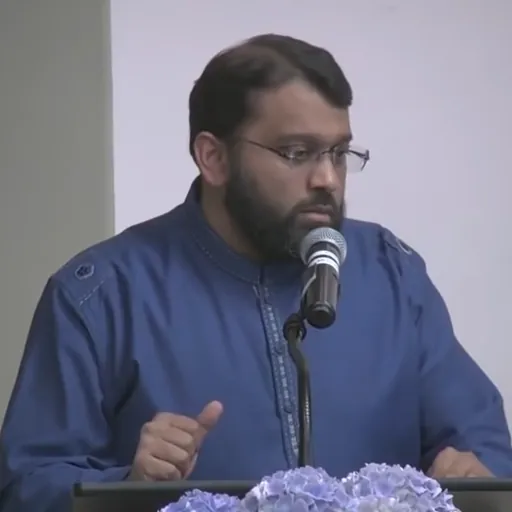
About Yasir Qadhi
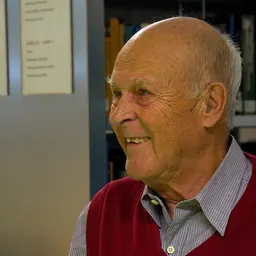
Born 1975. Yasir Qadhi is an American theologian and university teacher.
Yasir Qadhi (; born January 30, 1975), formerly known by his Arabic kunya Abu Ammaar Yasir Qadhi , is an American Muslim scholar and theologian. He is dean of The Islamic Seminary of America and resident scholar of the East Plano Islamic Center in Plano, Texas. He was formerly the dean of AlMaghrib Institute and taught in the religious studies department at Rhodes College. He currently serves as chairman of the Fiqh Council of North America.
Born in Texas to Pakistani parents, Qadhi grew up in Jeddah, Saudi Arabia. He studied chemical engineering at the University of Houston, before studying Hadith and Islamic theology at the Islamic University of Madinah in Saudi Arabia. Qadhi has written books and lectured widely on Islam and contemporary Muslim issues, and is considered one of the most influential Muslim scholars in the United States.
Qadhi was previously affiliated with Salafism, but has since left it. He now identifies himself as a Wasatist His father, Mazhar Kazi (1936 - November 23, 2025), a doctor and da'i, helped found the first mosque in the area and published books and pamphlets on Islam, while his mother is a microbiologist, both from Karachi in Pakistan. His father migrated from Jabalpur, present-day India to Pakistan. When he was five, after his father became assistant dean of a medical college, the family moved to Jeddah, Saudi Arabia, where he attended a British school. At home, his family would do halaqas of the Qur’an and he had a private hafiz teach him. By 15 he had memorized the Qur'an and graduated from high school two years early as class valedictorian. He also helped his father with an Islamic publication. He returned to the United States, where he earned a B.Sc in Chemical Engineering at the University of Houston.
Professional career After a short stint working in engineering at Dow Chemical, in 1996 Qadhi enrolled at the Islamic University of Medinah in Medina, Saudi Arabia. There, he earned a bachelor's degree in Arabic from the university's College of Hadith and Islamic Sciences and a master's degree in Islamic Theology from its College of Dawah. Qadhi returned to the United States after working and studying for nine years in Saudi Arabia. a seminar-based Islamic education institution founded in 2001. The instructors travel to teach Islamic studies in English. He moved to the Dallas metropolitan area in early 2019, becoming the resident scholar of the East Plano Islamic Center. He is the Dean of Academic Affairs at The Islamic Seminary of America.
Qadhi was a guest on an episode of Harvard professor Henry Louis Gates's television genealogy series Finding Your Roots on PBS.
Views Salafi movement Yasir Qadhi’s formative scholarship and early career were firmly rooted in the Salafi tradition: after earning a B.Sc. in Chemical Engineering at the University of Houston, he studied Hadith and Islamic theology at the Islamic University of Madinah, and later served for fifteen years as Dean of Academic Affairs at the Salafi-oriented AlMaghrib Institute in Houston, Texas. In the aftermath of the September 11 attacks and throughout his doctoral studies in Islamic theology at Yale University (2005–2013), Qadhi began to question what he saw as Salafism’s methodological rigidity and exclusivist frameworks. By the mid-2010s, he had formally distanced himself from the movement and adopted a wasaṭī (middle-way) approach within Sunni Islam, seeking to balance textual fidelity to the Qur’an and Sunnah with thoughtful engagement in contemporary social and intellectual contexts.
Jihad
Qadhi has presented papers on jihad movements. In 2006, at a conference at Harvard Law School, Qadhi presented a 15-minute analysis of the theological underpinnings of an early militant movement in modern Saudi Arabia headed by Juhayman al-Otaibi. The movement had gained international attention when it held the Grand Mosque of Mecca hostage in 1979.
In September 2009, he presented a paper at an international conference at the University of Edinburgh on understanding jihad in the modern world. He said the specific legal ruling (fatwa) of the 13–14th century theologian Ibn Taymiyya on the Mongol Empire has been wrongfully used in the 20th and 21st centuries by both jihadist and pacifist groups to justify their positions. The paper has been critiqued by some Salafi commentators, who say that they in fact did not revise the definition of Jihad.
Sufism and veneration of the saints
Qadhi believes that the practice of some Sufi Muslims visiting the graves of Sufi saints and calling upon Muhammad and calling upon them for help or guidance is not shirk (polytheism) but said it is haram, sinful, an evil innovation, and called it a stepping stone and gateway to shirk but not shirk in and of itself.
Ahruf and Qira'at On June 8, 2020, Qadhi had posited that the "standard narrative" in light of different Qira'at and Ahruf "has holes in it. That's what I'm gonna say. The standard narrative does not answer some very pressing questions." In 2024, he had published his views in the eighth chapter of Redhwan Karim's History of the Quran, referring to the "Standard Narrative" as the dictation model, the description of which was followed by contentions referring to Hadiths that Qadhi found incompatible with the model, with Qadhi then going on to posit an alternative model he referred to as the "Divine Permission Model" which he claimed to deal with these "holes" much better.
In regards to religious liberties, Qadhi believes that Islamic teachings do not support or require that Muslim business owners discriminate or refuse service to LGBTQ individuals. Nonetheless, Qadhi expresses concern that Islamic institutions may face issues if they speak in a vulgar manner and employ or fire employees that do not conform to conservative beliefs regarding sexual behaviors.
Controversies Some of his statements have been controversial, including comments in a speech in 2001 questioning Hitler's motives in the Holocaust. He later stated that he regretted those comments and visited the Auschwitz concentration camp with a delegation of Muslim leaders. The following year The New York Times reported he said that most Islamic studies professors in the United States are Jews who "want to destroy us." More generally, he said that he "fell down a slippery slope", expressing anger at actions of the Israeli government in the form of anti-Semitic remarks he later recognized as wrong.
The Times newspaper reported that British Charity Commission regulators contacted three Islamic charities about Qadhi's 2015 tour, where he allegedly made controversial comments and told students that "killing homosexuals and stoning adulterers was part of their religion." He also clarified to them that these punishments were only applicable in an Islamic society and were not to be applied in the West.
On June 8, 2020, Qadhi was interviewed by Muslim theologian Mohammed Hijab, where he was asked about the perfect preservation of the Qur'an, in light of different Qira'at and Ahruf. During the interview, Qadhi said, "The standard narrative has holes in it. That's what I'm gonna say. The standard narrative does not answer some very pressing questions." Qadhi later insisted that he was only referring to the preservation of the Qira'at and Ahruf themselves rather than to the preservation of the Qur'an. In 2024, he had published his views in the eighth chapter of Redhwan Karim's History of the Quran, referring to the "Standard Narrative" as the dictation model, the description of which was followed by contentions referring to Hadiths that Qadhi found incompatible with the model, with Qadhi then going on to posit an alternative model he referred to as the "Divine Permission Model" which he claimed to deal with these "holes" much better. He wrote that this alternative model was posited by At-Tahawi and Al-Shafi'i.
Works +Books authored or co-authoredTitleDescriptionRiyaa: Hidden Shirk Dar-al-Fatah, 1996An Introduction to the Sciences of the Qura̓anAl-Hidaayah Pub., 1999, An Explanation of the Four Principles of ShirkMuḥammad ibn ʻAbd al-Wahhāb, Al-Hidaayah, 2000, Du'a : The Weapon of the BelieverAl Hidaayah Publishing & Distribution, 2001, 15 Ways to Increase Your Earnings from the Quran and SunnahAl Hidaayah Publishing & Distribution, 2002, An explanation of Muhammad ibn Abd al-Wahhab's Kashf al-ShubuhatA critical analysis of shirk, with Muḥammad ibn ʻAbd al-Wahhāb, Al-Hidaayah, 2003, Maqalat al-Jahm b. Safwan wa-atharuha fıl-firaq al-IslamiyyaThe Doctrines of Jahm b. Safwan and Its Effects on Islamic Sects, 2 vols. Riyad: Adwa al-salaf, 2005.Like a Garment: Intimacy in IslamIndependently published (March 4, 2019), Seerah of Prophet Muhammad (SAW)Independently published (May 7, 2019), (length: 776 pages) Lessons from Surah al-Kahf (Pearls from the Qur'an)Kube Publishing Ltd. (March 10, 2020), Lessons from Surah Yusuf (Pearls from the Qur'an)Kube Publishing Ltd. (November 3, 2020), Reflections: Personal Insights From Shaykh Dr. Yasir Qadhi Al-Buruj Press (February 17, 2021), The Miracle of the Qur'anTertib Publishing (March 1, 2021)The Power of RepentanceTertib Publishing (March 9, 2021)The Parables of the Qur'anKube Publishing Ltd. (March 12, 2022), The Sīrah of the Prophet: A Contemporary and Original AnalysisKube Publishing Ltd. (June 15, 2023), Understanding Salafism: Seeking the Path of the Pious PredecessorsOneworld Publishing (July 15, 2025),
Research papers Reconciling Reason and Revelation in the Writings of Ibn Taymiyyah (d. 728/1328): An Analytical Study of Ibn Taymiyyah’s Dar' at-ta’aarod, PhD Dissertation, 2013, Yale University. "The Unleashed Thunderbolts' Of Ibn Qayyim Al-Ǧawziyyah: An Introductory Essay", Oriente Moderno vol. 90, no. 1, 2010, pp. 135–149. "A Christian Islamist?", Political Theology, vol. 14, issue 6, 2013, pp. 803–812. "Salafı-Ash'arı Polemics of the 3rd & 4th Islamic Centuries," The Muslim World, 2016.
Translations
Sunan Abu Dawud - first 2 volumes
Don’t just read it —
keep it.
Full-length biographies made to live with: read them, listen on the way to work, watch them tonight.
- E-book
- Audio
- Video
Instant download · yours to keep · every purchase keeps this site free
Important facts
People in Yasir Qadhi's life
Named in this biography and alive at the same time




Related people
Same field, nearest in time




Contemporaries
People whose lives overlapped Yasir Qadhi's


Frequently asked questions
Who is Yasir Qadhi?
Pakistani-American preacher and imam
When was Yasir Qadhi born?
Yasir Qadhi was born on 30 January 1975 in Houston.
What is Yasir Qadhi's occupation?
Yasir Qadhi is a theologian and university teacher.
What nationality is Yasir Qadhi?
Yasir Qadhi is American.
Sources & further reading
Cite this page
APA: Biography.guide. (2026). Yasir Qadhi. https://biography.guide/yasir-qadhi/
MLA: "Yasir Qadhi." Biography.guide, https://biography.guide/yasir-qadhi/.
Chicago: "Yasir Qadhi." Biography.guide. https://biography.guide/yasir-qadhi/.
Data last updated: 2026-09-21 · Spot an error? Report a correction.
Portrait: Wikimedia Commons · author & licence
Page generated 2026-09-27 05:00 UTC