
About Yank Robinson
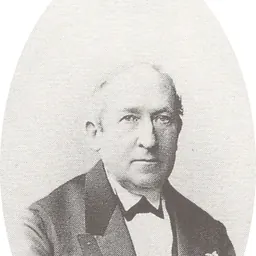
Lived 1859 – 1894 (aged 34). Yank Robinson was an American baseball player.
William H. "Yank" Robinson (September 19, 1859 – August 25, 1894) was an American professional baseball infielder. He played in Major League Baseball (MLB) from 1884 to 1892 for the Detroit Wolverines, Baltimore Monumentals, St. Louis Browns, Pittsburgh Burghers, Cincinnati Kelly's Killers, and Washington Senators.
Robinson was a starter for St. Louis Browns teams that won four consecutive American Association pennants and the 1886 World Series. While playing for the Browns, he set the major league record with 116 walks in 1888 and broke his own record with 118 walks in 1889. During his peak years from 1887 to 1890, Robinson drew 472 free passes (427 walks and 45 times hit by pitch) and 400 hits in 2,115 plate appearances, giving him a "free pass" percentage of .223 and an on-base percentage of .412. His Offensive WAR ratings of 3.8, 3.7 and 3.6 ranked sixth in the American Association in 1886 and 1887 and eighth in 1888.
Early life Robinson was born in Philadelphia, Pennsylvania, in 1859.
St. Louis Browns
1885 season In December 1884, after the Baltimore Monumentals disbanded, Robinson had offers from multiple teams but signed with the St. Louis Browns, the team that later became the St. Louis Cardinals, for $2,100. The Browns had finished in fourth place in 1884, and Robinson was one of the final additions to a team that went on to win four consecutive American Association pennants under player-manager Charles Comiskey from 1885 to 1888.
During the 1885 season, Comiskey made use of Robinson's versatility, positioning him in the outfield for 52 games, second base for 19 games, catcher for five games, third base for two games, and even one game at first base. He also scored five runs in the 1885 World Series.
During the 1887 season, Robinson compiled career highs with 75 stolen bases, a .305 batting average, a .445 on-base percentage, 74 RBIs, 32 doubles and 17 times hit by pitch. His Offensive WAR rating of 3.7 is the sixth highest in the American Association for 1887. He also posted a .326 batting average in the 1887 World Series. The number of balls required to draw a walk was progressively reduced to eight balls in 1880, six in 1884, five in 1887, and, finally, four in 1889.
Robinson was one of the first players to exploit fully the new rules governing bases on balls. In 1887, his 92 walks and 17 times hit by pitch elevated his on-base percentage to .445.
After a few games without Robinson, von der Ahe announced that a deal had been worked out between Comiskey and Robinson. Von der Ahe conceded that he "acted hastily" in berating Robinson on the bench. An adjustment was reached on the amount of the fine, and Robinson agreed to return to work. However, ill feeling between Robinson and von der Ahe persisted and contributed to Robinson's decision to move to the Players' League in 1890.
Players' League When Robinson jumped to the Players' League in 1890, playing for the Pittsburgh Burghers, the gap between Robinson's batting average and on-base percentage grew to a remarkable 205 points. During that season, Robinson had 70 hits for a .229 batting average, but his 101 bases on balls elevated his on-base percentage to .434, fourth highest in the Players' League. Robinson compiled a .178 batting average in 97 games for Cincinnati, but his talent for drawing walks, totaling 68 in 1891, gave him a respectable .328 on-base percentage.
Robinson concluded his major league playing career with Washington Senators in 1892. He appeared in 58 games at third base for Washington and compiled a .179 batting average.
At least two modern accounts support the notion that Robinson was a good fielder. In his 1999 book on the early St. Louis Browns, J. Thomas Hetrick stated: Performing gloveless at second base, Robinson was known for his range, accurate throwing arm, and double-play acrobatics. Ambidextrous, Robinson sometimes startled the opposition with lefthanded throws across his chest to nail base runners heading to third. Similarly, baseball historian Robert L. Tiemann acknowledged that Robinson's refusal to wear a glove rendered him "less than outstanding on ground balls", but praised him for his "good range" and "accurate throws" and concluded that, overall, Robinson "excelled at second base because of his agility and quickness."
While Robinson did rank second among the American Association's second basemen with 66 double plays turned in 1886, the historical record does not support the claim that he was an excellent, or even average, fielder. To the contrary, he never ranked higher than fifth in range factor, assists or putouts among the second basemen in the eight-team American Association. Moreover, he compiled a career fielding percentage of .897 and consistently ranked at or near the bottom of the American Association's second basemen in fielding percentage. He committed 103 errors in 1886, including a league-leading 95 errors at second base, and ranked among the league leaders in errors by a second baseman every year from 1886 to 1891. Perhaps most tellingly, and even though he played only nine major league seasons at second base, his 471 career errors at the position continue to rank 11th all time in major league history.
Death In April 1893, less than eight months after Robinson played in his last major league game, the Sporting Life newspaper reported that a private telegram said that Robinson was dying of consumption (pulmonary tuberculosis) and had been "reduced to a mere skeleton, weighing in the neighborhood of ninety pounds." He had reportedly signed a contract to play for Louisville in 1893, but traveled instead to Hot Springs, Arkansas, to receive treatment for his illness.
Two weeks later, Sporting Life published a retraction of its account and noted: "The story that second baseman Yank Robinson is dying with consumption is untrue. Yank is at Hot Springs and is in good health. The tale was probably designed as a big free advertisement for Yank, and in that particular was successful. It probably however lost him a chance of an engagement by Louisville."
The following year, in August 1894, Robinson died from tuberculosis at the St. Louis home of friend Patsy Tebeau. He was 34 years old and left $770 to be divided between Tebeau and a brother in Cleveland. He was buried at the Calvary Cemetery in St. Louis.
Don’t just read it —
keep it.
Full-length biographies made to live with: read them, listen on the way to work, watch them tonight.
- E-book
- Audio
- Video
Instant download · yours to keep · every purchase keeps this site free
Important facts
People in Yank Robinson's life
Named in this biography and alive at the same time

Related people
Same field, nearest in time



Contemporaries
People whose lives overlapped Yank Robinson's



Frequently asked questions
Who was Yank Robinson?
American baseball player (1859–1894)
When was Yank Robinson born?
Yank Robinson was born on 19 September 1859 in Philadelphia.
When did Yank Robinson die?
Yank Robinson died on 25 August 1894 in St. Louis.
What was Yank Robinson's occupation?
Yank Robinson was a baseball player.
What nationality was Yank Robinson?
Yank Robinson was American.
Sources & further reading
Cite this page
APA: Biography.guide. (2026). Yank Robinson. https://biography.guide/yank-robinson/
MLA: "Yank Robinson." Biography.guide, https://biography.guide/yank-robinson/.
Chicago: "Yank Robinson." Biography.guide. https://biography.guide/yank-robinson/.
Data last updated: 2026-09-20 · Spot an error? Report a correction.
Page generated 2026-09-27 05:23 UTC