
About Yam Kim-fai
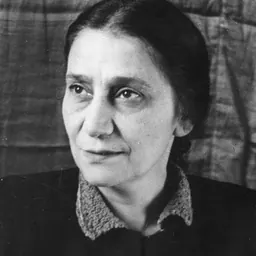
Lived 1913 – 1989 (aged 76). Yam Kim-fai was a Hong Kong opera singer, actor, actress and performer.
Yam Kim-fai (, 4 February 1913 – 29 November 1989), also known as Ren Jianhui was a Cantonese opera actress in China and Hong Kong.
Yam was most known for her ability to sing in the lower register. Her opera voice was indistinguishable from a male one and allowed her to play both male or female roles.
On 24 June 1972, Yam performed for the last time in public. In 1989, she died at home in Hong Kong due to pleural effusion.
Early life Born Yam Lee Chor (Chinese: 任麗初), Yam performed as a pastime with a Cantonese opera troupe since when still in grade school. When Yam was 14, her aunt , another Cantonese opera actress, taught Yam the foundation courses. Very soon, Yam quit school and began her formal opera performance studies with Wong Lui Hap , who was known for being the female version of Ma Sze Tsang but became known more often as Sifu of Yam. After the Second Sino-Japanese War, Wong worked with Luo Pinchao in Hong Kong at some point. Although they never co-operated again once the formal contract expired, Yam provided for Wong, a working poor in modern language, who was not well-off late in life .
Rooftops in Guangdong Jade Flower was one of the first female leads to co-star on stage. Yam rose to prominence and eventually becoming a male lead at the age of 17, (陳皮梅), who were more experienced and well-known, for another few years before venturing out on her own as male lead in many all-female troupes (小飛紅-太平艷影劇團/譚蘭卿-梅花影劇團) in "rooftop theatres".
Rooftop theatres were for all-female troupes since the time of Lee Suet Fong (李雪芳) who formed the all-female troupe (「群芳艷影」) which she left when married in 1923. (Fong, a female lead since 16, performed with Lee at some point, who was inspired and created her own vocal style) Since the first top four all-female troupes, female leads became less noteworthy as the actresses in male lead roles. Male and female performers were not often in same troupe until after Japan took Guangdong. The reputation of an all-female troupe was often regarded as less there counterpart all-male troupe. Yam observed that male leads were called sissies in the street while the jingles below reflected the sentiment about those troupes. 《鄉下佬買戲》:「講到鰟鱓女班經已做到怕,有文無武而且有鱓仲老過我阿媽。」 香港報章:「女優薪金微賤,當可以減班主之負擔。」
Yam became known as the female version of Kwai Ming Yeung, both AAA and vocal, before 1933, ) to perform in Hong Kong or in 1942 travelled to perform in Guangdong with Hung Sin Nui's Sifu (何芙蓮) as the co-star. Hung met Yam that year.
In Macau, she met the six major contributors to her career, two men and a married couple Ho Yin & Chen Keng (何賢 及 陳瓊) through the two brothers who eventually became the troupe manager and librettist . Deng Fen (鄧芬) became her godfather and vocal style tutor while the other man helped manage the finances, holding the purse strings at times and looking after the war chest Yam built up in Macau.
Theatres in Hong Kong Yam was the male lead (任冰兒) Bak Sheut Sin (白雪仙)
Dream of Red Chamber in Macau was one of many highlights in her career since being the last all-female troupe standing. The trend of huge production cost never recoverable from no matter how good box-office record as a result also caused Yam headache.
Yam was known since very young as the single financial source of immediate family, extended families, big spender co-star and associated families. Yam had a reputation of being very generous, footing the bills when her troupe was in trouble. Chan Lap Ban told in 1989 on camera the old days when they performed in villages (both age 20 or so). Investors failed to pay for their performance. Yam as the patriarch actually provided for the troupe to be all home safe, with her personal gold collection.
Since leaving Macau, there was no more financing, but the spending spree continued. A "too good to be just student" of Tang allowing the free use of his story-on-air saved Yam/Lang/Au Yeung from ("大包細") financial ruin. The pay was HK$200 per day of performance while ticket price was HK$6. The spending spree made it necessary for Yam to rely heavily on film roles for income and a real estate portfolio properly managed by reliable personnel.
Yam's The Marriage of Tang Bohu, renamed in 1974 as The Marriage of Three Smiles (三笑姻緣), came to the rescue in 1956 when the Tang flub started on day one, let alone no more than 6 rows of audience in 1956 the world was never informed. The flubbing of Tang continued until the 1957 Di Nü Hua in which Yam as male lead played the more important role in Tang's work for the first time. However, that ended after The Purple Hairpin. They are the only two films among Tang's BIG FOUR which Tang had the opportunity to bask in the glory before he died. Cinematographic plans to bring titles to cinemas before these two were cancelled
1. Fong Yim Fun since Golden Phoenix Opera Troupe (Chinese: 芳艷芬, 金鳳屏劇團) – top-billed instead of Yam sometimes. Many titles were adapted for the screen, a few iconic ones are listed below. Yam is in Qing Dynasty attire including pao, mao (a stiff cap) and magua (a buttoned mandarin jacket 'for the rich') for the first two below, both set in late 1800s and early 1900s.
2. Lai-Zhen Yu (Chinese: 余麗珍) – many movies were made from stage productions. For example, 1960 film Golden Chrysanthemum (Chinese: 《血洗梅花澗》/《七彩金葉菊》) and 1951 film A King Speaks His Heart (《帝苑春心化杜鵑》) with both Sit Gok Sin and Ma Sze Tsang as well.
3. Chan Yim Nung (陳艷儂) – the Dream of the Red Chamber (《紅樓夢》), Red Chamber in the Sea (《海角紅樓》)
4. Tang Pik Wan (鄧碧雲) – In Macau Wife in the morning, sister-in-law at night (《晨妻暮嫂》). Many movies (1947, 1952 and 1957 My wife married my brother) were made from this stage production. For example, 1956 film Guizhi Sues from the title The Daughter of the Horse Trader or Kwaichi sues (《販馬記》/《桂枝告狀》) which was Yam's debut but not Tang's.
5. Hung Sin Nui (紅線女) – vocal records like Kingdom and the Beauty or Prince and the Waitress (《游龍戲鳳》1953) were made from those plays. Stage production at Wing Lok Theatre (《胭脂虎棒打紫薇郎》,《女媧煉石補青天》) was, for example, in Hong Kong, early 1950s. Ngor Jie selling dumplings (《娥姐賣粉果》) in June 1952 was the last time shared stage.
These actresses above are successful performers in their own right. They shared the stage with as well as had film roles opposite many male leads throughout their career. Tang Pik Wan actually took on male lead roles as well while Chan Yim Nung did that in late 1950s as well as much later in life in United States for leisure.
Films In movies from 1951 to 1968, Yam played the male lead opposite just about every female lead, young like daughter of Leung Sing Bor included. In the 1961 film, "Fun on Polygamous Marriage" (《八美審狀元》), Yam is married to eight wives; Lai-Zhen Yu (余麗珍), comedian Lan-Hing Tam (譚蘭卿, 1908–1981) and Yam Bing-yee (任冰兒) are three of the actresses opposite Yam in it as the wives. However, her first film was "A Mysterious Night" in 1937 after observing film-making as a friend of Luo Pinchao and others. Good proportion of the 300 movies she made are contemporary, neither in Cantonese opera costumes nor set in early 1900s when women still had bound feet.
(born 1928)芳艷芬See above mostly since the Golden Phoenix and then Sun Yim Yeung era.2324Tang Bik-wan
The actresses listed above were accomplished performers with careers spanning stage, film, and, later, television. Fong Yin Fun, Yu Lai Zhen and Ng Kwun Lai all owned film production companies and regularly cast Yam, occasionally placing her above themselves in the billing order. Law Yim Hing and Ng Kwun Lai appeared with Yam infrequently on stage but featured in many of her films. Four of the seven - Fong Yin Fun, Law Yim Hing, Fung Wong Nui and Tang Pik Wan - donned male attire on stage and in films at various stages of their careers. The 1956 film How Wong Fei-hung Saved the Lovelorn Monk from the Ancient Monastery illustrates the breadth of Yam's film roles.
Linchpin Since 1956, for four years and then only sporadically in 1960s, on stage she was limited to only work opposite Bak Sheut Sin, fifteen years her junior and green from debut only in 1953, as the abandoned woman, a character like Eliza in My Fair Lady, in Red Cherries and a Broken Heart (Chinese: 紅了櫻桃碎了心).
Between 1953 and 1956, Bak played second fiddle (flowery role 花衫) to either Fong Yim Fun or Hung Sin Nui when Yam was the male lead opposite any one of them or Chan Yim Nung before that.
They reprised many of those roles when the operas were adapted for the screen between 1951 and 1968. The only two made into movies are Li Yi (李益) in The Legend of the Purple Hairpin and Zhou Shixian (Chinese: 周世顯) in Tai Nui Fa. However, some of Yam's other roles like Liu Mengmei (Chinese: 柳夢梅) in the Cantonese opera version of The Peony Pavilion and Pei Yu (Chinese: 裴禹) in The Reincarnation of Lady Plum Blossom were never made into movies. The latter is available only in vocal record. Her Liu Mengmei (Chinese: 柳夢梅) was never recorded for commercial purpose with Bak Sheut Sin.
Farewell The last overseas tour was 1968 in North America. With all of her 'next' generation, in tow, the last on stage live production of five titles in 1968/69/70 followed the last film "Tragedy of the Poet King" released in 1968. Her last public performance was on 24 June 1972.
Vocal style
Yam was once upon a time known as the female version of and is still one of the more famous exponent of Kwai Ming Yeung style.
Yam demonstrated this style in film The Red Robe (1965) and on stage titles like "Wong Fei-fu's Rebellion" or "The Revolt from Huang Feihu’s Rebellion" (Chinese: 《黃飛虎反五關》) instead of the roles (as romantic scholars) she spent more time on in her 40s and later years on stage. However, the voice still rose to the occasion. In 1960 for charity, Yam performed a duet with the late Leung Sing Bor, the song called "Gaoping level" (Chinese: 《高平關取級》).
Yam reprised her role as Liang Shanbo (Chinese: 梁山伯) more than once since the title debut. A film with Fong Yin Fun (芳艷芬) released in 1958 was followed by CD with Lee Bo Ying (李寶瑩) released in 1960s, (Chinese: 《梁祝恨史》之《樓台會》) but often nicknamed (Chinese: 《梁祝恨史》之《映紅霞》). The leads each in this title also has a solo from this title in CDs. Fong performed her solo for charity in mid-1980s on stage, almost 30 years since retirement. Several more CDs with Lee as co-star are very popular including sets This stamp set focused on Hong Kong's movie stars, saluting four stars who have left their marks on film history. Yam, in Cantonese opera costume, was featured on the HK$2.60 stamp.
For her 100th birthday, Yam Kim-fai centenary celebration at HK Film Archive Year Co-star Title In Chinese 1 1954 Tang Pik Wan Paying Nocturnal Sacrifice to Kam-kiu 夜祭金嬌 was organized by the Leisure and Cultural Services Department, Hong Kong. Only one actress listed in male lead role (finished hkbarwo.com training school in 1983) Only one, aged 60 or older performer listed, never worked for Chor Fung Ming (Young Phoenix) Cantonese Opera Troupe.
On 4 February 2016, her 103rd birthday, Google Hong Kong's homepage (Google.com.hk) Google Doodle was her illustration by Google artist Sophie Diao.
Don’t just read it —
keep it.
Full-length biographies made to live with: read them, listen on the way to work, watch them tonight.
- E-book
- Audio
- Video
Instant download · yours to keep · every purchase keeps this site free
Important facts
People in Yam Kim-fai's life
Named in this biography and alive at the same time
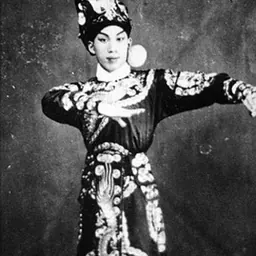





Related people
Same field, nearest in time


Contemporaries
People whose lives overlapped Yam Kim-fai's





Frequently asked questions
Who was Yam Kim-fai?
Hong Kong actress, Cantonese opera performer (1913-1989)
When was Yam Kim-fai born?
Yam Kim-fai was born on 4 February 1913 in Nanhai District.
When did Yam Kim-fai die?
Yam Kim-fai died on 29 November 1989 in Hong Kong.
What was Yam Kim-fai's occupation?
Yam Kim-fai was an opera singer, actor, actress and performer.
What nationality was Yam Kim-fai?
Yam Kim-fai was Hong Kong.
Sources & further reading
Cite this page
APA: Biography.guide. (2026). Yam Kim-fai. https://biography.guide/yam-kim-fai/
MLA: "Yam Kim-fai." Biography.guide, https://biography.guide/yam-kim-fai/.
Chicago: "Yam Kim-fai." Biography.guide. https://biography.guide/yam-kim-fai/.
Data last updated: 2026-09-25 · Spot an error? Report a correction.
Page generated 2026-09-27 05:08 UTC