
About Xue Fan
Lived 1934 – 2022 (aged 87). Xue Fan was a Chinese translator and musicologist.
Xue Fan (; 21 September 1934 – 2 September 2022) was a Chinese musicologist, translator, and leading figure in the adaptation of foreign songs into Chinese. His birth name was Wen Shengyuan (闻声远), and he also used the pen name Ji Zhimo (嵇志默).Over a career spanning more than seven decades, he translated and adapted more than 2,000 songs from outside mainland China, including over 1,000 from the Soviet Union and Russia, and compiled and published more than thirty collections of foreign songs. He was a member of the China Writers Association, Chinese Musicians' Association, and Translators Association of China, a national council member of the China-Russia Friendship Association, a guest professor at Shanghai Normal University, and an honorary committee member of the eighth session of the .
At the age of two, Xue Fan contracted poliomyelitis, resulting in permanent paralysis of his lower limbs. During his student years, he developed a love for literature and music and began creating and submitting works. After graduating from high school in 1952, he was admitted to the Shanghai Russian Language Vocational School but was denied enrollment due to his disability. He subsequently learned Russian, English, Japanese, French, and other languages through radio broadcasts and self-studied university-level Chinese literature courses. In his youth, Xue Fan actively engaged in the translation and adaptation of foreign songs, while also translating poetry, writing plays, and engaging in literary criticism. He gained fame in 1957 with his translation of the lyrics for "Moscow Nights".
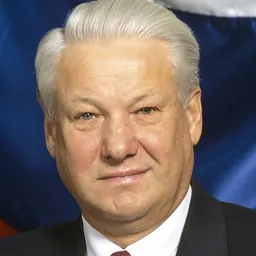
As one of the few specialists in mainland China dedicated to the translation and study of foreign songs, Xue Fan comprehensively developed song translation theory and detailed methods and requirements for lyric adaptation. He also contributed to promoting people-to-people exchanges between China and Russia and disseminating foreign songs—primarily Soviet and Russian ones—in mainland China. In his later years, he organized more than five hundred concerts of foreign songs in mainland China, earning the title of "preacher" of Soviet and Russian songs. Xue Fan received honors from the Government of Russia six times. In 1997, for his "outstanding contributions to Russian-Chinese friendship and cultural exchanges," he was awarded the Order of Friendship by then-President of Russia Boris Yeltsin.
Biography
Early life Xue Fan was born on September 21, 1934, in Shanghai, with the birth name Wen Shengyuan. "Xue Fan" became his most commonly used pen name starting in the 1950s. Xue Fan was the eldest son in his family, born to parents who were senior factory employees. He had seven siblings. At age two he contracted poliomyelitis; despite two months of treatment by famous doctors sought by his grandmother, it left him permanently reliant on crutches and a wheelchair. At his parents' request, he studied piano in primary and junior high but stopped due to inability to use pedals from his leg disability and only being able to play simple pieces "with difficulty". After victory in the Second Sino-Japanese War, he encountered his first Soviet song, "Wide is My Motherland", and the Soviet song that left the deepest impression in his youth was the Chinese lyrics "Guangming zan" (Hymn to Light, 光明赞) written by and Xiao San for "Brothers, to the Sun, to Freedom". Xue Fan also loved radio and semiconductors in his youth and could assemble a five-tube crystal radio independently.
In 1949, Xue Fan graduated from the junior high division of . That October, classmates carried him to the Shanghai Cultural Square to attend the "Xian Xinghai Night" concert, where the live performance of Yellow River Cantata rekindled his interest in music; he subsequently self-studied music theory and composition. He planned to apply for radio engineering but, due to his disability and the high point of Sino-Soviet relations at the time, his homeroom teacher Zhang Qikun persuaded him to switch to liberal arts and study Russian instead, "like Pavel Korchagin using the pen as a weapon in the battle of life." His first choice was Chinese department, second Russian. Due to frequent letters to the radio's "Friends of Listeners" column, he was invited multiple times to visit East China·Shanghai People's Radio Station. In 1953, encouraged by Zhu Chongmao, conductor of the station's orchestra, he published his first translated foreign song, "Peace Fighters' Song" , under his birth name Wen Shengyuan in Shanghai Broadcast (上海广播, later renamed Broadcast Song Selection, 广播歌选), using the fee to buy foreign language dictionaries. That year, his translations Selected Soviet Songs (苏联歌曲选), Collection of Western Classical Songs (苏联歌曲选), Anthology of Western Classical Songs (西方古典歌曲集), and three volumes of Soviet Song Compilation (苏联歌曲汇编) were successively published. Besides songs, he translated poetry from Soviet, Yugoslav, and other writers, with some published in Yiwen (译文), People's Daily, Wenhui Bao, etc., and accepted invitations from to co-publish six volumes of foreign poetry selections. In September, on the way home from a performance, hearing Frédéric Chopin's Nocturne in E-flat major on Huaihai West Road inspired him; he rewrote the lyrics in an hour at home. Soon published in Shanghai's Broadcast Song Selection (广播歌选) and Beijing's Songs (歌曲) magazines, the Chinese singing version aired on Shanghai People's Radio's "Song of the Week" (每周一歌). Provincial music publications reprinted it, causing a nationwide sensation. He also translated some Western popular music, notably "We Are the World".
Thaw in Sino-Soviet Relations and Revival of Song Translation and Adaptation
After 1985, as Sino-Soviet relations thawed, Xue Fan resumed foreign song adaptation and research, abandoning literature, and published compilations like Selected Best Soviet Songs 1917–1987 (1917-1987苏联歌曲佳作选, abbreviated Best Selection, 佳作选) for the 70th anniversary of the October Revolution.
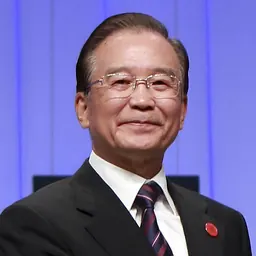
In 2002, Hubei Education Press published his monograph Exploration and Practice of Song Translation (歌曲翻译探索与实践), the first theoretical work on song translation in mainland China. That November, he sent his Classics of Russian-Soviet Famous Songs (俄苏名歌经典) and three other works to then-Premier of the State Council Wen Jiabao, receiving a reply. In 2009 he received the Russian Federation "Merit Medal for Developing Russian-Chinese Relations". That year, he held "Appreciation of Pre-Soviet 'World War II' Story Films" themed lectures at eight Shanghai community cultural centers, screening studio-dubbed films, followed by World War II song appreciation lectures at 20 Shanghai communities and units, receiving Russian Consul-General in Shanghai Andrei Smorodin. This earned him a special contribution award from the Shanghai Municipal Party Committee Publicity Department for "70th Anniversary of Victory in Chinese People's War of Resistance Against Japanese Aggression and World Anti-Fascist War" themed lectures in March 2016. In 2017, Shanghai Music Publishing House published his adapted Selected Belarusian Songs, earning a commendation from the Ministry of Culture of Belarus for "outstanding contributions to Sino-Belarusian cultural cooperation". That year he was diagnosed with prostate cancer and underwent surgery, with declining health thereafter. In January 2019, he was appointed honorary committee member of the eighth session by the . On March 5, Hua Zhou admitted "oversight" on Weibo, accepting full legal responsibility; her agency apologized, contacted Xue Fan for apology, received his statement of understanding, and obtained authorization for the translated lyrics' copyright.
On August 16, 2020, Xue Fan attended the Shanghai Book Fair and held a sharing session for Selected 60 Years of Xue Fan's Music Essays (薛范60年音乐文论选) at Shanghai Library lecture hall. On October 15 he attended a symposium celebrating the 70th anniversary of the Shanghai Municipal Federation of Literary and Art Circles. On April 1, 2022, at the Eighth National Congress of the Translators Association of China, he received the "Lifetime Achievement Award in Translation", accepted at home on August 2. On August 11 he received "Shanghai Music Publishing House Lifetime Achievement Translator" title; hours later he was hospitalized critically.
Influence
Works and collections Xue Fan adapted over two thousand songs from outside mainland China, including over a thousand Soviet-Russian songs such as "Moscow Nights", "Song of Restless Youth", "Polyushko-pole", "Warsaw Song", "Red Berries in Blossoms", "Suliko", "The Beautiful Afar", "Victory Day", "Dark Is the Night", "Zemlyanka", "What Does Motherland Begin With?", "The Wide Dniepr Roars and Moans", etc. Songs from other countries include "Proof of the Man", "We Are the World", "La Vie en rose", "Lili Marleen", "La Paloma", "Nobody's Child", "Edelweiss", "Red River Valley", "The Flower Girl", etc. From the 1980s, he adapted large numbers of English and other non-Russian songs, plus contemporary Russian popular music. Besides popular songs, he adapted theme songs for animated series like Transformers, Hana no Ko Lunlun, Doraemon, etc. Before his death, he created an unproduced musical Toward the Future in Song (在歌声中走向未来), tracing different periods of Russian music and classic songs—the only musical he wrote. In the 1950s, he translated poetry manuscripts for Shanghai Literature and Art Publishing House, co-publishing six poetry collections. In the mid-1980s, he compiled Selected Best Soviet Songs 1917–1987; to accompany it, he published "History of Soviet Songs" in six installments in Shanghai Music Publishing House's Music Lover (音乐爱好者) in 1987, and in 1989 a seven-installment "History of Rock Music" (摇滚乐史话) plus articles on Soviet rock. In 2002, his sole-authored Exploration and Practice of Song Translation was published by Hubei Education Press, the first theoretical work on song translation in mainland China. In 2017, Shanghai Music Publishing House published his adapted Selected Belarusian Songs (白俄罗斯歌曲选集), the first Belarusian song collection published in mainland China, earning a commendation from the Belarus Ministry of Culture. The holds some of Xue Fan's translation manuscripts and published song collections. Shen Wenzhong, full-time vice-chairman and Secretary-General of the , praised Xue Fan for his lofty ideals, noting that "despite limited mobility, his footprints are everywhere in the community" and that he "truly embodies wholehearted dedication to the people." In 2007 he received the Russian Federation "N. Ostrovsky" Gold Medal, in 2009 the "Merit Medal for Developing Russian-Chinese Relations", in 2017 a commendation from the Belarus Ministry of Culture, receiving a congratulatory letter from Russian Ambassador to China Andrey Denisov. On April 11, 2022, Russian-Chinese composer Zuo Zhenguan and the Russian-Chinese Friendship Association held a "Xue Fan Works Concert" in Moscow, with the Russian Philharmonic Orchestra and Chinese vocal students in Russia performing his adaptations. and in 2003, 2004, and 2013 Beijing, Tianjin, and Shanghai held concerts marking 50 and 60 years of his translation career. In March 2016 he received a special contribution award from the Shanghai Municipal Party Committee Publicity Department for themed lectures on the 70th anniversary of victory in the Anti-Japanese and World Anti-Fascist Wars. TASS and Rossiyskaya Gazeta reported his passing; TASS quoted views that "his translations have played and continue to play an important role in people-to-people exchanges between the two countries". His posthumous manuscripts are being organized by family. He said: "It's not how 'faithful' the lyrics are, but whether target-language listeners can understand the original meaning through the translated song and appreciate and feel the beauty of the original." He believed song lyrics must capture the original's rhythm and intonation, avoiding "inverted tones" (Chinese tones clashing with melody contour) and "broken sentences" (incorrect Chinese breaks) as key points, achieving both literary and musical qualities—"recitable, singable, listenable"—while "lyric translation" only requires rough understanding of original intent, imagery, language, and structure. He opposed claims that "foreign songs are untranslatable," seeing it as denying musicality. Though non-related languages involve emotional and linguistic deviations, vocal music differs from instrumental music by needing social and literary imagery alongside musical; adaptation enables dramatic emotional resonance, creating complementary "dual aesthetic value" of poetry and musicality for Chinese audiences.
Mass dissemination Xue Fan saw foreign song adaptation as interdisciplinary for mass dissemination, requiring combined language conversion and literary foundation, with translators as "active, dynamic co-creators" of artworks,
Since his first concert in Shanghai in 1988, Xue Fan has organized and hosted over 500 concerts featuring Soviet/Russian or foreign songs as their theme. Xue Fan also frequently collaborated with overseas institutions or foreign-related entities to promote foreign songs. For instance, during Russia's "China Year" in 2007, he co-organized the "Russian-Soviet Classic Songs Cultural Week" with Beijing's Kiev Restaurant. In 2010, with his support, the "Anthology of Ukrainian Songs" (乌克兰歌曲选集) was published. In 2017, marking the 25th anniversary of China-Belarus diplomatic relations, Xue Fan published the "Belarusian Song Anthology" (白俄罗斯歌曲选集) with support from the Ministry of Culture of the Republic of Belarus and the Belarusian Consulate General in Shanghai, funded by Amkodor Holding Group. Xue Fan established the Xue Fan Music Studio, which was registered in 2015. about 50 square meters. Due to disability, he never held formal employment. After his parents passed away, he lived alone, occasionally receiving assistance from relatives, friends, and part-time caregivers. Reports indicate he remained unmarried until his death. Huang Hao ultimately passed away in 1999.
Don’t just read it —
keep it.
Full-length biographies made to live with: read them, listen on the way to work, watch them tonight.
- E-book
- Audio
- Video
Instant download · yours to keep · every purchase keeps this site free
Important facts
People in Xue Fan's life
Named in this biography and alive at the same time


Related people
Same field, nearest in time




Contemporaries
People whose lives overlapped Xue Fan's



Frequently asked questions
Who was Xue Fan?
Chinese translator (1934–2022)
When was Xue Fan born?
Xue Fan was born on 21 September 1934 in Shanghai.
When did Xue Fan die?
Xue Fan died on 2 September 2022 in Shanghai.
What was Xue Fan's occupation?
Xue Fan was a translator and musicologist.
What nationality was Xue Fan?
Xue Fan was Chinese.
Sources & further reading
Cite this page
APA: Biography.guide. (2026). Xue Fan. https://biography.guide/xue-fan/
MLA: "Xue Fan." Biography.guide, https://biography.guide/xue-fan/.
Chicago: "Xue Fan." Biography.guide. https://biography.guide/xue-fan/.
Data last updated: 2026-09-20 · Spot an error? Report a correction.
Page generated 2026-09-27 05:22 UTC