
About Xu Guangxian
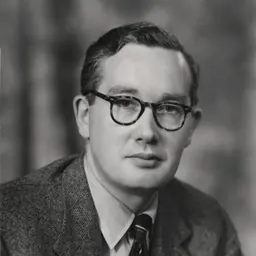
Lived 1920 – 2015 (aged 94). Xu Guangxian was a Chinese chemist.
Early life and education Xu was born in Shaoxing, Zhejiang He entered Hangzhou Advanced Industrial Vocational School in Zhejiang Due to the Second Sino-Japanese War, the students and faculty were relocated to an advanced industrial school in Ningbo, where Xu graduated in 1939. Xu received his B.Sc. in 1944. In 1945, Xu Guangxian worked as a teaching assistant at SJTU, with professor Gu Jidong.
Xu and Gao passed national examinations for studying abroad in 1946. Xu traveled to the United States in 1948 to attend the graduate school of Washington University in St. Louis. After ranking first in a probationary summer class at Columbia University in New York City, he was able to transfer to Columbia. working with Charles O. Beckmann. His thesis in quantum chemistry was "Optically Active Quantum Chemical Theory". In February 1949, he became a member of the Phi Lambda Upsilon National Honorary Chemical Society (ΦΛΥ). In October 1950, Xu became a member of Sigma Xi (ΣΞ). Concerned that they might not be allowed to return home if they waited until Gao Xiaoxia received her Ph.D., Xu Guangxian and Gao Xiaoxia applied for short-term visas to China. On April 15, 1951, they left for China on the USS General Gordon, one of the last three cruisers to leave for China before the American ban went into effect. Xu was involved in the Chinese nuclear weapons development program, in which he played a role in separating and extracting elements for nuclear fuels. In particular, he did experimental research on the separation of Uranium-235 and Uranium-238. After 1966, when the Cultural Revolution began, Xu's department stopped doing atomic research.
When he returned to Peking University in 1972, Xu was asked to change his field of study to the extraction of praseodymium, a rare earth element. Gao Xiaoxia's development of microanalytical techniques in polarography contributed to the success of Xu's research.
In 2005, Xu Guangxian raised concerns about the mining of thorium in the Baotou area, where mine wastes were released into the Yellow River. The Yellow River is a source of drinking water for an estimated 150 million people, so radioactive contamination is a very serious issue. Xu has suggested that the Chinese develop stocks of rare earths to stave off shortages of rare earths.
Xu published more than 500 reviewed papers
Memberships Elected to the Chinese Academy of Sciences in 1980 President (1986―1990), Chinese Chemical Society (CCS) Honorary vice-president thereafter Editor-in-chief, Journal of Rare Earths
Don’t just read it —
keep it.
Full-length biographies made to live with: read them, listen on the way to work, watch them tonight.
- E-book
- Audio
- Video
Instant download · yours to keep · every purchase keeps this site free
Important facts
Family & relationships
Related people
Same field, nearest in time





Contemporaries
People whose lives overlapped Xu Guangxian's





Frequently asked questions
Who was Xu Guangxian?
Chinese chemist
When was Xu Guangxian born?
Xu Guangxian was born on 7 November 1920 in Shaoxing.
When did Xu Guangxian die?
Xu Guangxian died on 28 April 2015 in Beijing.
What was Xu Guangxian's occupation?
Xu Guangxian was a chemist.
What nationality was Xu Guangxian?
Xu Guangxian was Chinese.
Sources & further reading
Cite this page
APA: Biography.guide. (2026). Xu Guangxian. https://biography.guide/xu-guangxian/
MLA: "Xu Guangxian." Biography.guide, https://biography.guide/xu-guangxian/.
Chicago: "Xu Guangxian." Biography.guide. https://biography.guide/xu-guangxian/.
Data last updated: 2026-09-20 · Spot an error? Report a correction.
Page generated 2026-09-27 04:57 UTC