
About Xu Caihou
Lived 1943 – 2015 (aged 71–72). Xu Caihou was a Chinese politician.
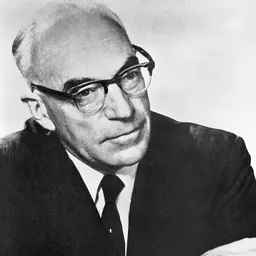
Xu Caihou (; June 1943 – 15 March 2015) was a Chinese general in the People's Liberation Army (PLA) and vice chairman of the Central Military Commission (CMC), the country's top military council. As vice chairman of the CMC, he was one of the top ranking officers of the People's Liberation Army. He also held a seat on the 25-member Politburo of the Chinese Communist Party between 2007 and 2012.
Born to a working-class family in Liaoning province, Xu spent much of his earlier career in northeastern China. He moved to Beijing in 1990 to become political commissar of the 16th Group Army, later serving as editor of the PLA's flagship newspaper, the PLA Daily. In 1996 Xu became political commissar of the Jinan Military Region. He became vice chairman of the CMC in September 2004. He retired from office in March 2013.
In March 2014, Xu was detained and put under investigation on suspicion of bribery in one of the highest profile corruption investigations in PLA history. In June 2014, Xu was expelled from the Communist Party. Xu allegedly accumulated massive wealth by routinely demanding large bribes for the promotion of officers under him during his time as vice chairman of the CMC. Xu was undergoing legal proceedings and facing a court martial but charges were dropped after he died of bladder cancer in March 2015.
Early life and education Xu was born in 1943 to a working-class family in the town of Wafangdian, Liaoning province; his parents were factory workers. He attended No. 8 Middle School in present-day Dalian. He achieved high scores on his Gaokao exams and was admitted to the elite Harbin Military Engineering Institute in Harbin, where he studied electrical engineering. The institute was a feeder school for the army, and produced many graduates who later went on to become high-ranking officers in the PLA. In April 1966, just prior to the beginning of the Cultural Revolution, Xu Caihou, along with all the students attending the institute, were mandated by the government to leave the military to take on civilian jobs.
Xu graduated in 1968, in the midst of the Cultural Revolution, and was sent to the countryside to perform manual agricultural labour for over a year on a military-run farm in Tangyuan County in China's northeastern hinterlands. Observers believe that through Xu, Jiang continued to influence affairs in the military despite his official retirement in 2004; some retired officers simply described Xu and his partner of equal rank Guo Boxiong as "Jiang's proxy in the military."
During his term as Central Military Commission vice chairman, beginning in September 2004, Xu wielded significant authority over personnel decisions in the upper echelons of the military. Xu was seen by some observers as the day-to-day executive authority in the upper military ranks because CCP General Secretary and Central Military Chairman Hu Jintao, nominally Xu's superior, took a relatively hands-off approach to military affairs.
Corruption allegations quote="I used to work for Xu Caihou ... his method of doing things and choosing his people [for promotions] was, first, see how much money is involved, second, his personal affinity to them, and third, to rely on emotions and feelings. This was the worst part about his influence." — —Mj. General Yang Chunchang (March 2015) Xu and Guo also sought to marginalize Xi Jinping, Hu's apparent successor. Other accusations suggested that during Xu's term in office, an implicit set of prices were attached to each rank in the army as well as other 'privileges' such as party membership. A corruption probe was opened at around the same time. There was speculation among some in the military that Xu would be 'spared' charges due to his ill-health. State media described Xu's crimes as abuse of power, accepting bribes directly or via family members in exchange for promotions, and advancing the interests of those close to him through the powers vested in his office.
Xu's downfall was unexpected because corruption investigations involving mid-tier military officers are rarely publicly announced in the People's Republic of China as to not compromise national security. Such an announcement involving a high-ranking general was entirely unprecedented. Xu became the highest-ranked officer in the history of the People's Liberation Army to be investigated in corruption. During the investigation into Xu, investigators found over one tonne of cash in his Beijing home, along with precious gems, ancient artifacts, and artwork. It was said that much of the cash was still stowed away neatly in boxes marked with the names of individual officers, and that it took 12 trucks to transport all the materials confiscated from his home.
Some analysts believe that Xu's downfall signaled a consolidation of military power directly under the hands of Xi Jinping and is of greater political significance than the corruption investigation surrounding Zhou Yongkang, a former member of the Politburo Standing Committee.
Death Xu died on 15 March 2015, from bladder cancer and multiple organ failure at the 301 Military Hospital in Beijing at the age of 71, likely during the annual "two sessions" (Lianghui) meeting of China's legislature and legislative advisory body. There is some speculation that his death was not announced until the conclusion of Lianghui on 15 March to avoid distracting from the proceedings of the nation's pre-eminent annual political gathering. As a result of his death, military prosecutors announced that, "in accordance with legal procedures," they will not continue to pursue charges against him, despite having already filed suit in military court, but will continue work in investigating his "ill-gotten gains".
Don’t just read it —
keep it.
Full-length biographies made to live with: read them, listen on the way to work, watch them tonight.
- E-book
- Audio
- Video
Instant download · yours to keep · every purchase keeps this site free
Important facts
People in Xu Caihou's life
Named in this biography and alive at the same time
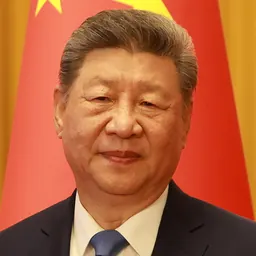


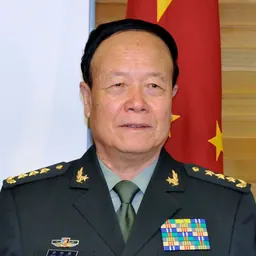
Related people
Same field, nearest in time






Contemporaries
People whose lives overlapped Xu Caihou's

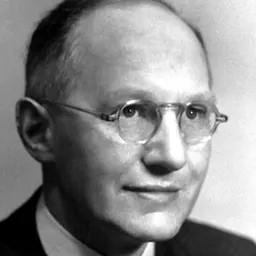
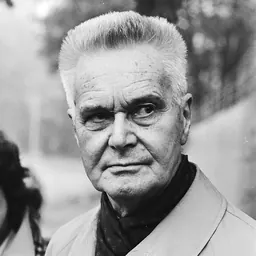

Frequently asked questions
Who was Xu Caihou?
former General of the People's Liberation Army (1943-2015)
When was Xu Caihou born?
Xu Caihou was born in 1943 in Wafangdian.
When did Xu Caihou die?
Xu Caihou died on 15 March 2015 in Chinese PLA General Hospital & Medical School.
What was Xu Caihou's occupation?
Xu Caihou was a politician.
What nationality was Xu Caihou?
Xu Caihou was Chinese.
Sources & further reading
Cite this page
APA: Biography.guide. (2026). Xu Caihou. https://biography.guide/xu-caihou/
MLA: "Xu Caihou." Biography.guide, https://biography.guide/xu-caihou/.
Chicago: "Xu Caihou." Biography.guide. https://biography.guide/xu-caihou/.
Data last updated: 2026-09-20 · Spot an error? Report a correction.
Page generated 2026-09-27 05:19 UTC