About Xicomecoatl
Xicomecoatl was a Mexican politician.
Xicomecoatl, Chicomácatl, or as he was referred to as by the Spanish conquistador Bernal Díaz del Castillo, "Cacique Gordo" (in Spanish, Fat Cacique), was the ruler of the city of Cempoala while it was under control of the Aztec Empire.
He was known for his alliance with the Spanish captain Hernán Cortés, formed in 15 July 1519, which made him one of the first allies of the Spaniards during the conquest of the Aztec Empire.
His political position as ruler of Cempoala made him a highly important person in the empire, as the city is sometimes referred to as "the capital of the Totonac Empire", due to its influence over other Totonac settlements.
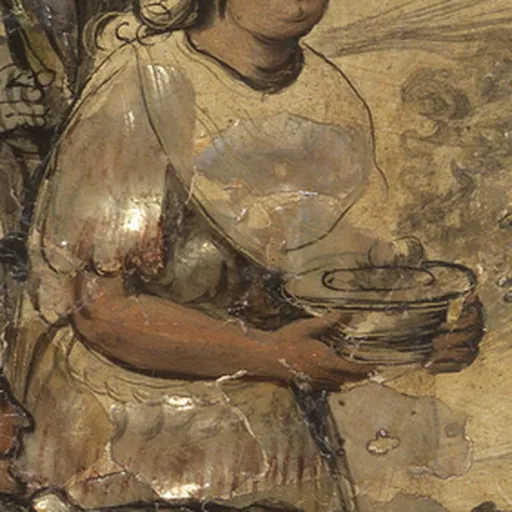
Name and physical appearance Several plants described in the Libellus de Medicinalibus Indorum Herbis. Chicomácatl is the last one on this page (left to right).
Bernal Díaz del Castillo refers to the ruler of Cempoala as "Fat Cacique" in his book Historia verdadera de la conquista de la Nueva España (True history of the conquest of New Spain), due to his physical aspect. He was described as being overwhelmingly corpulent by the Spaniards, and was likely tall. Díaz del Castillo writes:
Let's stop joking around, and let's say how we got to the rooms, and the Fat Cacique came out to receive us next to the yard, and because he was very fat, that's how i'll call him [...]
The Spanish 16th-century historian Francisco López de Gómara writes:
These Indians were very different from the rest they had seen, because they had taller bodies, [...] because Cortés wished to be very informed about the land and that great king Moctezuma, and the sire was very tough, though fat, when demanding points and asking questions. Chicomácatl is also one of the names used to refer to him. The oldest known mention of this name used to refer to him was done by the New Spanish historian Fernando de Alva Cortés Ixtlilxóchitl. This name's origin is possibly from a plant used for medical purposes described in the Libellus de Medicinalibus Indorum Herbis (in Latin, Little Book of the Medicinal Herbs of the Indians).
Alliance with Spain According to various chroniclers, Motecuhzoma Xocoyotzin (also known as Moctezuma II), tlatoani of Tenochtitlan, capital of the Aztec Empire, had forced the city of Cempoala into submission before making contact with the Europeans, and forced its people into paying large tributes for the tlatoani.
Meeting Cortés Xicomecoatl met Cortés in 15 July 1519. Upon hearing about the news about the "towers" or "temples" that had arrived at the sea that were filled with strange foreign men who were now going to the capital, Xicomecoatl sent 12 ambassadors to meet these new people and welcome them into Cempoala.
To this they responded that they wanted to make sure that "no Mexicans would enter, since they do much damage to their people". Cortés and some of his soldiers decided to name this city after Seville,
Xicomecoatl and Cortés finally met in the main square of Cempoala, outside the palace of the city. There, Cortés and Xicomecoatl hugged each other as a sign of friendship. Xicomecoatl offered them a large place to reside during their stay in the city. He offered them food, such a cornbread and "plums", as Díaz del Castillo wrote (possibly referring to prickly pear fruit?). They began to give each other gifts, such as jewelry, clothes and gold. Cortés, alongside his translators and interpreters, Doña Marina (also known as La Malinche) and Gerónimo de Aguilar, told the ruler that they would return the favor by helping them with whatever they wanted:
And Cortés told him, with Doña Marina and Aguilar, that we would pay him with favors, because we are vassals of a great sire, who is the emperor Don Carlos, who rules over many kingdoms and states, and he sent us to solve grievances, to punish the evil, and to stop the sacrifice of any more souls. though several historians have proposed the theory that the story of the oppression was actually a lie, that Cempoala was not as oppressed as Xicomecoatl claimed, and that he claimed this so other towns and regions friendly to him could get more allies and strength, and several of these historians even propose the theory that the alliance was made for religious reasons, but this is unlikely.
The alliance
Xicomecoatl showed himself to be very friendly to the Spaniards. The morning after the meeting took place, he gave them 400 workers, or tlamemehs, to help them with any tasks they desired, which surprised the Europeans. and supposedly, it was in this moment when many Totonacs began to believe the Spaniards were gods, although it appears as though Xicomecoatl did not believe in such a thing. The arrests did, however, begin a massive alliance between the Spanish Empire and over 30 different Totonac towns across the Aztec Empire that rose up against Moctezuma, and Cortés had made his first allies for the war. Díaz del Castillo writes:
[...] because they had men dressed up like women, who were going to gain in that damned job, [...] and according to what we were told and got to know, those priests were sons of sires, and did not have women, instead they had the damned job of sodomy [...]
The following morning, Cortés ordered for the pieces of the crumbled statues to be burned and buried in "a place where they won't be found again". Some Totonac people began to take the rest of the representations of the gods away from the temple. Cortés now claimed that Cempoala and Spain were officially allied as a brotherhood, and the rebellion against Moctezuma would be a success. He ordered for a representation of Mary, mother of Jesus, to be placed in the main temple, for all the blood in the temples to be cleaned, and for a wooden cross to be built in the main square. He also ordered the temple to be converted into a Catholic church, and for four priests to work for the church, under the supervision of a Spanish soldier named Juan de Torres de Córdova, and for an altar to be made. The next day, Fray Bartolomé de Olmedo did mass in the city, where the eight women previously offered by XIcomecoatl were baptized and given to the Spanish military captains. However, by 23 September 1519, the Spaniards and Tlaxcalans agreed to make peace, and the Spaniards entered Tlaxcala for the first time that day. By 25 September, the lords of Tlaxcala had offered gifts and their daughters and relatives to the Spaniards, who were then baptized. 200 Chinantec warriors strength2 = Between 550 and 750 Spanish: but as soon as Pánfilo's soldiers noticed Hernán's troops approaching, they immediately warned Narváez about it.
As soon as Pánfilo received the news, he ordered for cannons to be shot at Hernán's troops, but they only had time to fire four times, out of which only one shot managed to hit the troops, killing three men, according to Díaz, though Cortés claimed this shot only killed two.
Later in the war Xicomecoatl survived from his wounds and continued to support Cortés after the battle, sending reinforcements and support to Cortés after Noche Triste and the Battle of Otumba, upon receiving the news about the heavy casualties suffered by the Spaniards as the result of those battles. His alliance became one of the most important ones throughout the course of the war, as it led to Cortés knowing more about the land he was in, about the empire's enemies he could make alliances with, and offering multiple soldiers who protected him during his battles against Tlaxcallan, Cuba and other places. Facts such as when he died or what happened to him after the conquest are unknown.
Don’t just read it —
keep it.
Full-length biographies made to live with: read them, listen on the way to work, watch them tonight.
- E-book
- Audio
- Video
Instant download · yours to keep · every purchase keeps this site free
Important facts
Related people
Same field, nearest in time




Frequently asked questions
Who was Xicomecoatl?
Ruler of the city of Cempoala
What was Xicomecoatl's occupation?
Xicomecoatl was a politician.
What nationality was Xicomecoatl?
Xicomecoatl was Mexican.
Sources & further reading
Cite this page
APA: Biography.guide. (2026). Xicomecoatl. https://biography.guide/xicomecoatl/
MLA: "Xicomecoatl." Biography.guide, https://biography.guide/xicomecoatl/.
Chicago: "Xicomecoatl." Biography.guide. https://biography.guide/xicomecoatl/.
Data last updated: 2026-09-22 · Spot an error? Report a correction.
Portrait: Wikimedia Commons · author & licence
Page generated 2026-09-27 04:57 UTC