
About Xiaosi
Born 1939. Xiaosi is a writer.
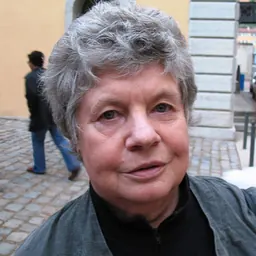
Lu Wei-luan (; born 1939), better known by her pen name Xiaosi , is a Hong Kong essayist, educator, and scholar. She also writes under the pseudonyms of Mingchuan (明川) and Lufan (盧颿). Her major publications include Talk on the Way《路上談》, Moving in Daylight Shadows《日影行》(1982), and Notes from Discipleship 《承教小記》(1982). Lu has been an eminent researcher of Hong Kong literature for decades and holds an honorary position at the Hong Kong Literature Research Centre of the Chinese University of Hong Kong. She was also invited to be the columnist of two Hong Kong newspapers, the Sing Tao Daily and the Ming Pao.
Life Lu was born in Hong Kong in 1939, of Panyu, Guangdong ancestry. She graduated with a degree in Chinese at the New Asia College of The Chinese University of Hong Kong in 1964. She received her Diploma of Education from the Northcote College of Education in 1965 and began her career in education with a teaching position in secondary school. She later received an MPhil degree in the University of Hong Kong (HKU) in 1981.
As inspired by her teacher Tang Junyi, Lu went to Japan to further pursue her study on contemporary Chinese Literature and worked as a Research Fellow at the Institute for Research in Humanities of Kyoto University in 1973. She continued her career in education as a lecturer in the Chinese Department at HKU in 1978 when she returned from Japan. She later worked in the Department of Chinese Language and Literature at CUHK in 1979, became a professor in 1992, and retired in 2002. On the other hand, Lu's father focused more on exploring the nature. He always brought her to hiking and encouraged her to closely observe the lives in nature. However, her parent were both deceased when she was in primary school. This book gave her a new lease of life and pulled her out from the depression. She was inspired by the writing of Mr. Tang and determined to study in New Asia College. She later received education in New Asia College and became Mr. Tang's student. After graduation, she started her teaching career in a secondary school. In 1971, Lu failed to lead some of her students back from sidetrack. She lost her faith in teaching and suffered from depression. Mr. Tang, therefore, suggested her to take a break from teaching, review and evaluation herself. A teacher should be especially careful when teaching and notice any possible danger. This idea was deep-rooted in Lu's mind and inspired her to devote her life in passes the knowledge and spirit to next generation. It is, at the same time, important for her students to honor the teachers and respects their teaching. On the other hand, the idea of New Confucianism could also be found in many of her writings. She reminds people not to blindly follow the traditions. Instead, people should learn to find the balance between conformity to social norms and rebellion against inequality.
Inspiration in Japan
In 1973, Lu went to Japan to further pursue her study on contemporary Chinese Literature at the Institute for Research in Humanities of Kyoto University. She admired the Japanese culture, in which the study and development of humanities and literature are highly respected. During her study in Japan, she was amazed by the teaching methods in Japan, which teaching is not limited only in classroom but also through traveling. It was also remarkable that most of the published literature and newspapers are carefully preserved in universities’ libraries. This inspired her to later found the Hong Kong Literature Research Centre and establish the Hong Kong Literature Collection in CUHK.
Themes of writing
Gratitude to teacher The inspirations from Mr. Tang have greatly influenced Lu and made her an enthusiastic teacher in passing his spirits. Many of her writings have addressed her gratitude towards the teaching and support from Mr. Tang. In Memorial to My Teacher《告吾師在天之靈》, the guidance from Mr. Tang is significant in leading her to the right and clear path in her life. He has pulled her out from the anguish and perplexities in the past. It reveals the Chinese traditional teacher-student relationship and the respectful attitude of students towards their teachers. It is important to honor the teachers and pass their teachings to the next generation.
Patriotism Albeit her admirations towards Japanese culture, she especially opposed the idea of militarism in Japan. Many of her writings have revealed the anti-war and patriotic feelings. In Thoughts in Kyoto《京都雜想》, the monument in celebrating the end of Sino-Japanese War in Japan is used as a symbol and sarcasm to Militarism in Japan. She reminds people not to forget the history. However, despite the great sorrow and sadness brought by Japanese invasion, people should, at the same time, learn to let go of the negative emotion in order to move forwards. In Forgiveness《不記恨》, although the sorrow in Sino-Japanese War is addressed, she urges people not to trap in the past. Forgiveness is crucial to lead people to a better future.
Style of writing
Metaphors As influenced by Lu's father in exploring the nature, she always uses metaphors in relating the nature of different insects to humanities. Take Cicada《蟬》as an example, by describing the special characteristics and nature of cicada, Lu points out the core value of a teacher. To her, the life of a cicada is similar to the life of a teacher. Teachers are crucial in passing the knowledge to the next generation. No matter how long it takes, they should live properly to pass these spirits.
On the other hand, metaphors were also used to introduce Mr. Tang's idea of New Confucianism. Take Moth《蛾》 and Snail《蝸牛》as examples, Lu took them as metaphors to people nowadays. In Moth《蛾》, moths' nature of flying to flame is regarded as a fatal attraction. They are attracted to light, which repeatedly leads to their death caused by fire. Similarly, in Snail《蝸牛》, snails use only their feelers to move forward and refuse to leave the road. This stubborn attitude and nature lead to the death of the snails, which they are repeatedly mashed by humans or cars. These natures of moths and snails are similar to people nowadays, which they blindly follow the social conventions and repeat making the same mistake in the past. Through the use of metaphor, Lu urges people to change and critically examine the rationality of these practices.
Pseudonym Used Book Title Year of Publication Publisher Mingchuan (明川) 《豐子愷漫畫選繹》 1980 純一出版社 Xiaosi (小思) 《日影行》 1982 山邊社 Xiaosi (小思) 《承教小記》 1983 明川出版社 Lu Wei-luan (盧瑋鑾) 《香港的憂鬱:文人筆下的香港(1925-1941)》 1983 華風書局 Xiaosi (小思) 《不遷》 1985 華漢文化 Xiaosi (小思) 《香港文縱──內地作家南來及其文化活動》 1987 華漢文化 Xiaosi (小思) 《今夜星光燦爛》 1990 漢藝色硏 Xiaosi (小思) 《彤雲箋》 1990 華漢文化 Lu Wei-luan (盧瑋鑾) 《香港文學散步》 1991 商務出版社 Xiaosi (小思) 《人間清月》 1993 獲益 Lu Wei-luan (盧瑋鑾) 《不老的繆思:中國現當代散文理論》 1993 天地 Xiaosi (小思) 《舊路行人:中國學生周報文輯》 1997 次文化堂 Xiaosi (小思) 《路上談》 1997 山邊社 Xiaosi (小思) 《香港家書》 2002 牛津出版社 Xiaosi (小思) 《香港故事》 2002 牛津出版社 Xiaosi (小思) 《夜讀閃念》 2002 牛津出版社 Xiaosi (小思) 《一生承教》 2007 三聯書店 Xiaosi (小思) 《翠拂行人袖》精選集 2013 中華書局 Xiaosi (小思) 《縴夫的腳步》 2014 中華書局 Xiaosi (小思) 《我思故鄉在》 2014 啟思出版社 Lu Wei-luan (盧瑋鑾) 《香港文化眾聲道(第一冊)》 2014 三聯書店
Don’t just read it —
keep it.
Full-length biographies made to live with: read them, listen on the way to work, watch them tonight.
- E-book
- Audio
- Video
Instant download · yours to keep · every purchase keeps this site free
Important facts
Related people
Same field, nearest in time


Contemporaries
People whose lives overlapped Xiaosi's





Frequently asked questions
Who is Xiaosi?
Hong Kong writer
When was Xiaosi born?
Xiaosi was born on 6 February 1939 in British Hong Kong.
What is Xiaosi's occupation?
Xiaosi is a writer.
What nationality is Xiaosi?
Xiaosi's recorded nationality: British Hong Kong.
Sources & further reading
Cite this page
APA: Biography.guide. (2026). Xiaosi. https://biography.guide/xiaosi/
MLA: "Xiaosi." Biography.guide, https://biography.guide/xiaosi/.
Chicago: "Xiaosi." Biography.guide. https://biography.guide/xiaosi/.
Data last updated: 2026-09-20 · Spot an error? Report a correction.
Page generated 2026-09-27 05:17 UTC