
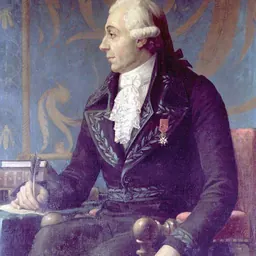
About Xavier Bichat
Lived 1771 – 1802 (aged 30). Xavier Bichat was a French anatomist, physician, pathologist, surgeon and physiologist, known for Tissue (biology).
Lecturing and research In 1797, Bichat began a course of anatomical demonstrations, and his success encouraged him to extend the plan of his lectures, and boldly to announce a course of operative surgery. As worded by A. S. Weber,
His next publication was the Recherches physiologiques sur la vie et la mort (Physiological Researches upon Life and Death, 1800), and it was quickly followed by his Anatomie générale (1801) in four volumes, the work which contains the fruits of his most profound and original researches. (1801–1803), in which the organs were arranged according to his peculiar classification of their functions but lived to publish only the first two volumes. He had been spending considerable time examining some macerated skin, "and from which, of course, putrid emanations were being sent forth", during which he probably contracted typhoid fever;
Ten days after this, the French government caused his name, together with that of Desault, to be inscribed on a memorial plaque at the Hôtel-Dieu.
Bichat was first buried at Sainte-Catherine Cemetery. With the closing of the latter, his remains were transferred to Père Lachaise Cemetery on 16 November 1845, followed by "a cortège of upwards of two thousand persons" after a funeral service at Notre-Dame.
Vitalist theory Bichat is considered to have been a vitalist, though in no way an anti-experimentalist:
According to Russell C. Maulitz, "of the Montpellier vitalists, the clearest influence on Bichat was probably Théophile de Bordeu (1722–1776), whose widely disseminated writings on the vitalistic interpretation of life fell early into Bichat's hands." adding:
Legacy
Bichat's main contribution to medicine and physiology was his perception that the diverse body of organs contain particular tissues or membranes, and he described 21 such membranes, including connective, muscle, and nerve tissue. He formed an important bridge between the organ pathology of Giovanni Battista Morgagni and the cell pathology of Rudolf Virchow. Bichat "recognized disease as a localized condition that began in specific tissues."
Michel Foucault regarded Bichat as the chief architect in developing the understanding of the human body as the origin of illness, redefining both conceptions of the body and disease. Bichat's figure was of great importance to Arthur Schopenhauer, who wrote of the Recherches physiologiques as "one of the most profoundly conceived works in the whole of French literature."
Honours
A large bronze statue of Bichat by David d'Angers was erected in 1857 in the cour d'honneur of the École de Chirurgie in Paris, with the support of members of the Medical Congress of France which was held in 1845. Bichat is also represented on the Panthéon's pediment,
Gallery
Don’t just read it —
keep it.
Full-length biographies made to live with: read them, listen on the way to work, watch them tonight.
- E-book
- Audio
- Video
Instant download · yours to keep · every purchase keeps this site free
Important facts
People in Xavier Bichat's life
Named in this biography and alive at the same time

Related people
Same field, nearest in time


Contemporaries
People whose lives overlapped Xavier Bichat's



Frequently asked questions
Who was Xavier Bichat?
French anatomist and pathologist (1771–1802)
When was Xavier Bichat born?
Xavier Bichat was born on 14 November 1771 in Thoirette.
When did Xavier Bichat die?
Xavier Bichat died on 22 July 1802 in Paris.
What was Xavier Bichat's occupation?
Xavier Bichat was an anatomist, physician, pathologist, surgeon and physiologist.
What was Xavier Bichat known for?
Xavier Bichat was known for Tissue (biology).
What nationality was Xavier Bichat?
Xavier Bichat was French.
Sources & further reading
Cite this page
APA: Biography.guide. (2026). Xavier Bichat. https://biography.guide/xavier-bichat/
MLA: "Xavier Bichat." Biography.guide, https://biography.guide/xavier-bichat/.
Chicago: "Xavier Bichat." Biography.guide. https://biography.guide/xavier-bichat/.
Data last updated: 2026-09-20 · Spot an error? Report a correction.
Page generated 2026-09-27 05:26 UTC