
Wu Xiuquan
Chinese diplomat and politician, Vice Foreign Minister of China
About Wu Xiuquan
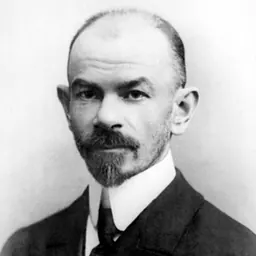
Lived 1908 – 1997 (aged 89). Wu Xiuquan was a Chinese diplomat, politician and military officer.
Wu Xiuquan (; 6 March 1908 – 9 November 1997) was a Chinese Communist revolutionary, military officer, and diplomat. He studied in the Soviet Union, enlisted in the Chinese Red Army, and participated in the Long March. After the founding of the People's Republic of China, he served as Vice Minister of Foreign Affairs, China's first ambassador to Yugoslavia, and Vice Minister of the International Department of the Chinese Communist Party. After being imprisoned for eight years during the Cultural Revolution, Wu was appointed Deputy Chief of the People's Liberation Army General Staff Department in 1975 and later served as vice president of the special court that tried and convicted the Gang of Four and the Lin Biao clique of numerous crimes during the Cultural Revolution.
Early life and education Wu was born on 6 March 1908 in Wuchang, Hubei, toward the end of the Qing dynasty, with his ancestral home in Yangxin County. While studying at Wuhan Middle School, he was active in the student movement and became a member of the Socialist Youth League of China under the influence of Chen Tanqiu and Dong Biwu. He worked in the Russian Far East after 1929. It was here, in late 1938, that Wu received Nguyễn Ái Quốc, the future political leader of North Vietnam. After the surrender of Japan at the end the war, Wu was appointed Chief of Staff of the People's Liberation Army (PLA) in the formerly Japanese-occupied Northeast China. In September 1945, to facilitate negotiations with the Soviet Army regarding the takeover of Northeast China, Wu Xiuquan was awarded the rank of Major General, becoming one of a few Chinese Communist officials to receive a military rank before the founding of the People's Republic. In June 1946, he served as the head of the Chinese side of the Changchun Branch, Military Mediation Office, engaging in a tit-for-tat struggle with representatives of the Kuomintang and the United States. He became Chairman of the Shenyang Military Control Commission after the PLA seized the city in November 1948, and a member of the Northeast People's Government when it was founded in August 1949.
Cultural Revolution and aftermath During the Cultural Revolution, Wu resisted Kang Sheng's attempt to persecute the senior leader Wang Jiaxiang. On 8 April 1967, after he posted a big-character poster condemning the chaos created by the radicals at the International Liaison Department, Kang Sheng and Lin Biao arrested Wu as a foreign spy and imprisoned him for eight years. Xu He was the third of five children of the educator Xu Yibing. Xu Chi, a renowned writer, and Xu Shunshou, a founder of China's aircraft manufacturing industry, were Wu's brothers-in-law.
Don’t just read it —
keep it.
Full-length biographies made to live with: read them, listen on the way to work, watch them tonight.
- E-book
- Audio
- Video
Instant download · yours to keep · every purchase keeps this site free
Important facts
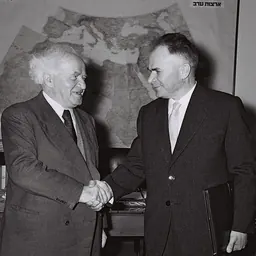
People in Wu Xiuquan's life
Named in this biography and alive at the same time





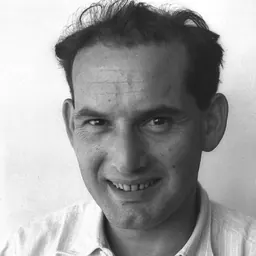
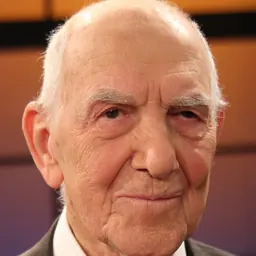
Related people
Same field, nearest in time

Contemporaries
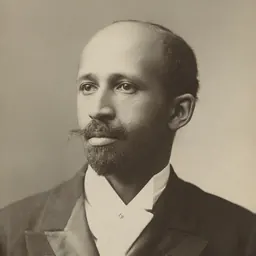
People whose lives overlapped Wu Xiuquan's


Frequently asked questions
Who was Wu Xiuquan?
Chinese diplomat and politician, Vice Foreign Minister of China
When was Wu Xiuquan born?
Wu Xiuquan was born on 6 March 1908 in Wuchang District.
When did Wu Xiuquan die?
Wu Xiuquan died on 9 November 1997 in Beijing.
What was Wu Xiuquan's occupation?
Wu Xiuquan was a diplomat, politician and military officer.
What nationality was Wu Xiuquan?
Wu Xiuquan was Chinese.
Sources & further reading
Cite this page
APA: Biography.guide. (2026). Wu Xiuquan. https://biography.guide/wu-xiuquan/
MLA: "Wu Xiuquan." Biography.guide, https://biography.guide/wu-xiuquan/.
Chicago: "Wu Xiuquan." Biography.guide. https://biography.guide/wu-xiuquan/.
Data last updated: 2026-09-26 · Spot an error? Report a correction.
Page generated 2026-09-27 05:14 UTC