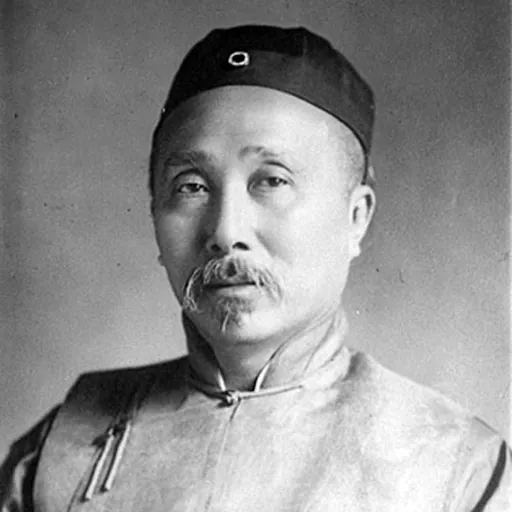
About Wu Ting-fang
Lived 1842 – 1922 (aged 79). Wu Ting-fang was a Chinese and British diplomat, justice of the peace, politician, jurist, lawyer and calligrapher.
Wu Ting-fang (; 30 July 184223 June 1922) was a Chinese calligrapher, diplomat, lawyer, politician, and writer who served as Minister of Foreign Affairs and briefly as Acting Premier during the early years of the Republic of China. He was also known as Ng Choy or Ng Achoy .
Education and career in Hong Kong
Wu was born in the Straits Settlement, now modern-day Malacca, in 1842 and was sent to China in 1846 to be schooled. He studied at the Anglican St. Paul's College, in Hong Kong where he learned to read and write in English. After serving as an interpreter in the Magistrate's Court from 1861 to 1874, he married Ho Miu-ling (sister of Sir Kai Ho) in 1864.
He studied law in the United Kingdom and was called to the bar at Lincoln's Inn (1876). Wu became the first ethnic Chinese barrister in history. He returned to Hong Kong in 1877 to practise law. He was admitted as a barrister in Hong Kong in a ceremony that May before Chief Justice John Smale who observed:
I am glad to see a Chinaman running in the race the most highly intellectual in the world. I am glad to see that a Chinaman ... has become a member of the English Bar. In England, every office becomes open to talent without favour or affection. A distinguished American statesman has become, and now is an ornament of the English bar, and all the Bar will gladly hail the time when a Chinaman shall distinguish himself as much as the eminent counsel to whom I refer. I have seen stranger things happen. In 1880, Wu became the first ethnic Chinese Unofficial member of the Legislative Council of Hong Kong To further this end, he wrote America, Through the Spectacles of an Oriental Diplomat in English in 1914.
Wu is mentioned several times in the diaries of Sir Ernest Satow who was British Envoy in China, 1900–06. For example, on 21 November 1903: "Wu Tingfang came in the afternoon, and stopped talking for an hour and a half about his commercial code and connected subjects. His idea is to draft also a new criminal code, and put both into force at the outset in the open ports."
Wu had an opportunity to implement his ideas about Chinese law reform between 1903 and 1906, when he (together with Shen Jiaben) were put in charge of reforming the Qing imperial code. His efforts included modernising the criminal code and abolishing inhumane methods of capital punishment such as death by a thousand cuts, decapitation and posthumous execution, and use of torture in interrogations. He also reformed the governmental structure for the administration of justice, ending the traditional combined approach. Sun Yat-sen praised Wu's contributions, saying that he began a "new epoch" for Chinese criminal law.
In an interview with American journalist Marguerite Martyn, Wu Tingfang argued in favor of women's suffrage.
Service post Xinhai Revolution He supported the Xinhai Revolution of 1911 and negotiated on the revolutionaries' behalf in Shanghai. He served briefly in early 1912 as Minister of Justice for the Nanjing Provisional Government, where he argued strongly for an independent judiciary, based on his experience studying law and travelling overseas. After this brief posting, Wu became Minister of Foreign Affairs for the ROC. He served briefly in 1917 as Acting Premier of the Republic of China.
In 1915, Wu was the President of the Far Eastern Athletic Association, which sponsored the Far Eastern Championship Games.
He joined Sun Yat-sen's Constitutional Protection Movement and became a member of its governing committee. He advised Sun against becoming the "extraordinary president" but stuck with Sun after the election. He then served as Sun's foreign minister and as acting president when Sun was absent. He died shortly after Chen Jiongming rebelled against Sun in 1922.
Vegetarianism
Wu was a vegetarian who consumed eggs and milk (ovo-lacto vegetarian). He believed that a non-flesh diet would prolong his life and he would live over a hundred years. Wu abstained from alcohol and tobacco after reading Mary Foote Henderson's book The Aristocracy of Health. He gave speeches on vegetarianism and authored an article "How I Expect to Live Long", published in November 1909 for the Ladies' Home Journal.
Wu founded the Rational Diet Society in Shanghai, also known as the Society for Cautious Diet and Hygiene (Shenshi Weisheng Hui) with Li Shizeng in September, 1910. It was the first vegetarian organization in Shanghai and had about 300 members. The society met at Wu's residence for lectures on the dangers of alcohol, meat-eating and tobacco.
Death
Wu died on 23 June 1922 from pneumonia at the age of 79.
Wu's tomb was moved to Yuexiu Hill in Guangzhou in 1988, where it forms an ensemble with the tomb of his son Wu Chaoshu and the memorial tablet bearing an inscription by Sun Yat-sen dedicated to Wu Tingfang.
In popular culture Wu is caricatured in "The Chinese Minister Wu", one of the Mr. Dooley columns of Finley Peter Dunne, where he is depicted bamboozling "Sicrety iv State Hay".
Selected publications
How I Expect to Live Long (1909) America and the Americans: From a Chinese Point of View (1914) America: Through the Spectacles of an Oriental Diplomat (1914) American Manners (1915)
Don’t just read it —
keep it.
Full-length biographies made to live with: read them, listen on the way to work, watch them tonight.
- E-book
- Audio
- Video
Instant download · yours to keep · every purchase keeps this site free
Important facts
Family & relationships
People in Wu Ting-fang's life
Named in this biography and alive at the same time



Related people
Same field, nearest in time

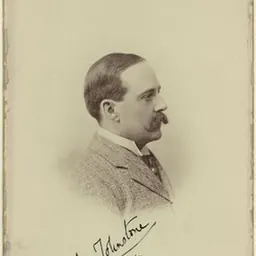
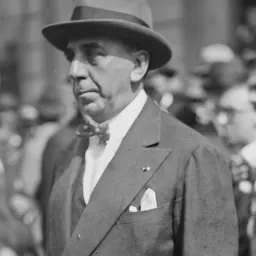
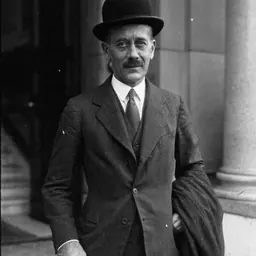
Contemporaries
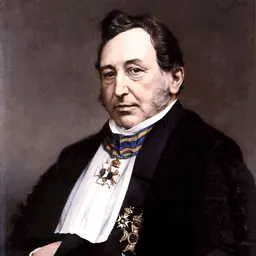
People whose lives overlapped Wu Ting-fang's

Frequently asked questions
Who was Wu Ting-fang?
Premier of the Republic of China (1842-1922)
When was Wu Ting-fang born?
Wu Ting-fang was born on 30 July 1842 in Straits Settlements.
When did Wu Ting-fang die?
Wu Ting-fang died on 23 June 1922 in Guangzhou.
What was Wu Ting-fang's occupation?
Wu Ting-fang was a diplomat, justice of the peace, politician, jurist, lawyer and calligrapher.
What nationality was Wu Ting-fang?
Wu Ting-fang was Chinese and British.
Sources & further reading
Cite this page
APA: Biography.guide. (2026). Wu Ting-fang. https://biography.guide/wu-ting-fang/
MLA: "Wu Ting-fang." Biography.guide, https://biography.guide/wu-ting-fang/.
Chicago: "Wu Ting-fang." Biography.guide. https://biography.guide/wu-ting-fang/.
Data last updated: 2026-09-20 · Spot an error? Report a correction.
Portrait: Wikimedia Commons · author & licence
Page generated 2026-09-27 04:57 UTC