
About Woo Sang-ho
Born 1962. Woo Sang-ho is a South Korean politician.
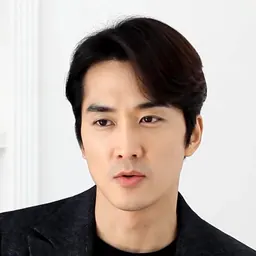
Woo Sang-ho (, born 12 December 1962) is a South Korean activist and politician who has served as the governor of Gangwon State since 2026. A member of the Democratic Party of Korea (DPK), he previously served as the party's floor leader from 2016 to 2017 and as its interim leader from June to August 2022. He was the member of the National Assembly for Seodaemun A from 2004 to 2008 and from 2012 to 2024.
Woo was born in Cheorwon, Gangwon, and raised in Seoul, where he attended Yongmoon High School. He joined student movements and took a crucial role during the June Struggle, while studying the Korean language at Yonsei University. Following his graduation in 1989, he joined politics during 1995 local elections. He first contested in 2000 election for Seodaemun A constituency but lost to Lee Sung-heon.
He was firstly elected in 2004, but lost again in 2008. After coming back to the National Assembly in 2012, he became the parliamentary leader of the Democratic Party in 2016. He took a crucial role during the 2016 political scandal that triggered the impeachment of the then President Park Geun-hye. He worked close to the Democratic presidential candidate Moon Jae-in who was elected in 2017.
In the 2018 local elections, Woo was one of the favorite candidates for the Seoul mayorship. He contested the Democratic preselection but lost to the then-Mayor, Park Won-soon. Following the death of Park in 2020, he ran again for Democratic preselection for the same position for the 2021 election but lost to Park Young-sun.
Early life and education Woo Sang-ho was born on 12 December 1962 in Cheorwon, Gangwon. He is the youngest of the three sons and a daughter of Park Byung-hui (died in 2013), a health centre worker. He later described himself as "too poor" during these times and also revealed that he never had his own room until his marriage. He then attended Yonsei University, where he studied Korean language. or Korean teacher.
In 1984, his second elder brother became disabled after a traffic collision. He then committed suicide.
Early career and political activities Woo's interest in politics had began in 1979, when President Park Chung Hee was assassinated.
On 13 April 1987, the then President Chun Doo-hwan announced that the upcoming presidential election would be an indirect election as usual under the incumbent constitution. The announcement, oppositions and activities strongly objected to, provoked the June Struggle. A day before, they held a practical protest at Yonsei University, but one of the member Lee Han-yeol, who was also a junior to Woo, collapsed to the ground after a tear gas fired by the suppression forces hit his head. He was immediately brought to a hospital but died on 5 July after being in coma for about a month. and kept his portrait along with Woo Hyun and Ahn Nae-sang; both are now actors. Although he did not contest, he gave his support to a Seoul mayoral candidate.
Woo contested the 2000 election for the Seodaemun A constituency. A year before, the then incumbent MP Kim Sang-hyun was seeking re-election, but also showed his intention that the upcoming new party (later named as the Millennium Democratic Party; MDP) should hold a preselection for the constituency. As Woo was likely to be the candidate for the constituency, Kim condemned the party and showed an opinion polling that indicated that Kim was more capable than Woo. Despite Kim's criticism, Woo officially won the MDP preselection on 17 February. Kim did not accept the result and subsequently withdrew from the MDP. He later joined the newly formed Democratic National Party.
As the MDP candidate, Woo contested against the GNP candidate Lee Sung-heon, his senior whom he met at Yonsei University. Woo gained popularity under the slogan "Young politics, clean politics" Following the election, he briefly worked as a visiting researcher at Colorado State University in 2001. Roh then was officially elected the MDP presidential candidate, but was challenged within the party following the party's huge defeat in 2002 local elections, as well as the appearance of Chung Mong-joon. Several party members including Kim Min-seok (a former Seoul mayoral candidate who lost to Lee Myung-bak) against Roh quit the party and formed the Council for a Unity Candidate (CUC) that endorsed Chung. Several MPs accused CUC and established the National Participation Movement Headquarter, where Woo was its Deputy Head, to support Roh.
The MDP was, however, under crisis after Roh took an oath as the President of the Republic. MPs from both the MDP and the GNP who sought political reforms subsequently left the party. Roh himself also quit the MDP on 29 September 2003. In October, Woo was also one of the MPs withdrawn from the MDP. They established a new party named the Uri Party, but Roh did not join until 2004.
First term as Member of the National Assembly (2004–2008) The 2004 election was held amid the controversial impeachment of Roh Moo-hyun. The de facto ruling Uri Party was expected to win the majority. In the election, Woo contested again for Seodaemun A constituency against the then incumbent MP and the GNP candidate Lee Sung-heon. Woo was leading in various polls and on 15 April, and he successfully defeated Lee.
During his first year, the abolition of the controversial National Security Act had been an crucial issue in politics. Many Uri MPs, including Woo, supported abolition. but the vote failed to pass amid the internal conflicts and strong oppositions from the GNP. The party leadership immediately faced harsh criticism and collapsed on 3 January 2005.
Prior to the 2006 local elections, Woo was appointed the new Spokesperson of the Uri Party under the new Chairman Chung Dong-young. After the party had chosen the former Justice Minister Kang Kum-sil as its Seoul mayoral candidate, Woo subsequently joined her campaign. However, the election was a crushing defeat of the Uri Party, where the party only secured the North Jeolla governorship. Kang, who was leading the early polls, lost to the GNP candidate Oh Se-hoon by a wide margin.
In the 2008 election, Woo faced his second rematch against Lee Sung-heon. He promised to make Seodaemun as the "district of prestigious education", as well as opposing Yeonhui-dong Chinatown masterplan proposed by the Seoul Mayor Oh Se-hoon. amid high popularity of the new government of Lee Myung-bak. On 9 April, he received 28,142 votes (43.50%) and lost to Lee.
Extra-parliamentary career and return (2008–2012) On 14 August 2009, after about a year he lost, Woo was appointed the new Spokesperson of the Democratic Party following the resignation of Kim Yoo-jung. His return was regarded as the return of the 386 Generation. Though many opinion polls showed that both candidate were neck and neck or Woo came behind to Lee, Woo was leading in the exit polls (Woo: 56.3%, Lee: 43.7%). In the end, he received 40,481 votes and defeated Lee, making a comeback to the National Assembly after 4 years.
Parliamentary leader of the Democratic Party (2016–2017) Election In the 2016 election, the main 2 opposition parties — the Democratic Party, and the People's Party, won a majority upset victory. Woo again defeated Lee Sung-heon in his 5th matchup since 2000. On 29 April 2016, shortly after his re-election as an MP, Woo officially launched his bid for the Democratic Party parliamentary leadership. In the declaration, he mentioned that the election result (where the ruling Saenuri Party lost majority) was the people's mandate and urged the oppositions to unite against the ruling party. Since no candidates received a majority, a second round of voting was held in the afternoon. Several sources analysed that Woo Sang-ho was widely supported by both pro-Roh Moo-hyun and pro-Moon Jae-in factions. Since non-conservative oppositions held majority seats, the Democratic Party had gained a chance to take the speakership, as well as most of the committee presidencies. was taken by the Democratic Party during the last session (2012–2016), but was handed over to the Saenuri Party in this time.
Parliamentary leadership On 8 May, Woo appointed 11 deputy parliamentary leaders, Lee Hoon (Planning Cluster), Back Hye-ryun (Law Cluster), Song Ki-hun, Kang Byung-won, Park Jeung, Yoo Dong-soo, Mun Mi-ock, An Ho-young, Oh Young-hun, Choi In-ho and Kim Byung-wook. All of them were first-term MPs from both pro-Roh Moo-hyun and pro-Sohn Hak-kyu factions. The main reason of its adoption was "to suggest alternatives for the 9-year conservative governments' economic failures". The incident provoked controversy, and on 26 May 2016, the Democratic Party promised to hold a hearing session to find the truth of the case.
However, as there were no progress, Woo criticised the Park Geun-hye administration for being "not cooperative" on 22 July. He also emphasised that a special hearing session must be held, and the people in charge should be responsible. He told them that in case the Saenuri Party kept rejecting a hearing session, 3 opposition parties — Democratic, People's, and Justice, would proceed to reveal the truth. Initially, Woo urged the government to hold a hearing that includes both, Instead, both the Saenuri Party and the oppositions agreed to hold a hearing session of Baek Nam-gi. Kang Shin-myung, the former National Police Agency Commissioner General during the incident, refused to apologise as "the incident occurred amid violent demonstration". The government's suggestion of a postmortem was harshly criticised by the bereaved family members and opposition politicians. Woo showed objeced towards the postmortem, indicating that "There's already a video recording his collapse, as well as medical opinions."
Corruption Investigation Office for High-ranking Officials On 19 July, Woo agreed with Park Jie-won, the then parliamentary leader of the People's Party, regarding an issue related to the proposed Corruption Investigation Office for High-ranking Officials (CIO). Two days later, Woo indicated that "various prosecution reforms were discussed but were never happened due to the strong objection from the Saenuri Party". He added that the establishment of the CIO is to enhance the South Korean democracy, as well as to get rid of corruptions from high-ranking officials. after the Democratic Party's overwhelming victory in the 2020 election.
2016 political scandal
On 25 October 2017, Woo revealed to SisaIN what he had done during the political scandal in 2016. According to the interview, after he received reports related to Choi Soon-sil in July 2016, he formed a private task force with Cho Eung-cheon, Sohn Hye-won and Do Jong-hwan. Lee stopped his protest after a week, and the Saenuri Party returned to the inspection. following a report of JTBC about Choi Soon-sil on 24 October. Various netizens, students, celebrities and politicians urged Park to step down. Thousands and millions of people demonstrated against the government.
Rather than impeach her from the beginning, Woo set three-level strategies: go away-resign-impeach. He later told SisaIN that Park visited the National Assembly Proceeding Hall on 8 November and said, "the new Prime Minister will be elected by the National Assembly, and will oversee the Cabinet". On 21 November, both the Democratic Party and the People's Party agreed to impeach Park. On the other hand, a confrontation happened between two parties, as the Democratic Party supported the impeachment vote on 2 December, while the People's Party wanted it on 9 December. The latter was confirmed following a negotiation with the 2 parties and the Justice Party. Woo later revealed to SisaIN that if the former was adopted, the oppositions might not get enough votes from the Saenuri MPs. The same day, a photo was taken, where Woo raised his right hand in greeting to someone. The photo has later become viral as the "someone" was a bereaved family member to a victim of the MV Sewol tragedy.
The impeachment of the first female president of the country provoked the snap presidential election on 9 May. In the election, Moon Jae-in, the most favourable candidate, was elected the new President of the Republic.
Democratic in government (2017–2022) Following the inauguration of the new President Moon Jae-in, it was rumoured tha Woo would be appointed as the new Minister of Unification. He denied the claim, saying that "those fresh and capable talents should be the ministers." On the other hand, when a cabinet reshuffle was announced on 8 March, his name was excluded. Initially, the Democratic Party spokesperson Lee Hae-sik said that the party President Lee Hae-chan dissuaded Woo for entering the Cabinet. On 11 March, Lee revealed that the Blue House was not willing to appoint too many long-term MPs into the Cabinet.
In the 2020 election, Woo faced the 6th challenge from Lee Sung-heon, whom he defeated with 47,980 votes.
On 8 June 2021, Woo was one of 12 MPs expelled or received a "quit order" from the party. This was following a controversy of breaching the Agricultural Land Act. He, however, did not accept the party's decision, indicating that he is farming at there. In the election, however, its presidential candidate Lee Jae-myung, ended up with losing to Yoon Suk-yeol. On 15 March, Woo announced he would not conteset for Seoul mayorship at the June local elections in order to take responsibilities for the party's defeat at the presidential election. Instead, he was considered a potential candidate for Gangwon governorship, although the former Governor Lee Kwang-jae became the candidate.
Interim President of the Democratic Party (2022) Following the crushing defeat of the Democratic Party at the June local election, Woo was unanimously nominated interim President of the Democratic Party.
On 13 June, the temporary leadership body was established, including Seo Nanyee, who was elected Member of the North Jeolla Provincial Council at the local election on 1 Jule; she is also the youngest councillor.
Governor of Gangwon State (2026–present) Woo was elected as Governor of Gangwon State in the 2026 South Korean local elections. He defeated People Power Party nominee Kim Jin-tae with 51.8 percent of the vote. Woo pledged to attract younger residents to the region by improving the local economy and living conditions.
Seoul mayorship bid First bid (2018)
On 21 January 2018, Woo announced his intention to run for the Seoul mayorship in the upcoming local election. He was the first Democratic pre-candidate to launch a bid. He cited that the gap between so-called "3 districts of Gangnam (Gangnam, Seocho and Songpa)" and the rest has become wider, and pledged he would balance both areas. Park Won-soon was officially selected as the Democratic Seoul mayorship candidate with 66.26%. and this was applicable for both Woo Sang-ho and Park Young-sun. The day, Woo conceded his defeat and congratulated to Park Won-soon.
On 13 December 2020, Woo again announced his intention to run for the Seoul mayorship. He also became the first Democratic pre-candidate to launch a bid in that race. Move all parts of the Seoul Underground to basement Supply 160 thousands of public housings within the city Ban all diesels until 2030, as well as new registrations of petrol cars
On 5 February 2021, the Democratic Party has confirmed that Woo Sang-ho and Park Young-sun would be the pre-candidate for preselection.
On 23 February, Woo visited the Korean Confederation of Trade Unions (KCTU) Seoul branch. He said, "I was supposed to join labour movements, but then shifted to student movements because all of my juniors were arrested." On 7 February, he met Chung Bong-ju, the ODP pre-candidate, and again agreed to put a single candidate but with a condition, which is that both parties must be merged.
Endorsements On 4 January 2021, Woo was endorsed by the former Chief of Staff to the President Im Jong-seok.
On 17 February, Kwak Sang-uhn, the son-in-law to the former President Roh Moo-hyun, endorsed Woo.
Result Woo received 30.44% of the vote and lost to Park Young-sun, who obtained 69.56%, in the Democratic preselection on 1 March. He was defeated by Park in both party member votes and opinion polling. He is regarded as a "factionless" politician. Nevertheless, he categorises himself as pro-Roh Moo-hyun.
LGBT issues Prior to 2021 Seoul mayoral election, Woo joined a meeting held at the National Assembly Proceeding Hall, along with Park Young-sun and the Democratic Party president Lee Nak-yon. When he was questioned by reporters regarding Queer Culture Festival, he replied, "I haven't considered the issue as I'm not elected yet, but will think about." On 20 March 2009, he posted on his website about the past life at prison. His decision was criticised by several activists.
North Korea After being elected the parliamentary leader in 2016, Woo promised, "I will say what I have to say to North Korea." He denounced the 7th Congress of the Workers' Party of Korea as "illogical", adding that "denuclearisation while boosting nuclear armament is an unacceptable double standard." He indicated that the relationship between North Korea and the United States would deteriorate due to the preemptive shootings of North Korea.
In June 2022, Woo criticised the President Yoon Suk-yeol for watching a film titled Broker at a cinema after North Korea launched a rocket.
China At the beginning of the COVID-19 pandemic, the South Korean government prohibited the entry of all foreigners who visited Hubei starting from 4 February 2020. While several politicians criticised the decision as "too late", Woo appeared on Kim Ou-joon's News Factory on 3 February and expressed support.
Japan In February 2013, Woo held Dokdo Photography Exhibition at the National Assembly Proceeding Hall for 3 days (20–22) to protest against Japan's so-called "Takeshima Day" celebrations. He condemned the Shimane prefectural government for infringing of South Korea's sovereignty. This incident was revealed after Lim Su-kyung described it on the Internet.
Song Seung-heon's national service issue On 27 October 2004, several Uri Party MPs from the Culture and Tourism Committee including Woo had sent a letter to the Military Manpower Administration (MMA); the letter urged the MMA to delay the enlistment date of an actor Song Seung-heon so he could be cast in a drama named Sad Love Story. During that time, Song was criticised for defaulting the national service. Woo indicated, "If the issue is not settled, there will be negative consequences to the Korean wave." He was subsequently criticised online.
Song was replaced to Yeon Jung-hoon following the incident.
Violations of COVID-19 standard operating procedures On 4 February 2021, Woo again provoked controversy when he took a photo with 15 other people including other MPs and several district mayors in Seoul at Sindorim Station. In the photo, all of them were holding hands with eachother without practicing social distancing.
On 8 April, a day after the by-election, Woo was reported that he and his companion were drinking with 4 other people at a BBQ restaurant in Central District, Seoul, which is not allowed under the law (only up to 5 people per table are allowed). Regarding this incident, he explained that he went to the restaurant along with 3 other people to have a dinner, but 4 people at another table described themselves as his "supporter", so he sat there for 5 minutes. He wrote, "I've seen Ms Kang Nan-hee's letter reported on media. Park Won-soon is my comrade from now (when I'm writing this post) till my death." Oh Shin-hwan, another PPP pre-candidate, denounced Woo that "he would like to provoke another harassments" and urged him to immediately resign. Following the public criticisms, Woo explained that he was consoling Park's bereaved family members and not advocating the late's sexual harassments.
Personal life Woo married Lee Hyun-joo
Woo is also a Protestant and the incumbent Deacon of Yeonhui-dong Church.
He is a smoker.
On 27 December 2020, Woo had close contact with a COVID-19 patient during an event. Although he tested negative, he underwent a 14-day voluntary self-quarantine.
Works Books Bumpkin (2004)
Essays If I Can Be Anything in the World (2016)
Election results General elections Year Elections Constituency Political party Votes (%) Results 2000 16th National Assembly General Election Seodaemun A (Seoul) MDP 33,259 (45.16%) Defeated 2004 17th National Assembly General Election Seodaemun A (Seoul) Uri 38,795 (46.06%) Won 2008 18th National Assembly General Election Seodaemun A (Seoul) UDP 28,185 (43.49%) Defeated 2012 19th National Assembly General Election Seodaemun A (Seoul) DUP 40,481 (54.36%) Won 2016 20th National Assembly General Election Seodaemun A (Seoul) Democratic 42,972 (54.88%) Won 2020 21st National Assembly General Election Seodaemun A (Seoul) Democratic 47,980 (53.24%) Won
Local elections Governor of Gangwon Year Elections Constituency Political party Votes (%) Remarks 2026 9th Iocal Election Gangwon(Governoral Elections) Democratic 437,583 (51.81%) Won
Don’t just read it —
keep it.
Full-length biographies made to live with: read them, listen on the way to work, watch them tonight.
- E-book
- Audio
- Video
Instant download · yours to keep · every purchase keeps this site free
Important facts
People in Woo Sang-ho's life
Named in this biography and alive at the same time


Related people
Same field, nearest in time


Contemporaries
People whose lives overlapped Woo Sang-ho's




Frequently asked questions
Who is Woo Sang-ho?
South Korean politician (1962-)
When was Woo Sang-ho born?
Woo Sang-ho was born on 12 December 1962 in Cheorwon County.
What is Woo Sang-ho's occupation?
Woo Sang-ho is a politician.
What nationality is Woo Sang-ho?
Woo Sang-ho is South Korean.
Sources & further reading
· DBpedia: Woo Sang-ho (politician)
Cite this page
APA: Biography.guide. (2026). Woo Sang-ho. https://biography.guide/woo-sang-ho/
MLA: "Woo Sang-ho." Biography.guide, https://biography.guide/woo-sang-ho/.
Chicago: "Woo Sang-ho." Biography.guide. https://biography.guide/woo-sang-ho/.
Data last updated: 2026-09-20 · Spot an error? Report a correction.
Page generated 2026-09-27 05:30 UTC