
Wong Shun Leung
Martial artist
About Wong Shun Leung
Lived 1935 – 1997 (aged 61). Wong Shun Leung was a Chinese martial artist.
Wong Shun-leung (; 8 May 1935 – 28 January 1997) was a Hong Kong martial artist who studied Wing Chun kung fu under Yip Man (葉問) and was credited with training Bruce Lee. In interviews, Wong claimed to have won at least 60, and perhaps over 100, street fights against martial artists of various styles, though these numbers cannot be independently confirmed. Due to his reputation, his students and admirers referred to him as 'Gong Sau Wong' (講手王 or 'King of Talking Hands'). Wong recorded one instructional film entitled Wing Chun: The science of in-fighting.
Early martial arts training Wong reportedly trained in several martial art styles in his youth, primarily in Tai Chi and either boxing or kickboxing. He abandoned boxing because of two incidents: one with his boxing coach and one with Ip Man. In another account, however, Wong said he had defeated his boxing coach with wing chun techniques: "I was sparring with my instructor and I hit him very hard, he got real mad and came at me very hard. I fought back with wing chun and he ended up bleeding. Boxing was over for me!"
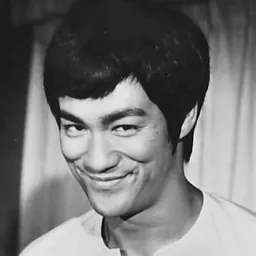
Bruce Lee once wrote in a letter to Wong, "Even though I am (technically) a student of Ip Man, in reality I learned my Kung-fu from you." which has been translated into English as an appendix to an article by Wong.
In 1970 Bruce Lee wrote a letter in Chinese to Wong Shun-leung:
Official recognition by China in 1996 as Science of Ving Tsun Kung Fu In October 1996, National Sports Administration of China invited Wong Shun-leung (together with 12 students) to Beijing to teach and to promote Wong's Ving Tsun to the Chinese peoples, the seminar turn out very successful with nearly 200 registered participants and among them were martial arts experts, enthusiast, police and army individuals. After the weeklong training with Wong and Wong's students, both organizer and participants unanimously acknowledged that Wong's Ving Tsun is not just an ordinary fighting skill but something deep, significant and highly effective, since then Wong's fighting system became known as 咏春拳学 in Chinese, Ving Tsun Kuen Hok in Cantonese of Hong Kong and Science of Ving Tsun Kung Fu in English, today WSLVT (Wong Shun Leung Ving Tsun) is widespread in mainland China and worldwide.
Fighting career
Beimo (比武) competition According to Wong and his students, he became active in beimo (比武): semi-organized bare-knuckle challenge fights in Hong Kong (sometimes known as 'kung fu elimination contests'). Supposedly there were no rules, protective equipment, or time limits.
According to Yuen Yim-keung, there were three two-minute rounds with a one-minute rest in between. The ring was five meters in diameter, which was drawn in chalk, and as a result if the opponent went out of the ring more than three times he would be announced as the loser. There were also no attacks to the eyes, throat or groin, but everything else could be applied. Also if there was excessive blood loss, then the injured fighter would be announced as the loser.
In the early 1950s, compared to other kung fu styles, wing chun was hardly known. It was a style of kung fu practiced by a minority—mostly members of the Association of Restaurant Workers of Hong Kong. Different kung fu schools met secretly with each other for challenge matches. Wong was said to have faced opponents from many disciplines—"virtually every style of martial art in the colony." Wong's prowess in beimo helped him convince his secondary school classmate, Wu Chan-nam, to become his first student—Wu witnessed his win in a beimo match. In addition, he encouraged his junior fellow students and his own students to compete in beimo competitions and arranged matches for them. reports that Wong defeated Giko, and that Wong himself told Smith how he was able to achieve this victory. Lee Hang-cheong (李恆昌), one of Wong's students, recalled that Wong had insulted his intended opponent (apparently a well-known kung fu instructor) to coerce him to fight, but regretted both instigating the fight and accidentally blinding the other man in one eye. There is a discrepancy between Lee's account and others about Wong's age when he retired from beimo competition. A few sources claim that Wong competed in beimo until the age of 32. According to Life and Legend of Bruce Lee, there was always supposed to be a referee present at a beimo match, as Wong re-enacted the scene of a 1950s beimo match on a rooftop and played the role of the referee.
Other competitions On 22 November 1957, the inaugural Taiwan–Hong Kong–Macau Open Chinese Kung Fu Competition (台港澳國術比賽) was held in Taiwan. Thirty-two competitors from Hong Kong and Macau formed a team and participated in this competition, but only two Hong Kong competitors scored a victory. Wong competed in his weight class and had a preliminary match with Wu Ming Jeet (吳明哲), a Taiwanese fighter known for his powerful kicks, but was knocked out and eliminated. Gary Lam recounted that "several years ago my Sifu, the late Wong Shun-leung, sparred with a champion western fencer on television. Wong easily beat the fencer, and when the fencer complained Wong had an unfair advantage with two swords, Wong offered him a second blade and beat him again." It took place at Lee's home in Kowloon Tong. Wong claimed that his hands were faster acting than Lee's, however Bruce retaliated by saying his kicks were much faster, thus provoking the friendly scuffle. Wan commented that Lee's kicks were fast and powerful whilst Wong's wing chun hand techniques were modified and practical. Wong and Lee only fought for a short period of time.
Filmography
Enter the Dragon Some sources claim that Wong choreographed some fight scenes in Enter the Dragon (龍爭虎鬥), saying that "... when shooting Enter the Dragon in Hong Kong, he [Bruce Lee] invited Wong to come on location to discuss the fight scenes"
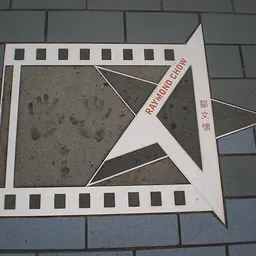
A photograph of Wong, Lee, and Raymond Chow (鄒文懐) on one of the sets of Enter the Dragon (the weapon room) implies that Wong was present during filming. and thus could have been from the time when Wong attended a screen test for Game of Death, as described below.
Game of Death Wong received an invitation to appear in Game of Death (死亡遊戲), but declined. He was scheduled to attend a screen test on the set of Enter the Dragon after Bruce Lee had finished shooting the film and was working on dubbing. Lee returned to Hong Kong from his last trip to the United States of America in late May 1973. In a 1986 interview, Wong said, "I told him (Bruce Lee) that I didn't want to go and die in my first movie! ... I wasn't in dire financial straits at the time, so I didn't have to do the film (just) to make money." He also starred in a training video, entitled Wing Chun: the Science of In-fighting, which was produced in the early 1980s.
Anthony Kan Attilio Reale: practiced Ving Tsun with Wong Shun-leung for 16 years; played the Ving Tsun Fighter in Bloodsport with Jean-Claude Van Damme; teaches advanced students in Munich, Germany Barry Lee Chiu Hok-yin Keo Chan (FR) Lam Kam-kuen Philip Ng Reto Cuorad Rick Cantrell Rolf Clausnitzer Tommy Yuen Yim-keung Wong Hong-chung (son of Wong Shun-leung) Other sources give his date of birth as 8 June 1935. The discrepancy is attributed to Wong's date of birth under the lunar calendar, i.e., the 8th day of the 5th lunar month.
Don’t just read it —
keep it.
Full-length biographies made to live with: read them, listen on the way to work, watch them tonight.
- E-book
- Audio
- Video
Instant download · yours to keep · every purchase keeps this site free
Important facts
People in Wong Shun Leung's life
Named in this biography and alive at the same time





Related people
Same field, nearest in time


Contemporaries
People whose lives overlapped Wong Shun Leung's



Frequently asked questions
Who was Wong Shun Leung?
martial artist
When was Wong Shun Leung born?
Wong Shun Leung was born on 8 May 1935 in British Hong Kong.
When did Wong Shun Leung die?
Wong Shun Leung died on 28 January 1997 in Hong Kong.
What was Wong Shun Leung's occupation?
Wong Shun Leung was a martial artist.
What nationality was Wong Shun Leung?
Wong Shun Leung was Chinese.
Sources & further reading
Cite this page
APA: Biography.guide. (2026). Wong Shun Leung. https://biography.guide/wong-shun-leung/
MLA: "Wong Shun Leung." Biography.guide, https://biography.guide/wong-shun-leung/.
Chicago: "Wong Shun Leung." Biography.guide. https://biography.guide/wong-shun-leung/.
Data last updated: 2026-09-20 · Spot an error? Report a correction.
Page generated 2026-09-27 05:15 UTC