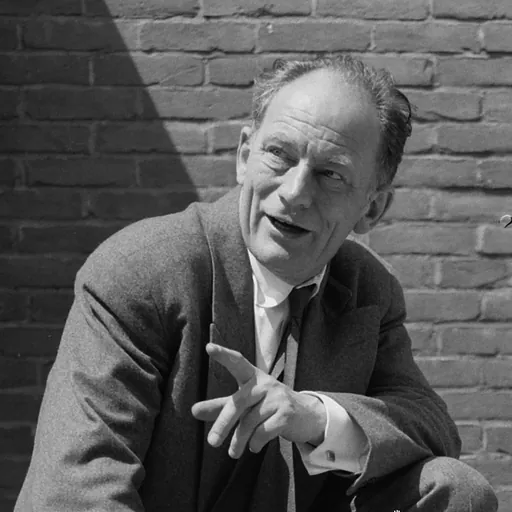
About Wolfgang Staudte
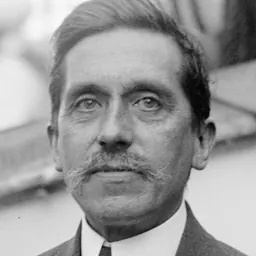
Lived 1906 – 1984 (aged 77). Wolfgang Staudte was a German film director, voice actor, screenwriter, film actor, stage actor and film producer.
Wolfgang Staudte (9 October 1906 – 19 January 1984), born Georg Friedrich Staudte, was a German film director, script writer and actor. He was born in Saarbrücken.
After 1945, Staudte also looked at German guilt in the cinema. Alongside Helmut Käutner, he was considered the only German post-war director of any standing who, after 1945, could look back on continuous artistic filmmaking far removed from Heimatfilm and the suppression of history. Staudte's films stood for politically committed cinema as well as for professional craftsmanship, for film art and (good) entertainment with a social claim.
His most important work came in the ten years following World War II, in which he worked with the DEFA in East Germany. The main focus of his work was to highlight the limits of German national pride. His work in anti-Nazi films, such as The Murderers Are Among Us (1946), was also a personal working-through of his film career under the Nazis (he acted in the antisemitic film Jud Süß). Following 1956, he worked in West Germany. By the 1970s, his work was no longer considered particularly modern and he moved to television. He appeared on shows such as Der Kommissar and Tatort.
He is the great-uncle of the German-Iranian director and novelist Andy Siege.
Filmography As director Film Bravo Acrobat! (1943) (1944) — based on a story by Johann von Vásáry (1944, lost film, rediscovered 1996) The Murderers Are Among Us (1946) The Adventures of Fridolin (1948) — remake of the lost film Der Mann, dem man den Namen stahl Rotation (1949) Second Hand Destiny (1949) A Tale of Five Cities (1951, anthology film) Der Untertan (1951) — based on the novel Der Untertan by Heinrich Mann Poison in the Zoo (directed by Hans Müller, 1952) (premiere: 1952, Überläufer from 1945) Die Geschichte vom kleinen Muck (1953) — based on the fairy tale Little Muck by Wilhelm Hauff Leuchtfeuer (1954) Ciske de Rat (Dutch-language, 1955) — based on the novel Ciske de Rat by Piet Bakker Ciske – ein Kind braucht Liebe (German-language, 1955) — based on the novel Ciske de Rat by Piet Bakker (1955, unfinished film) — based on Brecht's Mother Courage and Her Children Rose Bernd (1957) — based on Rose Bernd by Gerhart Hauptmann Escape from Sahara (1958) (1958) — screenplay by Ennio De Concini, Duccio Tessari and W. Staudte The Muzzle (1958) — based on a novel by Heinrich Spoerl Roses for the Prosecutor (1959) The Fair (1960) The Last Witness (1960) — based on a book by Maximilian Vernberg The Happy Years of the Thorwalds (co-director: , 1962) — based on Time and the Conways by J. B. Priestley The Threepenny Opera (1963) — based on Brecht's Threepenny Opera Destination Death (1964) (1964) — based on a story by Honour Among Thieves (1966) — based on a play by Charles Rudolph (1968) Gentlemen in White Vests (1970) Jailbreak in Hamburg (1971) (1978) Television Die Rebellion (1962, TV film) — based on the novel Rebellion by Joseph Roth (1966, TV film) Die Klasse (1968, TV film) — based on a novel by Hermann Ungar Die Gartenlaube (1970, TV film) — based on a play by Hermann Ungar Der Kommissar: Messer im Rücken (1970, TV series episode) Der Kommissar: ...wie die Wölfe (1970, TV series episode) (1970, TV series, 5 episodes) Die Person (1970, TV film) — based on a story by Der Kommissar: Besuch bei Alberti (1971, TV series episode) Der Kommissar: Ende eines Tanzvergnügens (1971, TV series episode) Der Kommissar: Die Anhalterin (1971, TV series episode) Der Kommissar: Lisa Bassenges Mörder (1971, TV series episode) Der Kommissar: Tod eines Ladenbesitzers (1971, TV series episode) (1971, TV miniseries) — based on The Sea-Wolf by Jack London Der Kommissar: Ein rätselhafter Mord (1971, TV series episode) Der Kommissar: Die Tote im Park (1972, TV series episode) (1972, TV film) — based on a novel by Raoul Anderland Marya Sklodowska-Curie (1972, TV film) — biographical film about Marie Curie Der Kommissar: Das Komplott (1973, TV series episode) Der Kommissar: Die Nacht, in der Basseck starb (1973, TV series episode) Der Kommissar: Ein Funken in der Kälte (1973, TV series episode) (1973, TV film) — based on a novel by Tatort: Tote brauchen keine Wohnung (1973, TV series episode) Ein fröhliches Dasein (1974, TV film) — screenplay by Robert Wolfgang Schnell Lehmanns Erzählungen (1975, TV film) — based on a story by Siegfried Lenz Schließfach 763 (1975, TV film) — screenplay by (1975, TV series, 13 episodes) (1975, TV miniseries) — based on Burning Daylight by Jack London Tatort: (1976, TV series episode) Um zwei Erfahrungen reicher (1976, TV film) — screenplay by Robert Wolfgang Schnell Prozeß Medusa (1976, TV film) — based on a novel by Tatort: Spätlese (1977, TV series episode) MS Franziska (1978, TV miniseries) Das verschollene Inka-Gold (1978, TV film) — based on a story by Jack London Feuerwasser (1978, TV film) — based on a play by Ulrich Becher Tatort: (1979, TV series episode) Iron Gustav (1979, TV miniseries) — based on the novel Iron Gustav by Hans Fallada Tatort: Schussfahrt (1980, TV series episode) Tatort: (1980, TV series episode) (1982, TV miniseries) (1983, TV series, 4 episodes) Solo Run (1983, TV film) — based on a novel by Hans Herlin Tatort: (1984, TV series episode) Der Snob (1984, TV film) — based on a play by Carl Sternheim So ein Theater (1984, TV film) (1985, TV miniseries)
As screenwriter The Axe of Wandsbek (dir. Falk Harnack, 1951) — based on a novel by Arnold Zweig As actor The Street Song (1931) Secret of the Blue Room (1932) Tannenberg (1932) Homecoming to Happiness (1933) Grand Duchess Alexandra (1933) The Hymn of Leuthen (1933) Stronger Than Regulations (1936) Susanne in the Bath (1936) Togger (1937) All Lies (1938) The Holm Murder Case (1938) By a Silken Thread (1938) D III 88 (1939) Shoulder Arms (1939) Legion Condor (1939) The Strange Woman (1939) Jud Süß (1940) Friedemann Bach (1941) Riding for Germany (1941) The Big Game (1942)
Don’t just read it —
keep it.
Full-length biographies made to live with: read them, listen on the way to work, watch them tonight.
- E-book
- Audio
- Video
Instant download · yours to keep · every purchase keeps this site free
Important facts
People in Wolfgang Staudte's life
Named in this biography and alive at the same time

Related people
Same field, nearest in time



Contemporaries
People whose lives overlapped Wolfgang Staudte's
Frequently asked questions
Who was Wolfgang Staudte?
German film director (1906-1984)
When was Wolfgang Staudte born?
Wolfgang Staudte was born on 9 October 1906 in Saarbrücken.
When did Wolfgang Staudte die?
Wolfgang Staudte died on 19 January 1984 in Žigrski Vrh, Maribor.
What was Wolfgang Staudte's occupation?
Wolfgang Staudte was a film director, voice actor, screenwriter, film actor, stage actor and film producer.
What nationality was Wolfgang Staudte?
Wolfgang Staudte was German.
Sources & further reading
Cite this page
APA: Biography.guide. (2026). Wolfgang Staudte. https://biography.guide/wolfgang-staudte/
MLA: "Wolfgang Staudte." Biography.guide, https://biography.guide/wolfgang-staudte/.
Chicago: "Wolfgang Staudte." Biography.guide. https://biography.guide/wolfgang-staudte/.
Data last updated: 2026-09-21 · Spot an error? Report a correction.
Portrait: Wikimedia Commons · author & licence
Page generated 2026-09-27 05:00 UTC