
About Wojciech Bobowski
Lived 1610 – 1675 (aged 64–65). Wojciech Bobowski was a Polish composer, painter, translator, diplomat, musicologist and bible translator.
Wojciech Bobowski or Ali Ufki (also Albertus Bobovius, Ali Bey, Santurî Ali Ufki; 1610–1675) was a Polish, later Ottoman musician and dragoman in the Ottoman Empire. He translated the Bible into Ottoman Turkish, composed an Ottoman Psalter, based on the Genevan metrical psalter, and wrote a grammar of the Ottoman Turkish language. His musicological works are considered among the most important in 17th-century Ottoman music.
Life Bobowski was born as a Pole in Bobowa near Gorlice. He was raised in a Protestant family and started a career as a church musician. At some point, he was captured by a Turkish prince as his sister was married to an Ottoman sultan.
Because he had enjoyed musical training and was capable of reading and notating music , he was sold to the court of sultan Murad IV (and later Ibrahim I and Mehmed IV), where he converted to Islam and became known as Alī Ufqī. At the court he served as an interpreter, treasurer and musician in the sultan's seraglio. He was also known to have mastered 17 languages, including Polish, Turkish, Arabic, Spanish, French, German, Greek, Hebrew, Italian, and Latin.
Around 1657, approximately 19–20 years after he was captured when on a voyage to Egypt, he regained his liberty, after which he lived in Egypt for some time. It is also likely he travelled on a pilgrimage to Mecca. After he gained his freedom he became one of the most important dragomans in the Ottoman Empire.
Works Bible translation Bobowski, or now Ufki, having been raised as a Christian and now being a convert to Islam, became deeply interested in religious issues. He translated the Anglican catechism into Ottoman Turkish, and wrote an explanation of Islam in Latin, in an attempt to increase the mutual understanding of both cultures.
Bobowski's translation of the Bible into Turkish, known as the Kitabı Mukaddes ("Holy Book") has for long been the only complete Turkish Bible and is considered one of his greatest achievements.
Psalter Having been raised in a Protestant family, Bobowski was familiar with the singing of the Genevan Psalms. This experience greatly influenced his composition of fourteen Turkish psalms.
In this small collection of psalms, known as Mezmurlar and released in 1665, Ali Ufki used original melodies from the Genevan Psalter, a commonly used Calvinist hymnbook. He classified them using the Turkish modal system and translated the texts into Ottoman Turkish. Because of certain features of French prosody, the Genevan melodies tend to be in asymmetrical meters, which makes them more similar to Middle Eastern music than much of other European music. Rhythmical intensity is likely one of the most important shared features, and their modal character facilitates their transformation into Turkish modes, as this can be done with only light changes in intonation. Ali Ufki's versions of the psalms are relatively simple; with careful attention paid to ensuring words are easy to understand and music is only the background.
In 2005, the King's Singers together with Sarband released a CD titled Sacred Bridges which includes recordings of Psalms 5, 6, and 9 from Ali Ufki's psalter.
Musical anthologies Among his achievements was the release of two manuscript anthologies of Ottoman music, known as Mecmûa-i Sâz ü Söz ("Collection of Instrumental and Vocal Works"). These anthologies contained both sacred and secular pieces, instrumental and vocal music, art music as well as traditional Turkish folk music. Only two manuscript copies survive: in the British Library and the Bibliothèque nationale de France . This work preserved for modern times several hundred classical Ottoman songs and instrumental pieces and is the first instance in which western staff notation was applied to Turkish music.
Other works In 1666, Bobowski also wrote a grammar of the Ottoman Turkish language. He also translated works of Hugo Grotius and Comenius into that language.
Don’t just read it —
keep it.
Full-length biographies made to live with: read them, listen on the way to work, watch them tonight.
- E-book
- Audio
- Video
Instant download · yours to keep · every purchase keeps this site free
Important facts
People in Wojciech Bobowski's life
Named in this biography and alive at the same time
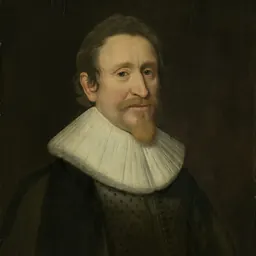
Related people
Same field, nearest in time

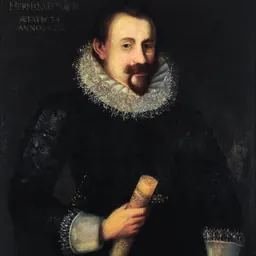

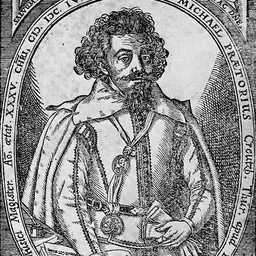

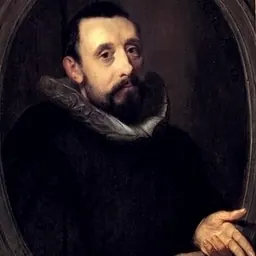
Contemporaries
People whose lives overlapped Wojciech Bobowski's






Frequently asked questions
Who was Wojciech Bobowski?
Polish-Ottoman musician (1610-1675)
When was Wojciech Bobowski born?
Wojciech Bobowski was born in 1610 in Lviv.
When did Wojciech Bobowski die?
Wojciech Bobowski died in 1675 in Constantinople, Istanbul.
What was Wojciech Bobowski's occupation?
Wojciech Bobowski was a composer, painter, translator, diplomat, musicologist and bible translator.
What nationality was Wojciech Bobowski?
Wojciech Bobowski was Polish.
Sources & further reading
· Wikipedia: Wojciech Bobowski
Cite this page
APA: Biography.guide. (2026). Wojciech Bobowski. https://biography.guide/wojciech-bobowski/
MLA: "Wojciech Bobowski." Biography.guide, https://biography.guide/wojciech-bobowski/.
Chicago: "Wojciech Bobowski." Biography.guide. https://biography.guide/wojciech-bobowski/.
Data last updated: 2026-09-20 · Spot an error? Report a correction.
Page generated 2026-09-27 05:27 UTC