
About Władysław Umiński
Lived 1865 – 1954 (aged 89). Władysław Umiński was an opinion journalist and writer.
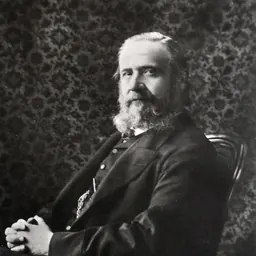
Władysław Jan Umiński (10 November 1865 – 31 December 1954) was a Polish journalist, fiction author, and science educator. An early science-fiction writer, he has been dubbed "the Polish Jules Verne" and recognized as a pioneer of Polish science fiction and adventure literature.
He authored around thirty novels and numerous popular science articles, blending scientific exploration with adventure narratives aimed at educating young readers, which is why much of his fiction is classed as young-adult literature. His writings also featured themes of exploration and adventure, emphasized technological innovation, patriotism, and moral progress, frequently featured Polish protagonists and advocated for Polish independence.
Umiński’s novels popularized concepts like aviation and space exploration in Polish literature, while his journalism spanned science, education, and literary criticism. Despite waning popularity posthumously, his contributions to Polish literature and education earned him accolades, including the Officer's Cross of the Order of Polonia Restituta in 1952.
Life Władysław Umiński was born 10 November 1865, in the Russian partition of Poland, at the village of Przedecz, He had three siblings. In 1874 the family moved to Warsaw, where he attended gymnasium and real school. At 15 he wrote his first fiction, the short story "Z Korsyki" ("From Corsica"), and published it in the magazine (The Children's Friend).
After obligatory service in the Imperial Russian Army (as a sapper), he studied in the Department of Natural Sciences at Saint Petersburg University. Due to financial difficulties, he could not realize his ideas in reality, which was one of his motivations for literary endeavours. He founded first registered aviation club in Poland (Kółko Awiatyczne), in Warsaw (sources vary with regard to the date: 1895 ). His 1911 novel popularized the modern Polish word for the airplane (samolot), which he is also credited with coining. However, around that time he was also in poor financial situation, as the communist regime at that time saw his works as ideologically suspect (he was criticized in particular for favorable portrayal of the United States), and did not support their republication, particularly as Umiński continued to try to get them published through the private Gebethner i Wolff publishing house at the time private enterprises were increasingly discriminated against. Some of his works were temporarily banned by the censorship agency. Another novel mostly finished near the end of his life, O własnych siłach (about wartime orphans) was never published and are now considered lost; Umiński also had plans for its sequel. A title of another planned novel of him he discussed in interviews in his last years was Zmora świata. His science fiction motif was tied to his intend to popularize science. His characters also resemble those of Jules Verne, an archetype which Niewiadowski and Smuszkiewicz called Nietzschean Übermensch. cited Flibustierowie (1898) and Krwawy chleb (1912) as particularly notable in this context.
From modern perspective, his works have been criticized for not delving into societal issues or transformation of future society, and his science fiction ideas have been noted to have been not particularly revolutionary or imaginative, rather, simple extrapolations and improvements of existing technologies (gramophones, submarines, aircraft). His 1895 novel also anticipates miniature sound-recording devices and explores one of early science fiction's recurring themes, the possibility of communication with extraterrestrial intelligence. Czarodziejski okręt (1916), meanwhile, portrayed an advanced civilian ship featuring a seaplane and long range wireless telegraphy or radio ("metatelephone"). His Krzyż i półksiężyc (1913) and (1925) are regarded as some of the earliest examples of Polish military science fiction. A similar view was endorsed 2013 by Damian Makuch, who noted that after Umiński's death his works suffered from lack of updating with regards to current technological developments, The comparison to Verne was made as early as 1895 by a reviewer writing for magazine . Smuszkiewicz did note that despite this comparison, Umiński's works are not as innovative with regards to both science fiction themes and the plot construction as those of Verne's, although he notes that his works had significant value in terms of educating youth about science and patrotism. He has also been compared to Henryk Sienkiewicz with regards to his action scenes.
Private life He married Anna Natalia Bejn, who died shortly before him in 1951. They had a daughter who died in 1945.
Selected works
The following list contains his fiction, and selective works of non-fiction works. His translations are omitted. Dates denote book publications; many works debuted a few years earlier in the serialized format. Zwycięzcy oceanu (1891, eight editions, and a translation to Czech ) Balonem do bieguna (1894, five editions and translations to French and Russian ) (1894, seven editions ) W nieznane światy (1895; retitled in later editions from 1913 as Na drugą planetę, nine editions, and translations to Hebrew and Russian) (1895, one edition) Przygody emigrantów w puszczy brazylijskiej (1895, one edition) (1896, two editions) . Opisy i przygody w podróży, dla młodzieży (1896, three editions and a translation to Hebrew) Od Warszawy do Ojcowa (1897, two editions) Z odmętów morskich (1897, one edition) . Przygody rozbitków pośród oceanu (1897, two editions) Ocean i jego tajemnice (1899) Nansen pośród lodów północy. Odczyt ludowy (1899) Na szczytach (1900, two editions) Podróż naokoło świata piechotą. T.1: (1900, three editions) (1901, one edition) (1901; later editions retitlled and split into Tajemnicza bandera and Flibustierowie; eight editions, a translation to Serbo-Croatian and a radio adaptation) . Przygody rodziny polskiej na dalekim Wschodzie (1903, two editions) Człowiek leśny. Opowiadanie podróżnika po Afryce (1903, one edition) Wygnańcy (1906, one edition) W czarnej otchłani. Kartka z życia górników (1908, one edition) (a three-volume series composed of Przygody małego Australczyka (1910), W puszczach Kanady (1921) and W krainie wschodzącego słońca (1911); several editions and a translation) (1911, three editions) Krwawy chleb (1912, one edition titled Znojny chleb), eight editions (1912, three editions) Krzyż i półksiężyc. Powieść dla młodzieży na tle ostatniej wojny bałkańskiej (1913, two editions) Po kraju (1913, two editions) Czarodziejski okręt (1916, three editions) Krwawa dola. Powieść z niedalekiej przeszłości (1918, one edition) (1919, one edition) (1920, three editions) Przygody łodzi podwodnej i inne opowiadania (1925, one edition) . Podróż skauta Jerzego Jelińskiego (1926, two editions) Zaziemskie światy (1948)
Don’t just read it —
keep it.
Full-length biographies made to live with: read them, listen on the way to work, watch them tonight.
- E-book
- Audio
- Video
Instant download · yours to keep · every purchase keeps this site free
Important facts
People in Władysław Umiński's life
Named in this biography and alive at the same time


Related people
Same field, nearest in time



Contemporaries
People whose lives overlapped Władysław Umiński's


Frequently asked questions
Who was Władysław Umiński?
Polish writer (1865–1954)
When was Władysław Umiński born?
Władysław Umiński was born on 10 November 1865 in Przedecz.
When did Władysław Umiński die?
Władysław Umiński died on 31 December 1954 in Warsaw.
What was Władysław Umiński's occupation?
Władysław Umiński was an opinion journalist and writer.
Sources & further reading
· Wikipedia: Władysław Umiński
Cite this page
APA: Biography.guide. (2026). Władysław Umiński. https://biography.guide/wladyslaw-uminski/
MLA: "Władysław Umiński." Biography.guide, https://biography.guide/wladyslaw-uminski/.
Chicago: "Władysław Umiński." Biography.guide. https://biography.guide/wladyslaw-uminski/.
Data last updated: 2026-09-25 · Spot an error? Report a correction.
Page generated 2026-09-27 05:12 UTC