
About Władysław Tarnowski
Lived 1836 – 1878 (aged 41). Władysław Tarnowski was an Austrian composer, poet, translator, pianist, writer and philosopher.
Władysław Tarnowski (June 4, 1836 – April 19, 1878 ), also known by his pen name Ernest Buława, was a Polish pianist, composer, poet, dramatist, and translator. Tarnowski was born in Wróblewice, an administrative district of Drohobycz in present-day Ukraine, to Count Walerian Spycimir Tarnowski and Ernestyna Tarnowska. As a young prodigy, he was introduced to Frédéric Chopin. Tarnowski studied in Lviv and Kraków, and with Daniel Auber at the Conservatoire de Paris. During the January Uprising of 1863-64 he wrote the song "Jak to na wojence ładnie" ("Isn't the War Fun"), which remains popular in several iterations. Tarnowski traveled widely, giving concerts in Wrocław in 1860 and 1875, Vienna, Venice and Florence in 1872, Paris in 1873, and Lviv in 1875. He toured the Middle East and Asia, lived in India, China, and Japan, and died near San Francisco on the steamer SS Pacific while returning from Japan. Fantasia quasi una sonata (violins and piano) Souvenir d'un ange (Vienna , published by V. Kratochwill)
Piano 3 Mazurkas (3 Mazurkas, Vienna , published by Bösendorfer), 2 pieces: Chart sans paroles, Valse-poeme (Leipzig , published by Ch. F. Kahut) Deux Morceaux: Fantazie-Impromptu, Valse-poeme Impromptu "L'adieu de l'artiste" (Vienna c. 1870, published by J. Gutmann) Symfonia d’un drammo d’amore (1871) Sonate pour piano composée et dediée a son ami Br. Zawadzki (Vienna c. 1875, publ. V. Kratochwill) Grande polonaise quasi rhapsodies symphonique (Vienna c. 1875, publ. J. Gutmann) Extases au Bosphor, fantasie rhapsodies sur les melodies orientales op. 10 (Leipzig c. 1875, publ. Forberg) Nocturne dédié à sa soeur Marie (Vienna, n.d.) Deux Nocturnes: "Nuit sombre", "Nuit claire"
Pensée funebre (before 1878) Andantino pensieroso ("Echo Muzyczne", Warszaw, issue 6, 17 December 1878.)
Songs
Solo: "Uhlans March" (also known as "Soldier's Song" and "March Soldier's Langiewicza"), beginning: "A kto chce rozkoszy użyć" ("And who wants pleasure to use"). Now better-known with the lyrics "Jak to na wojence ładnie". Published in Kieszonkowy słowniczek polski z melodiami (Poznan, 1889, J. Leitgebera) and as " War Song" (Lwow, 1908, B. Połoniecki).
With piano accompaniment: "Cypryssen 5 characterische Gesänge" (Vienna, 1870, Bösendorfera), with "Herangedämmert kam der Abend", "Die Perle", "Die Schwalben", "Im Traum sah ich das Lieben", and "Ich sank verweint in sanften Schlummer"
"Neig, o Schöne Knospe", for a poem by Mirza Shafi Vazeh
"Zwei Gesänge mit Begleitung des Pianoforte – Du buch mit Siegen Siegeln, Ob Du Nun ruhst", songs for a poem by Ludwig Foglar (Vienna c. 1870, V. Kratochwill)
"Zwei Gesänge: Klänge Und Schmerzen, Nächtliche Regung" (Leipzig, c. 1870, Ch. E. Kahnt) "Au soleil couchant" (1873), for a poem by Victor Hugo "Still klingt das Glöcklein durch Felder" (Vienna c. 1875, J. Gutmann)
"Kennst du die Rosen", for his own poem (J. Gutmann, Vienna)
"Mein Kahn", for a poem by Johann von Paümann (Hans Max; Wiedeń, Buchholz and Diedel) "Alpuhara" (1877), for a poem by Adam Mickiewicz
Stage Achmed the oder the Pilger the Liebe (Achmed, pielgrzym milości), with libretto, based on Washington Irving's "Legend of Prince Ahmed al Kamel, or The Pilgrim of Love" from Tales of the Alhambra. Piano extract (Leipzig, c. 1875, R. Forberg) Karlinscy (Vienna, 1874, V. Kratochwill) Joanna Grey (Vienna, 1875, V. Kratochwill)
Tarnowski wrote articles and reviews for Ruch literacki and Tygodnik ilustrowany.
Literary works
Poetry
"Krople czary" ("Drops From a Goblet"), 1865 "Szkice helweckie i Talia" (1868, Leipzig, P. Rhode) "Piołuny" ("Absinthe"), 1869 "Kochankowie ojczyzny" ("Lovers of the Motherland"), 1872
Dramas
Karlińscy, 1874 Joanna Grey (Jane Grey), 1875 The Achmed the oder the Pilger the Liebe (libretto in German)
Translations The Osjan Song Hamlet Works by P. B. Shelley and H. Heine P. Cornelius, Grundzüge der Geschichte der Musik (Zarys historii muzyki, Outline of the History of Music, Leipzig, 1869)
Don’t just read it —
keep it.
Full-length biographies made to live with: read them, listen on the way to work, watch them tonight.
- E-book
- Audio
- Video
Instant download · yours to keep · every purchase keeps this site free
Important facts
People in Władysław Tarnowski's life
Named in this biography and alive at the same time





Related people
Same field, nearest in time

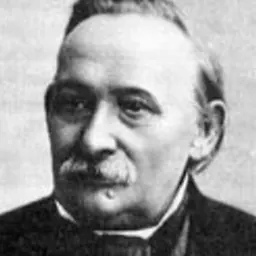
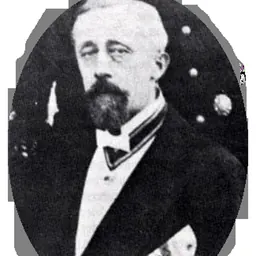

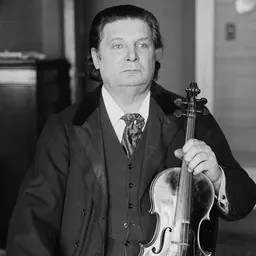
Contemporaries
People whose lives overlapped Władysław Tarnowski's

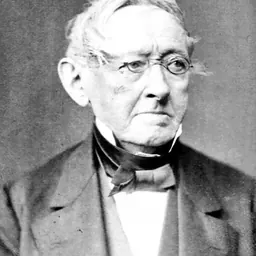


Frequently asked questions
Who was Władysław Tarnowski?
Polish composer (1836–1878)
When was Władysław Tarnowski born?
Władysław Tarnowski was born on 4 June 1836 in Voroblevychi.
When did Władysław Tarnowski die?
Władysław Tarnowski died on 19 April 1878 in Pacific Ocean.
What was Władysław Tarnowski's occupation?
Władysław Tarnowski was a composer, poet, translator, pianist, writer and philosopher.
What nationality was Władysław Tarnowski?
Władysław Tarnowski was Austrian.
Sources & further reading
· Wikipedia: Władysław Tarnowski
· DBpedia: Władysław Tarnowski
Cite this page
APA: Biography.guide. (2026). Władysław Tarnowski. https://biography.guide/wladyslaw-tarnowski/
MLA: "Władysław Tarnowski." Biography.guide, https://biography.guide/wladyslaw-tarnowski/.
Chicago: "Władysław Tarnowski." Biography.guide. https://biography.guide/wladyslaw-tarnowski/.
Data last updated: 2026-09-26 · Spot an error? Report a correction.
Page generated 2026-09-27 05:16 UTC