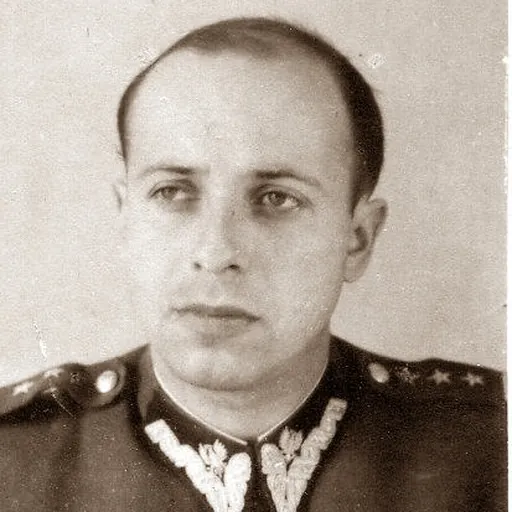
About Witold Leder
Lived 1913 – 2007 (aged 93). Witold Leder was a Polish translator.
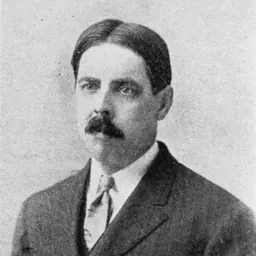
Witold Leder (December 8, 1913 - April 16, 2007) was a Polish military intelligence officer, activist, translator, and author. He shared in the ups and downs of the anti-Stalinist current of Polish communism, in which he was a lifelong participant.
Youth (1913-1933) He was born in Paris as the son of Władysław Feinstein, known among various pseudonyms as (1880–1938), and Lili Hirszfeld (1885–1962), two Polish émigrés and activists of the Marxist SDKPiL Party, after 1918 Communist Party of Poland. As a child, he moved wherever Feinstein/Leder's Communist assignments would take the family, from 1920 on behalf of the Soviet Union: he thus lived in Paris (1913–15), Geneva (1915–18), Warsaw (1919–20), Moscow (1920–21), Sopot (1921), Berlin (1921–24), Moscow again (1924–26), Naples (1926-28), and Rome (1928). While the rest of the family moved back to Moscow in 1928, he attended high school in Lahr where he joined the Young Communist League of Germany (under a false name, since he could not do so legally as a Soviet citizen) and received German Abitur in 1931. He then joined his father who was on a diplomatic mission in London on behalf of the Soviet Union, and worked there at the TASS bureau for half a year, then moved together with his father to Paris, and undertook studies there in electrical engineering.
Military career (1933-38, 1943-52) In 1933, back in Moscow, he joined the Zhukovsky Air Force Engineering Academy, through which he would become a commanding officer of the Red Army. However, following his father's arrest (September 1937) and death in captivity (February 1938) as part of the Great Purge, he was removed from the Academy and Red Army in mid-1938.
For several years he worked odd jobs, including as a translator and teacher of English. In October 1941, as Axis forces were approaching Moscow, he moved together with his mother and brother to Orenburg (then named Chkalov after Valery Chkalov), where they experienced hardship together with thousands of other refugees.
In the spring of 1943, he was informed by Zygmunt Modzelewski, who was a friend of the family and had remained in Moscow, about the effort to organize a Polish Division as part of the Soviet war effort. He volunteered and in autumn 1943 became a captain in the 1st Tadeusz Kościuszko Infantry Division, then served in the 1st Corps of the Polish Armed Forces (pl) and the 1st ("Warsaw") and 2nd Air Force Regiments (pl) of the Polish People's Army, participating in military operations all the way to Berlin in the spring of 1945. Simultaneously, and together with his brother Stefan, in 1943 he also joined the newly organized Polish Workers' Party, a choice he later explained as driven by his deep belief in the righteousness of Communism despite his first-hand experience of the Soviet regime's atrocities under Stalin. In 1981 he was a co-founder of the Association of Polish Translators and Interpreters (Stowarzyszenie Tłumaczy Polskich). He also wrote essays and articles of his own on international politics, mostly in Polish and German. Late in his life, together with his brother who in the meantime had become a noted psychiatrist, he coauthored a book on their family members' history and lifelong commitment to Communism, first published in German as Unbeirrbar Rot: Zeugen und Zeugnisse einer Familie (2002, ) and then in Polish as Czerwona nić: Ze wspomnień i prac rodziny Lederów (2005, ).
As he put it in one of that book's essays, he never gave up on the possibility of a revived Communist ideal. In 1980-81 he was involved in what became known as the "horizontal movement", an attempt at reforming the Polish United Workers' Party from within, whose name hinted at alternative structures to democratic centralism. This is also why he did not join Solidarity despite being personally close to many of its founders and key activists. He reckoned that he "did not completely fit in the [Communist] system into which life, not without my own participation, had thrown me". His son Andrzej Leder (born 1960) is a Polish philosopher.
Honors He was awarded the Order of Polonia Restituta in 1946.
Don’t just read it —
keep it.
Full-length biographies made to live with: read them, listen on the way to work, watch them tonight.
- E-book
- Audio
- Video
Instant download · yours to keep · every purchase keeps this site free
Important facts
People in Witold Leder's life
Named in this biography and alive at the same time


Related people
Same field, nearest in time




Contemporaries
People whose lives overlapped Witold Leder's





Frequently asked questions
Who was Witold Leder?
Polish translator (1913–2007)
When was Witold Leder born?
Witold Leder was born on 8 December 1913 in Paris.
When did Witold Leder die?
Witold Leder died on 16 April 2007 in Warsaw.
What was Witold Leder's occupation?
Witold Leder was a translator.
What nationality was Witold Leder?
Witold Leder was Polish.
Sources & further reading
Cite this page
APA: Biography.guide. (2026). Witold Leder. https://biography.guide/witold-leder/
MLA: "Witold Leder." Biography.guide, https://biography.guide/witold-leder/.
Chicago: "Witold Leder." Biography.guide. https://biography.guide/witold-leder/.
Data last updated: 2026-09-21 · Spot an error? Report a correction.
Portrait: Wikimedia Commons · author & licence
Page generated 2026-09-27 04:59 UTC