
Wilmon W. Blackmar
Medal of Honor recipient and Commander-in-Chief of the Grand Army of the Republic
About Wilmon W. Blackmar
Lived 1841 – 1905 (aged 63). Wilmon W. Blackmar was an American soldier.
Wilmon Whilldin Blackmar (July 25, 1841 – July 16, 1905) was a United States military officer who fought with the Union Army as a member of the 15th Pennsylvania Cavalry and the 1st West Virginia Cavalry during the American Civil War. He received his country's highest award for bravery during combat, the U.S. Medal of Honor, for his "extraordinary heroism" for taking the initiative, during a critical stage of the Battle of Five Forks on April 1, 1865, to lead a successful advance upon the enemy while fighting with the 1st West Virginia Cavalry. His award was conferred on October 23, 1897.
An advisor to several Massachusetts governors during the late 1880s and early 1900s and Commander-in-Chief of the Grand Army of the Republic (1904–1905), he then became only the second person in Massachusetts history to lie in state at the Massachusetts State House in Boston following his death in 1905.
Formative years Born on July 25, 1841, in Bristol, Pennsylvania, Wilmar W. Blackmar was a son of the Rev. Joseph Blackmar, a Massachusetts clergyman, and Eliza (Philbrick) Blackmar. After relocating with his parents to Boston, Massachusetts, during his early childhood, he received his initial education at Boston's Brimmer Grammar School and the State Normal School in Bridgewater. He then began his higher education experience at Phillips Exeter Academy in Exeter, New Hampshire.
Civil War Battle of Five Forks, Virginia, April 1, 1865 During the summer of the second year of the American Civil War, Wilmon Blackmar left Phillips Exeter to enlist for military service. After enrolling in Philadelphia on August 22, 1862, at the age of 21, he officially mustered in for duty at Carlisle in Cumberland County on August 30 as a private with Company K of the 15th Pennsylvania Cavalry (also known as the 160th Pennsylvania Volunteers or "Anderson Cavalry"). He then participated in various operations associated with the Army of the Potomac.
After fighting with his regiment in the Battle of Antietam on September 17, 1862, he was promoted to the rank of corporal. On March 1, 1863, he advanced to the rank of sergeant and then advanced again to first sergeant on May 5 of that same year, according to historian Samuel P. Bates (or, per Grand Army of the Republic records, to the rank of "orderly sergeant").
This "Honorably Discharged" medal was given to soldiers who served with West Virginia units during the Civil War. Assigned in 1865 to the staff of Brevet Major General Henry Capehart, who had been placed in charge of a brigade in the division commanded by Brevet Major General George Armstrong Custer, Blackmar participated in the opening battles of the Appomattox Campaign, and then performed the act of valor for which he was personally brevetted in the field as a captain that same day by Custer and was then also later awarded the U.S. Medal of Honor. Realizing that the Union Army was in trouble during the Battle of Five Forks, Virginia, on April 1, 1865, Blackmar took the initiative to order his men and other Union troops to rapidly form a line and charge the enemy, an action which forced the Confederate troops to disperse.
With the Appomattox Campaign successfully concluded and the war officially declared over, Blackmar honorably mustered out at the rank of captain on July 8, 1865. and then went on to complete his legal studies at the Harvard Law School in 1868. Admitted to the Suffolk Bar following his graduation, he served as a lawyer during the 1880s and 1890s, a fact confirmed by his 1894 application for a United States passport, which also noted that he was a permanent resident of Hingham, Massachusetts who was a 53-year-old man who was 5'7" tall with dark hair and blue eyes with an oval face with a high forehead, straight nose, round chin, and fair complexion.
After marrying Helen R. Brewster, a Boston resident who was a daughter of John R. Brewster, on November 17, 1880, he and his wife then divided their time between their permanent residence at 72 Commonwealth Avenue in Boston and their summer home, "World's End Farm," in Hingham. Having joined his local chapter of the Grand Army of the Republic in 1867 (John A. Andrew Post No. 15, Boston), he also remained active with the G.A.R for the remainder of his life, helping to establish Boston's Edward W. Kinsley Post (No. 113) and serving in various positions at the organization's national level.
In 1881 he was elected as an original companion of the Massachusetts Commandery of the Military Order of the Loyal Legion of the United States (MOLLUS). He was assigned MOLLUS insignia number 2276.
Upon retirement, he served as Judge Advocate General for several Massachusetts governors, and was also elected Commander-in-Chief of the Grand Army of the Republic in 1904, a position he continued to hold until his death.
Death and State House tribute Photographed in 1893 with Grant's chair from Appomattox, Blackmar donated the chair to the Smithsonian Institution in 1905. In 1905, Blackmar became only the second person in the history of Massachusetts to lie in state at the Massachusetts State House. He died in Boise, Idaho, on July 16 His remains were returned to Boston and public tribute was paid to him at the State House. Blackmar was then interred at the Cedar Grove Cemetery in Dorchester, Massachusetts.
When it was read in August 1905, his will revealed that he had left $3,000 to Lexington, Kentucky resident Nancy T. Creel, the daughter of the nurse who had rendered care to Blackmar during the American Civil War as he recuperated from typhoid fever. He also made significant contributions to the Grand Army of the Republic and a gift to the U.S. government of "the chair in which General Ulysses S. Grant sat when arranging the surrender of General Robert E. Lee, of the Confederate Army at Appomattox," according to newspaper reports from that era.
Medal of Honor citation Rank and organization: Lieutenant, Company H, 1st West Virginia Cavalry. Place and date: At Five Forks, Va., April 1, 1865. Entered service at: ------. Birth: Bristol, Pa. Date of issue: October 23, 1897. Citation:
Don’t just read it —
keep it.
Full-length biographies made to live with: read them, listen on the way to work, watch them tonight.
- E-book
- Audio
- Video
Instant download · yours to keep · every purchase keeps this site free
Important facts
People in Wilmon W. Blackmar's life
Named in this biography and alive at the same time


Related people
Same field, nearest in time

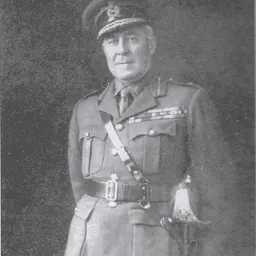

Contemporaries
People whose lives overlapped Wilmon W. Blackmar's
Frequently asked questions
Who was Wilmon W. Blackmar?
Medal of Honor recipient and Commander-in-Chief of the Grand Army of the Republic (1841-1905)
When was Wilmon W. Blackmar born?
Wilmon W. Blackmar was born on 25 July 1841 in Bristol.
When did Wilmon W. Blackmar die?
Wilmon W. Blackmar died on 16 July 1905 in Boise.
What was Wilmon W. Blackmar's occupation?
Wilmon W. Blackmar was a soldier.
What nationality was Wilmon W. Blackmar?
Wilmon W. Blackmar was American.
Sources & further reading
· Wikipedia: Wilmon W. Blackmar
Cite this page
APA: Biography.guide. (2026). Wilmon W. Blackmar. https://biography.guide/wilmon-w-blackmar/
MLA: "Wilmon W. Blackmar." Biography.guide, https://biography.guide/wilmon-w-blackmar/.
Chicago: "Wilmon W. Blackmar." Biography.guide. https://biography.guide/wilmon-w-blackmar/.
Data last updated: 2026-09-20 · Spot an error? Report a correction.
Page generated 2026-09-27 05:23 UTC