
About Willmoore Kendall
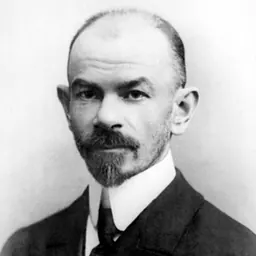
Lived 1909 – 1968 (aged 58–59). Willmoore Kendall was an American political scientist, known for National Review.
Willmoore Bohnert Kendall Jr. (March 5, 1909 – June 30, 1967) was an American conservative writer and a professor of political philosophy.
Early life and education Kendall was born March 5, 1909, in Konawa, Oklahoma. His father, who was blind, was a Southern Methodist minister who preached in Konawa and other local towns. At age two, Kendall learned to read by playing with a typewriter. Graduating from high school at age 13, Kendall enrolled at Northwestern University before transferring to the University of Tulsa. In 1927, Kendall graduated from the University of Oklahoma at age 18. In 1927, under the pseudonym Alan Monk, Kendall wrote his first book, Baseball: How to Play It and How to Watch It. He later became a prep school teacher.
After graduate-level studies in Romance languages at the University of Illinois Urbana-Champaign, Kendall became a Rhodes scholar in 1932, enrolling in the philosophy, politics and economics program at Pembroke College, Oxford.
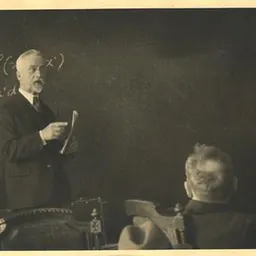
Career Around 1939, Kendall began his academic career as an assistant professor of political science, teaching at Louisiana State University, Hobart College, and the University of Richmond. Among his students was William F. Buckley, Jr. with whom he participated in the founding of National Review; as a senior editor, he constantly fought with the other editors (it is said that he was never on speaking terms with more than one person at a time). Another student whom Kendall strongly influenced at Yale was L. Brent Bozell Jr. Kendall also influenced Buckley's ideas in the National Review because he explained that liberals were a small minority group in the community. A friend, Professor Revilo P. Oliver, gave him credit with convincing him to enter political activism by writing for National Review. After Yale, Kendall lived in Spain and France for a time, and briefly taught at several universities in a non-tenured role. He stayed at that institution until he died in 1967.
Philosophy In the 1930s, Kendall held left-wing views, for instance supporting the proposed Ludlow Amendment that would require a national popular vote for entering a war. His 1940 Ph.D. dissertation provided a unique view of John Locke. Kendall saw him more as a proto-democrat who would approve of societies governed by majority rule, rather than an individualist who wished for an aloof government as was the more common consensus view. He felt that majoritarianism should come before liberalism (in the political philosophy sense of liberal democracy) and that the government should not undercut the social consensus by attempting to enforce abstract rights. On those grounds, he supported racial segregation, for example, if the society of Southern states found that acceptable to their consensus, they should be allowed to impose it. Civil rights agitators were disrupting the social consensus and group morality.
After long being skeptical of religion, Kendall converted to Roman Catholicism in 1952, with Buckley as his godfather, in part due to the church's centuries-old traditions and opposition to Communism.
Additionally, in his 1963 book The Conservative Affirmation and various articles, Kendall opposed open society and moral relativism, particularly the philosophy of John Stuart Mill. According to Kendall, "any viable society has an orthodoxy—a set of fundamental beliefs, implicit in its way of life, that it cannot and should not and, in any case, will not submit to the vicissitudes of the market place." Criticizing Mill, Kendall wrote: "The all-questions-are-open-questions society...cannot...practice tolerance towards those who disagree with it."
On economics, Kendall was heavily influenced by the thought of John Maynard Keynes while studying at Oxford and consequently was not a full adherent of capitalism; Kendall was also critical of what he called "the bureaucratization of business enterprise" and "rise of the meritocracy."
Regarding the "all men are created equal" clause of the Declaration of Independence, Kendall interpreted "equal" to refer to equality before the law rather than liberal egalitarianism in a socioeconomic sense.
Personal life and death Kendall's first two marriages were annulled. His first marriage to Katherine Tuach began in 1935 and ended in divorce in 1951. His second marriage was to Anne Brunsdale, an employee he had supervised at the Central Intelligence Group and niece of North Dakota Governor Norman Brunsdale; it began in 1952 and ended in divorce in 1956. His third marriage, to Nellie Cooper, began in 1966.
He died of a heart attack at home on June 30, 1967.
Kendall is the model for the character Jesse Frank in Sidney Zion's 1990 novel Markers.
Don’t just read it —
keep it.
Full-length biographies made to live with: read them, listen on the way to work, watch them tonight.
- E-book
- Audio
- Video
Instant download · yours to keep · every purchase keeps this site free
Important facts
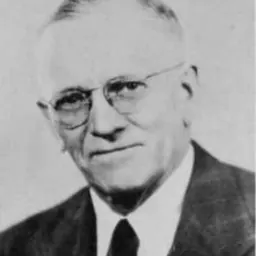
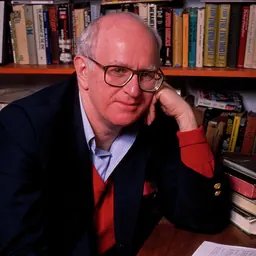
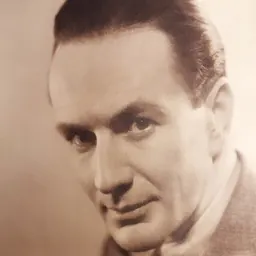
People in Willmoore Kendall's life
Named in this biography and alive at the same time



Related people
Same field, nearest in time





Contemporaries
People whose lives overlapped Willmoore Kendall's




Frequently asked questions
Who was Willmoore Kendall?
American political scientist
When was Willmoore Kendall born?
Willmoore Kendall was born on 5 March 1909 in Konawa.
When did Willmoore Kendall die?
Willmoore Kendall died in 1968 in Irving.
What was Willmoore Kendall's occupation?
Willmoore Kendall was a political scientist.
What was Willmoore Kendall known for?
Willmoore Kendall was known for National Review.
What nationality was Willmoore Kendall?
Willmoore Kendall was American.
Sources & further reading
· Wikipedia: Willmoore Kendall
Cite this page
APA: Biography.guide. (2026). Willmoore Kendall. https://biography.guide/willmoore-kendall/
MLA: "Willmoore Kendall." Biography.guide, https://biography.guide/willmoore-kendall/.
Chicago: "Willmoore Kendall." Biography.guide. https://biography.guide/willmoore-kendall/.
Data last updated: 2026-09-22 · Spot an error? Report a correction.
Page generated 2026-09-27 05:00 UTC