
Willis Van Devanter
Associate Justice of the United States Supreme Court
About Willis Van Devanter
Lived 1859 – 1941 (aged 81). Willis Van Devanter was an American lawyer, judge, university teacher and politician.
Willis Van Devanter (April 17, 1859 – February 8, 1941) was an American lawyer who served as an associate justice of the Supreme Court of the United States from 1911 to 1937. He was a staunch conservative and was regarded as a part of the Four Horsemen, the conservative bloc that dominated the Supreme Court during much of the 1930s.
Early life Van Devanter was born in Marion, Indiana, to a family of Dutch Americans. He attended Indiana Asbury University (now DePauw University) from 1875 to 1878 before earning a Bachelor of Laws from the Cincinnati Law School in 1881. He was a member of the Beta Theta Pi fraternity and the Knights of Pythias.
Legal, political and state judicial careers In 1884, Van Devanter moved to the Wyoming Territory where he became the city attorney of Cheyenne. He served on a commission to revise the statutes of Wyoming Territory in 1886, and as a member of the territorial legislature in 1888. He also served as an attorney to the Wyoming Stock Growers Association during the Johnson County War, managing to strain the local courts' (and county's) budget and delay trials while his clients and their allies worked to make key witnesses and the gunman unavailable, as well as securing favorable press coverage from the state's most influential papers while threatening to sue the Johnson County paper for slander.
He served as chief justice of the Supreme Court of Wyoming from 1889 to 1890,
From 1897 to 1903, Van Devanter served in Washington, D.C., as an assistant attorney general, working in the Department of Interior. He was also a professor at George Washington University Law School from 1897 to 1903.
Federal judicial service
Eighth Circuit Court of Appeals
On February 4, 1903, President Theodore Roosevelt nominated Van Devanter to a newly created seat on the Eighth Circuit Court of Appeals. He was confirmed by the United States Senate on February 18, 1903, and received his commission the same day. He was sworn into office on January 3, 1911. and voted against the Agricultural Adjustment Administration (United States v. Butler), the National Recovery Administration (Schechter Poultry Corp. v. United States), federal regulation of labor relations (National Labor Relations Board v. Jones and Laughlin Steel Corp.), the Railway Pension Act (Railroad Retirement Board v. Alton Railroad), unemployment insurance (Steward Machine Co. v. Davis), and the minimum wage (West Coast Hotel v. Parrish). For his conservatism, he was known as one of the Four Horsemen, along with Pierce Butler, James Clark McReynolds, and George Sutherland; the four would dominate the Supreme Court for over two decades, until the early 1930s. The decision has since been the basis for Pueblo self-government and protection of tribal lands.
Van Devanter had chronic "pen paralysis", and, as a result, he wrote fewer opinions than the other justices, averaging three a term during his last decade on the Court. He acknowledged that he might have retired five years earlier due to illness, if not for his concern about New Deal legislation, and that he depended upon his salary. only to halve them again next month by the Economy Act. On May 18, 1937, the same day he made his decision to retire public, Van Devanter informed President Roosevelt that he would retire on June 2, 1937, when the Supreme Court's then-present term ended, out of "desire to avail myself of the rights, privileges and Judicial service specified in the Act of March 1, 1937, entitled 'An Act to provide for retirement of Justices of the Supreme Court. He was the last serving Supreme Court Justice appointed by President Taft. Van Devanter was replaced by Hugo Black.
After retirement, he lived on a farm near Ellicott City, Maryland. He also remained available to hear cases in the lower courts and presided over civil trials.
At the turn of the century, Van Devanter purchased Pate Island in the Woods Bay area along Georgian Bay in Ontario, Canada. There he enjoyed hunting and fishing.
Van Devanter died in Washington, D.C., on February 8, 1941, His personal and judicial papers are archived at the Manuscript Division of the Library of Congress.
Don’t just read it —
keep it.
Full-length biographies made to live with: read them, listen on the way to work, watch them tonight.
- E-book
- Audio
- Video
Instant download · yours to keep · every purchase keeps this site free
Important facts
People in Willis Van Devanter's life
Named in this biography and alive at the same time


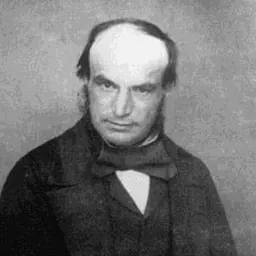
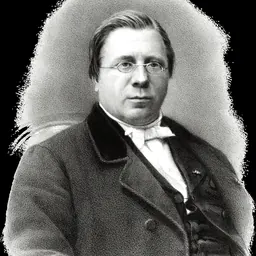
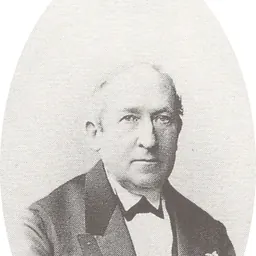
Related people
Same field, nearest in time

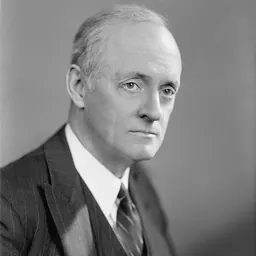

Contemporaries
People whose lives overlapped Willis Van Devanter's


Frequently asked questions
Who was Willis Van Devanter?
Associate Justice of the United States Supreme Court (1859-1941)
When was Willis Van Devanter born?
Willis Van Devanter was born on 17 April 1859 in Marion.
When did Willis Van Devanter die?
Willis Van Devanter died on 8 February 1941 in Washington, D.C..
What was Willis Van Devanter's occupation?
Willis Van Devanter was a lawyer, judge, university teacher and politician.
What nationality was Willis Van Devanter?
Willis Van Devanter was American.
Sources & further reading
· Wikipedia: Willis Van Devanter
· DBpedia: Willis Van Devanter
Cite this page
APA: Biography.guide. (2026). Willis Van Devanter. https://biography.guide/willis-van-devanter/
MLA: "Willis Van Devanter." Biography.guide, https://biography.guide/willis-van-devanter/.
Chicago: "Willis Van Devanter." Biography.guide. https://biography.guide/willis-van-devanter/.
Data last updated: 2026-09-20 · Spot an error? Report a correction.
Page generated 2026-09-27 05:20 UTC