
William Woodthorpe Tarn
British classical scholar and historian of classical antiquity
About William Woodthorpe Tarn
Lived 1869 – 1957 (aged 88). William Woodthorpe Tarn was a British historian of classical antiquity, university teacher, writer and classical scholar.
Sir William Woodthorpe Tarn (26 February 1869 – 7 November 1957) was a British classical scholar and writer. He wrote extensively on the Hellenistic world, particularly on Alexander the Great's empire and its successor states.
Life William Woodthorpe Tarn was born in London on 26 February 1869, eldest of two sons and one daughter of William Tarn (b. 1841), a silk merchant, and Frances Arthy (b. 1843/4). He was educated at Eton College, where he was school captain and a king's scholar, graduating in 1888. He studied at Trinity College, Cambridge, with Henry Jackson, sparking a lifelong interest in Greek philosophy. He then studied law at the Inner Temple, becoming a chancery barrister in 1894. In 1896 he married Flora Macdonald (d. 1937). He had one daughter, Otta, for whom he wrote a fairy story, The Treasure of the Isle of Mist (1919).
Following the long illness of Flora, Tarn had a breakdown and retired from law. He left London for Scotland, where he made his home initially at Mountgerald, near Dingwall, and later at Muirtown House, near Inverness. His interest in Greek philosophy reappeared in his first book, Antigonos Gonatas (1913), he sought to bring his subject, whom he admired, to life. Despite technical advances and numerous revisionist challenges, Tarn's books continue to influence the subject at the end of the twentieth century.
During the Great War, Tarn worked as an intelligence officer, having been refused enlistment in the army due to poor sight.
Tarn published in learned journals, especially on ancient Hellenistic, geographical, military, and naval history. He was known as "a forceful if courteous controversialist", according to Adcock. In 1952 he was knighted for his services to history. His study of Greeks in Hellenistic Asia used new and diverse sources, using Greek, Babylonian, Indian and Tibetan sources to complement Greek sources.
According to some, Tarn offered a somewhat idealistic interpretation of Alexander's conquests as culturally inclusive and essentially driven by his vision of the "unity of mankind" in the Opis Decree. Such a reading, which echoes Hellenistic philosophical ecumenicalism has been challenged by recent revisionists. Jeanne Reames remarked that "Tarn's portrait of Alexander turned the Greek conqueror into a proper Scottish gentleman". Likewise, Ernst Badian criticised Tarn for his prejudice against opponents to Alexander. When discussing the revolt of the Spartan king Agis III in 331 BC, Badian added that Tarn "distort[ed] the actual facts in an all but irresponsible fashion" in his work.
Reames also saw Tarn's strong influence in Mary Renault's trilogy of historical novels about Alexander - though Renault's acknowledged Alexander's homo-erotic tendencies, while Tarn had regarded references to them in ancient sources as "defamations" which the Macedonian king had to be defended against.
Tarn's ground-breaking work on Graeco-Bactrian history considered the interaction between Greek and non-Greek subject peoples in Hellenistic territories and how these developed over time. He characterised the cosmopolitan Bactrian Euthydemid dynasty as "a courageous experiment that failed". His works are considered very influential, if often challenged by more recent scholarship, on the subject of the Greco-Bactrian and Indo-Greek history.
His only non-academic writing is The Treasure of the Isle of Mist (1919), a fairytale dedicated to his daughter Otta. (Later editions: Oxford University Press, 1969 (hardcover, ); Chicago: Argonaut, 1969 (hardcover, )). (See Antigonos Gonatas.) The Treasure of the Isle of Mist. London: Philip Allan & Co, 1919. – fantasy adventure for children The Hellenistic Age: Aspects of Hellenistic Civilisation, by J.B. Bury, E.A. Barber, Edwyn Bevan, and Tarn. Cambridge: Cambridge University Press, 1923. Hellenistic Civilisation. London: Edward Arnold & Co., 1927. (2nd, rev. ed., 1930. 3rd ed., with G.T. Griffith, 1952.) Seleucid-Parthian Studies (Proceedings of the British Academy; XVI). London: Humphrey Milford, 1930. Hellenistic Military and Naval Developments. Cambridge U. Press, 1930. (Latest ed., New York: Biblo and Tannen, 1998 (paperback, )). Alexander the Great and the Unity of Mankind. Humphrey Milford, 1933. The Greeks in Bactria & India. Cambridge: Cambridge University Press, 1938. (3rd, revised ed. Chicago Ridge, IL: Ares Publishers, 1997 (hardcover, )). Online at Archive.Org Alexander the Great. Vol. I, Narrative; Vol. II, Sources and Studies. Cambridge U. Press, 1948. (New ed., 2002 (paperback, )). Tarn, W. W. "Alexander and the Ganges," Journal of Hellenic Studies, 43 (1923), 93–101 Tarn, W. W. "Heracles Son of Barsine." JHS 41.1 (1921): 18–28.
Don’t just read it —
keep it.
Full-length biographies made to live with: read them, listen on the way to work, watch them tonight.
- E-book
- Audio
- Video
Instant download · yours to keep · every purchase keeps this site free
Important facts
People in William Woodthorpe Tarn's life
Named in this biography and alive at the same time


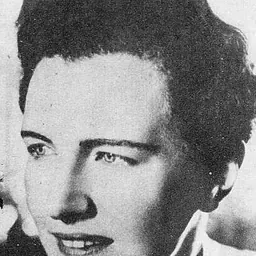
Related people
Same field, nearest in time


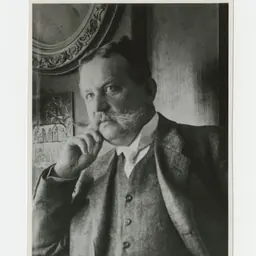


Contemporaries
People whose lives overlapped William Woodthorpe Tarn's

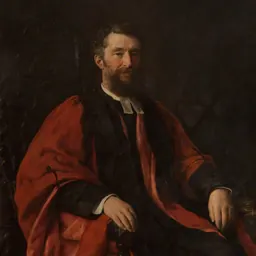

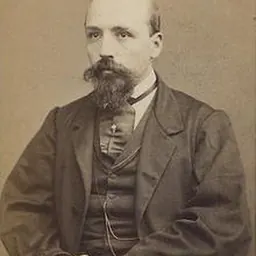

Frequently asked questions
Who was William Woodthorpe Tarn?
British classical scholar and historian of classical antiquity (1869–1957)
When was William Woodthorpe Tarn born?
William Woodthorpe Tarn was born on 26 February 1869 in London.
When did William Woodthorpe Tarn die?
William Woodthorpe Tarn died on 7 November 1957 in Inverness.
What was William Woodthorpe Tarn's occupation?
William Woodthorpe Tarn was a historian of classical antiquity, university teacher, writer and classical scholar.
What nationality was William Woodthorpe Tarn?
William Woodthorpe Tarn was British.
Sources & further reading
· Wikipedia: William Woodthorpe Tarn
· DBpedia: William Woodthorpe Tarn
Cite this page
APA: Biography.guide. (2026). William Woodthorpe Tarn. https://biography.guide/william-woodthorpe-tarn/
MLA: "William Woodthorpe Tarn." Biography.guide, https://biography.guide/william-woodthorpe-tarn/.
Chicago: "William Woodthorpe Tarn." Biography.guide. https://biography.guide/william-woodthorpe-tarn/.
Data last updated: 2026-09-20 · Spot an error? Report a correction.
Page generated 2026-09-27 05:18 UTC