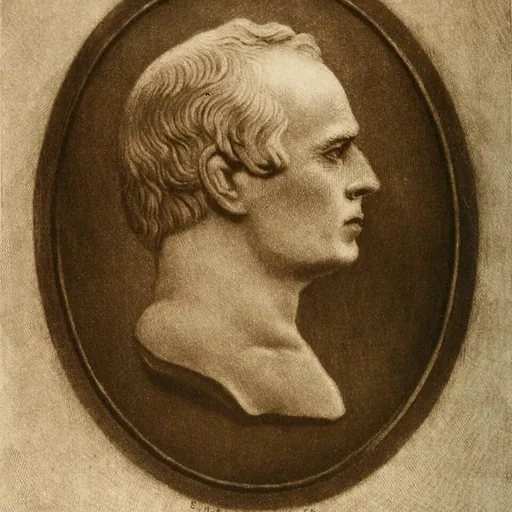
About William Williams
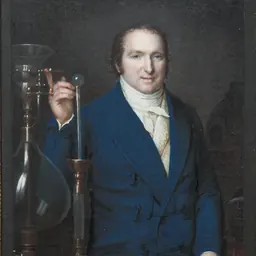
Lived 1787 – 1850 (aged 62). William Williams was an American printer and publisher.
William Williams (October 12, 1787 – June 10, 1850) was an American printer, publisher and bookseller, originally from Massachusetts. He moved to New Hartford, New York, with his family and soon established himself in the printing and newspaper business in nearby Utica, New York during the early nineteenth century. Williams printed the first directory for Utica and published several Utica newspapers and almanacs. Through his various newspapers he published editorials in support of prominent politicians, canal and railroad proposals, and advocated for the colonization of free Blacks. During the War of 1812, he volunteered for military service, organized a company of militia of young men from Utica, and was present during the Second Battle of Sacket's Harbor, where he advanced to the rank of colonel. When a cholera epidemic broke out in Utica in 1832, Williams volunteered in setting up temporary hospitals and aiding the sick and himself became infected. He was an elder and a devoted member of Utica's First Presbyterian Church, and was strongly opposed to Freemasonry, to which he published a controversial newspaper, The Elucidator. Always civic minded, Williams spent the better part of his adult life involved in several areas of public service. In his latter business years he suffered financial difficulties, forcing him to sell off his bookstore and many of his effects. After receiving a serious head injury in a stagecoach accident he endured the last years of his life with a measure of mental impairment.
Early life and family Williams was born on October 12, 1787, in Framingham, Massachusetts. He was the son of Deacon Thomas Williams of Roxbury, Massachusetts, Growing up in a devoted religious family, Williams's strong religious proclivities were developed during his youth. He joined the First Presbyterian Church in Utica, in July 1808, which was at the time operating in conjunction with the New Hartford Church. He came with his father's family to New Hartford, New York and then to neighboring Utica in 1803, along with Asahel Seward, from whom he had learned the printing trade. (Ashel had learned his printing trade serving as an apprentice to Isaiah Thomas, a prominent and accomplished colonial printer and publisher.) a village established by Jedediah Sanger, a Revolutionary War veteran.
Williams married Sophia Wells, daughter of Samuel Wells, in 1811, in New Hartford. Their marriage brought fourteen children, several of whom died very young. Sophia died November 12, 1831. Williams's son, Robert Stanton Williams, was born September 10, 1828, was the youngest surviving child of Sophia. His second son, Samuel Wells Williams, named after Williams's father-in-law, was born September 22, 1812, who became a writer doing missionary work in China. After the death of Sophia, Williams married again in 1833 to Catherine Huntington, the daughter of Hon. Henry Huntington of Rome, New York, a state legislator and the president of the Bank for Savings of the Village of Utica, the present day Bank of Utica. Williams had fourteen children by his first wife, and two by his second. He lost several children when they were in their infancy or adolescent years; Fredrick in 1814, Laura, in 1820, Julian and Harriet, in 1824, Alfred and Thomas in 1831.
Printer and publisher
Williams learned the printing trade as an apprentice in the printing shop of William McLean and Ashel Seward from 1800 to July 1807. In 1807 he joined in a partnership with Seward and formed the firm of Seward & Williams. Their firm was next to The Utica Morning Herald. William was said to be a man of great ambition and industry and went on to learn paper-making and woodcut engravings which he used in the various works he printed. Soon he was taken into and managed the Seward bookstore, at which time he printed the first directory for Utica, published in 1817. This was the first work where Williams's name appears in the title page. which included notable figures like Thurlow Weed who went on to become a New York newspaper publisher and politician, and Henry Ivison, an apprentice who lived with the Williams family for eight years, and who went on to become the founder of the prominent New York publishing house of Ivison, Blakeman, Taylor & Company.
Williams became a partner with Seward about 1808 and operated a bookstore at 60 Genesee Street, next to the village coffee house. Williams and Seward printed and published the speeches of Alexander B. Johnson, and John Sherman's description of Trenton Falls, in upstate New York. He also printed a speech by William H. Maynard on the bill for the proposed Chenango Canal, and Beach's Considerations for the canal, to which he appended his own tourist map of the State of New York as well as his Stage Canal and Steamboat Register.
On July 10, 1793, the first newspaper to appear west of Albany, New York, was a weekly publication called the Whitestown Gazette, which was founded in New Hartford. It was first established by Jedediah Sanger, Elijah Risley and Samuel Wells, and printed by Richard Vanderberg. It was later discontinued, but was re-established in May 1796, now with Samuel Wells as the proprietor, and William McLean doing the printing. (In the same year of 1793 the erection of the first church in Oneida county was also begun at New Hartford.) Williams and Seward, changed the name of Whitestown Gazette to The Utica Patriot, which later became The Patriot and Patrol up until 1824. Fours later it was renamed The Utica Sentinel with Williams being the sole owner.
On August 11, 1814, Williams and Seward established a weekly newspaper, called The Utica Club, which was commonly called The Club. Edited by Henry Goodfellow, Esq. & Company, it ran from 1814 to 1815. Through their newspaper they advertised for "The Philadelphia Edition of the Edinburgh Encyclopedia" ..."just received by A. Seward at his book-store, and subscriptions are to be paid and called for by subscribers." By 1818 Williams and Seward still continued to employ their newspaper in the advertising of the various works they had published. Their business continued until 1824, when their partnership dissolved with the withdrawal of Seward, but the business in all its aspects continued for several years longer under Williams. at his shop at 60 Genesee Street, in Utica. It featured "Doctrinal and practical subjects on religion" along with "Religious intelligence." It received contributions from various ministers of the Presbyterian Church, including Eev. William R Weeks, who later became the editor. The Christian Repository ran for a period of seven years. In 1822 Williams also printed the Constitution of the Presbyterian Church in the United States.
After Williams's partner Seward withdrew, he was not again actively engaged in business, instead preferring to live a quiet life. Though Williams was strongly opposed to the precepts of the Freemasonry, Seward was, however, considered the very back bone of the Masonic Lodge, and presented its members with a Bible they used for many years following. Williams published a weekly newspaper called The Elucidator, founded by its editor B. B. Hotchkin in 1829, which largely featured anti-Masonic essays, but it proved to be a financial failure, and only remained in publication until February 18, 1834. In 1829, he also published a work entitled Light on Masonry, which further subjected him to the ill-will of the Masonic community.
Williams also printed, in 1832, an edition of the New Testament; Walter King's Questions on the Gospel Harmony; Proceedings of thee Synod of Dort. Williams wanted to do more with his career than just being a bookseller, printer, and newspaper proprietor, and subsequently learned the art of engraving. In this capacity, he performed work for the firm of Balch and Stiles, who printed maps of New York and banknotes for the city and Bank of Utica and some western banks. Williams also established a newspaper called The Farmers' Calendar that featured advice for farming in New York for each year of the month. He had announced that the word NEWS was derived from the four cardinal points of the compass marked with the letters N, E, W, and S.
War of 1812 In 1813, during the War of 1812, a second attack was expected at Sacketts Harbor. When volunteers were summoned, Williams was the first and most active man in Utica to muster and organize a company, of which he was appointed captain. At the time, the young Thurlow Weed was working for Williams in his office, where Williams consented to his leaving Utica to join the company. Williams' company was attached to the 134th Regiment, under the command of Sir William Pepperill. Other men from this regiment included Nathan Seward, of New Hartford, and Thurlow Weed from Utica. Prior to the war, Weed worked in the office of Williams, was a resident at his home for a short time, and would later speak of Williams fondly in his autobiography. A companion of Williams and a member of the company gave witness: He also functioned as the village trustee. Upon the establishment of the Utica Sunday School in 1816, Williams became its first superintendent, and during the years following he was a Sunday school instructor. He also became the president of the Western Sunday School Union. From 1821 to 1824 Williams published editorials supporting DeWitt Clinton during his second term as New York Governor. He also published editorials against "negro slavery", Meetings were held in the First Presbyterian Church in Utica, of which Williams was an elder, favoring the American Colonization Society. These meetings were the cause of much excitement, leading to the formation of a convention of the Anti-Slavery Society, which was held on October 21, 1835, in Utica.
In 1828, the Utica fire department was reorganized and Williams was appointed the chief engineer. (Utica native and historian Moses Bagg doubts that office existed before Williams assumed the position.)
Later years
Before Utica was incorporated as a city in 1832, it was a small village, about the same size as New Hartford, known as Fort Schuyler. That year a cholera epidemic reached the north eastern United States and Canada and broke out in Utica. Williams was earnest in his efforts in setting up temporary hospitals and in attending to the sick, with little regard for his own comfort and safety. Along with one of his daughters, he became infected, and narrowly survived the ordeal. The Board of Health had formed a committee to deal with ways to curb the spread of the cholera epidemic, of which Williams was a member.
In 1834 Williams fell into financial debt with his creditors, while also owing back taxes, and had many of his effects sold at Sheriff's auctions, while creditors ran his store, still under his name, seeking compensation. By 1836 he sold his bookstore and moved his family to Tonawanda in Erie County to manage an estate of which he was part owner with his father-in-law, Henry Huntington, of Rome. He was buried there in Forest Hill Cemetery. By that time the population of the village of Utica had increased to over 17,000, while the Utica and Schenectady Railroad Company had long since been established and the Chenango Canal completed. Williams's close friend Thurlow Weed once wrote that, after the death of William Williams, that "as a citizen, he was public spirited beyond his means; his counsel, his exertions, and his purse were ever at the service of any enterprise calculated to benefit the place." Williams's newspapers and maps is said to have aided in the public awareness, support and promotion of many projects that came to fruition in upstate New York.
Don’t just read it —
keep it.
Full-length biographies made to live with: read them, listen on the way to work, watch them tonight.
- E-book
- Audio
- Video
Instant download · yours to keep · every purchase keeps this site free
Important facts
Family & relationships
People in William Williams's life
Named in this biography and alive at the same time


Related people
Same field, nearest in time

Contemporaries
People whose lives overlapped William Williams's


Frequently asked questions
Who was William Williams?
American printer and publisher (1787-1850)
When was William Williams born?
William Williams was born on 12 October 1787 in Framingham.
When did William Williams die?
William Williams died on 10 June 1850 in Utica.
What was William Williams's occupation?
William Williams was a printer and publisher.
What nationality was William Williams?
William Williams was American.
Sources & further reading
· DBpedia: William Williams (printer and publisher)
Cite this page
APA: Biography.guide. (2026). William Williams. https://biography.guide/william-williams/
MLA: "William Williams." Biography.guide, https://biography.guide/william-williams/.
Chicago: "William Williams." Biography.guide. https://biography.guide/william-williams/.
Data last updated: 2026-09-22 · Spot an error? Report a correction.
Portrait: Wikimedia Commons · author & licence
Page generated 2026-09-27 05:02 UTC