
William Whitaker
English theologian (1548–1595), Master of St. John's College, Cambridge
About William Whitaker
Lived 1548 – 1595 (aged 46–47). William Whitaker was an English theologian, anglican cleric and writer.
William Whitaker (1548 – 4 December 1595) was a prominent Protestant Reformed Anglican churchman, academic, and theologian who was Master of St. John's College, Cambridge, and a leading divine in the university in the latter half of the sixteenth century. His uncle was Alexander Nowell, the Dean of St Paul's Cathedral and catechist.
Early life and education Whitaker was born at Holme, near Burnley, Lancashire, in 1548, being the third son of Thomas Whitaker of Holme, by Elizabeth his wife, daughter of John Nowell, esq., of Read Hall, Read, Lancashire, and sister of Alexander Nowell, dean of St Paul's. After receiving the rudiments of learning at his native parish school, he was sent by his uncle, Alexander Nowell, to St Paul's School in London. (Alexander Nowell, a Marian exile, a fugitive from the "burning times" of Anglo-Italian policies, 1553–1558, was also a Protestant, Reformed and Anglican Churchman.) Whitaker thence proceeded to Cambridge, where he matriculated as a pensioner of Trinity College on 4 October 1564. He was subsequently elected a scholar on the same foundation, proceeded B.A. in March 1568, and on 6 September 1569 was elected to a minor fellowship, and on 25 March 1571 to a major fellowship, at his college. In 1571 he commenced M.A. Throughout his earlier career at the university he was assisted by his uncle, who granted him leases, "freely and without fine," towards defraying his expenses. Whitaker evinced his gratitude by dedicating to Nowell a translation of the Book of Common Prayer into Greek, and a like version of Nowell's own larger catechism from the Latin into Greek.
Academic career The marked ability with which he acquitted himself when presiding as "father of the philosophy act" at an academic commencement appears to have first brought him prominently into notice. He also became known as an indefatigable student of the scriptures, the commentators, and the schoolmen, and was very early in his career singled out by John Whitgift, at that time master of Trinity, for marks of special favour. On 3 February 1578 he was installed canon of Norwich Cathedral, and in the same year was admitted to the degree of B.D., and incorporated on 14 July at Oxford. In 1580 he was appointed by the crown to the Regius Professorship of Divinity at the University of Cambridge, to which Elizabeth shortly after added the chancellorship of St. Paul's Cathedral, London, and from this time his position as the champion of the teaching of the Protestant and Reformed Church of England appears to have been definitely taken up. In 1582, on taking part in a disputation at commencement, he took for his thesis, Pontifex Romanus est ille Antichristus, quern futurum Scriptura prædixit, or, The Roman Pope is that Antichrist which the Scriptures Foretold. His lectures, as professor, afterwards published from shorthand notes taken by John Allenson, a fellow of St. John's, were mainly directed towards refuting Roman Catholic theologians, especially Robert Bellarmine and Thomas Stapleton. He also severely criticised the just-published Rheims version of the New Testament, thereby becoming involved in a controversy with William Rainolds. Cygnea cantio ... hoc est, ultima illius concio ad clerum, habita Cantabrigiæ anno 1595, ix Oct. Cambridge, 1599. Controversia de Conciliis, contra pontificios, inprimis Robertum Bellarminum Iesuitam, in sex quaestiones distributa, Cambridge, 1600. Tractatus de peccato originali ... contra Stapletonum, Cambridge, 1600. Prælectiones in controversiam de Romano Pontifice ... adversus pontificios, inprimis Robertum Bellarminum, Hanau, 1608. Praelectiones aliquot contra Bellarminum habitæ (in Conr. Decker De Proprietatibus Iesuitarum, Oppenheim, 1611). Adversus universalis gratiæ assertores prælectio in 1 Tim. ii. 4 (in Pet. Baro's Summa Triurn de Prædestinatione Sententiarum, Harderwyk, 1613). Prælectiones de Sacramentis in Genere et in Specie de. SS. Baptismo et Eucharistia, Frankfort, 1624. Articuli de prædestinatione ... Lambethæ propositi, et L. Andrews de iisdem Iudicium, London, 1651.
Other works by Whitaker are extant in manuscript; the Bodleian Library has Commentarii in Cantica, and Prælectiones in priorem Epistolam ad Corinthios by him; Gonville and Caius College Cambridge has Theses: de fide Davidis; de Prædestinatione; and St. John's College, Cambridge, a treatise on ecclesiastical polity, which Baker thinks was probably from his pen, although it leans somewhat to Erastianism.
Don’t just read it —
keep it.
Full-length biographies made to live with: read them, listen on the way to work, watch them tonight.
- E-book
- Audio
- Video
Instant download · yours to keep · every purchase keeps this site free
Important facts
Family & relationships
People in William Whitaker's life
Named in this biography and alive at the same time


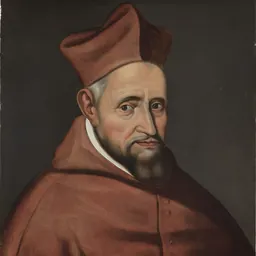
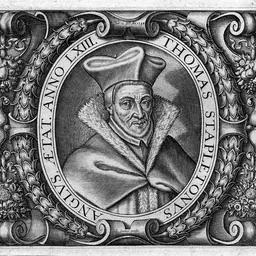
Related people
Same field, nearest in time
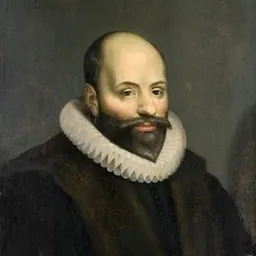
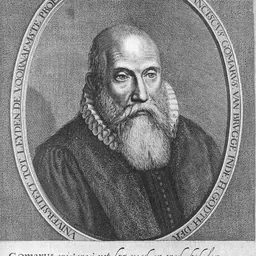

Contemporaries
People whose lives overlapped William Whitaker's


Frequently asked questions
Who was William Whitaker?
English theologian (1548–1595), Master of St. John's College, Cambridge (1548–1595)
When was William Whitaker born?
William Whitaker was born in 1548 in Holme Hall, Cliviger.
When did William Whitaker die?
William Whitaker died on 4 December 1595 in Cambridge.
What was William Whitaker's occupation?
William Whitaker was a theologian, anglican cleric and writer.
What nationality was William Whitaker?
William Whitaker was English.
Sources & further reading
· DBpedia: William Whitaker (theologian)
Cite this page
APA: Biography.guide. (2026). William Whitaker. https://biography.guide/william-whitaker-theologian/
MLA: "William Whitaker." Biography.guide, https://biography.guide/william-whitaker-theologian/.
Chicago: "William Whitaker." Biography.guide. https://biography.guide/william-whitaker-theologian/.
Data last updated: 2026-09-20 · Spot an error? Report a correction.
Page generated 2026-09-27 05:22 UTC