
William Ward
American football player and coach, physician and surgeon
About William Ward
Lived 1874 – 1936 (aged 61). William Ward was an American american football player and coach.
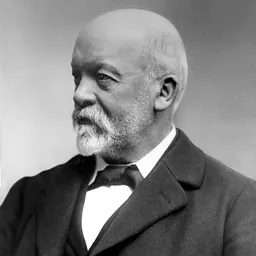
William Douglas Ward (August 25, 1874 – May 13, 1936) was an American college football player and coach, physician and surgeon. He played football at Princeton University from 1893 to 1894 and was the coach of the University of Michigan football team in 1896. He later became a physician and surgeon in Rochester, New York. He was a pioneer in early surgical procedures to construct artificial vaginas and published an article on the subject in 1915.
Early years Ward was born in Rochester, New York in August 1874. His grandfather, Levi Ward, was the mayor of Rochester. His father, Frank Addison Ward, was a Rochester native, a Princeton alumnus, and the chief executive of Ward's Natural Science Establishment, a company that supplied natural history specimens to colleges, museums and collectors in the United States and Europe. Ward's mother, Mary Hawley Douglas, was also a native of New York. Ward attended preparatory school at St. Paul's School in Concord, New Hampshire. He scored the only touchdown in Princeton's 6–0 victory over Yale on Thanksgiving Day 1893. In December 1894, The New York Times wrote:
Ward received a bachelor of arts degree from Princeton in 1895, He was voted the "Best All-Round Man in the Class, the "Best All-Round Athlete," the "Most Awkward Man," and the "Latin Salutatorian."
Lawrenceville After graduating from Princeton, Ward spent a year as a teacher in Lawrenceville, New Jersey. He also returned to Princeton during the fall of 1895 as an assistant coach for the Princeton football team. While at Lawrenceville, he sought "to impart into growing youth the mathematical idea, also the rudiments of foot-ball, and the truth of truths that there is no University in the country like Princeton." He later wrote, "Teaching, somehow, did not satisfy me: in fact, even before I left college I had an idea that I might be a doctor some day." He also served as the head football coach for the 1896 Michigan Wolverines football team. He was assisted in coaching the team by William McCauley (during the month of October), Keene Fitzpatrick and James Robinson. He led the team to a 9–1 record, outscoring opponents 262 to 11. The team went undefeated and allowed only four points in its first nine games, including victories over Michigan Normal (18–0), Grand Rapids High School (44–0), Physicians & Surgeons of Chicago (28–0), Rush Lake Forest (66–0), Purdue (16–0), Lehigh (40–0), Minnesota (6–4), Oberlin (10–0), and Wittenberg (28–0). The final game of the season was a 7–6 loss to the University of Chicago at Chicago Coliseum, in front of 8,000 fans. With respect to fraternity life, Ward wrote: "The boys were very good to me there and among other things elected me a member of the Psi Upsilon fraternity. There was a nice set of boys in the chapter and I used to have my room at the chapter house. It made life at Ann Arbor much more pleasant than it would have been, and I enjoyed the fraternity life, though I still rejoice that we don't indulge at Princeton." As he had done at Michigan, Ward followed in the footsteps of William "Jerry" McCauley. Both were Princeton football players who coached football at Michigan and received their medical degrees at Penn. Ward later wrote, "At Pennsylvania, too, 'Jerry' McCauley had been my forerunner, and he it was who took me around to see Dr. Joe upon the very day of my arrival in Philadelphia, and from that time until I left Philadelphia, in March, 1902, after a winter's special training with him, he was my friend and instructor; and if I ever make a name for myself in the domain of surgery it is his training that I have to thank for it. Many a morning would find me standing beside his operating table instead of on the benches of the lecture room where I belonged, but I have never repented my choice." He became prominent as a physician and surgeon in Rochester. He was a surgeon at Rochester General Hospital and a member of the Rochester Medical Association and the Rochester Athletic Club. In 1915, he published an article titled "The Construction of an Artificial Vagina With Establishment of the Menstrual Function" in the journal, Surgery, Gynecology and Obstetrics. He wrote the article after studying attempts by doctors in Germany and the United States to construct artificial vaginas and after successfully performing the surgery on a 13-year-old girl at Rochester General Hospital. Ward became an advocate of the procedure and wrote: It is not my intention in this short paper to go into a discussion of the propriety of making a patient go through the dangers of a major operation in order to make a vagina for her if she has not a functioning uterus. There is no question but that she can go through life quite comfortably, so far as physical comfort is concerned, without genital organs; but when the psychic aspect is considered it is quite a different proposition, and much can be said on both sides. My own views on the subject are simple. I believe that the sexual life is very important for the happiness of a very large proportion of mankind, and if a girl finds that part of life is impossible for her she is likely to brood over the loss and imagine it even greater than it is; so if she, fully understanding the danger of the operation, still wishes to have it performed, I am perfectly willing to try to remedy the defect in her anatomy.
Family and later years On May 10, 1905, Ward was married to Anne Marie Devine. They subsequently had another son, William Douglas Ward, Jr.
In a draft registration card completed in September 1918, Ward stated that he was living at 20 Grove Place in Rochester, New York, and was employed as a physician and surgeon. At the time of the 1920 United States census, Ward and his wife continued to reside at 20 Grove Place in Rochester with their two sons.
Ward died in 1936 at Park Avenue Hospital in Rochester.
Head coaching record
Don’t just read it —
keep it.
Full-length biographies made to live with: read them, listen on the way to work, watch them tonight.
- E-book
- Audio
- Video
Instant download · yours to keep · every purchase keeps this site free
Important facts
People in William Ward's life
Named in this biography and alive at the same time


Related people
Same field, nearest in time


Contemporaries
People whose lives overlapped William Ward's
Frequently asked questions
Who was William Ward?
American football player and coach, physician and surgeon (1874-1936)
When was William Ward born?
William Ward was born on 25 August 1874 in Rochester.
When did William Ward die?
William Ward died on 13 May 1936 in Rochester.
What was William Ward's occupation?
William Ward was an american football player and coach.
What nationality was William Ward?
William Ward was American.
Sources & further reading
· DBpedia: William Ward (American football)
Cite this page
APA: Biography.guide. (2026). William Ward. https://biography.guide/william-ward-american-football-player/
MLA: "William Ward." Biography.guide, https://biography.guide/william-ward-american-football-player/.
Chicago: "William Ward." Biography.guide. https://biography.guide/william-ward-american-football-player/.
Data last updated: 2026-09-20 · Spot an error? Report a correction.
Page generated 2026-09-27 05:33 UTC