
About William Walker
Lived 1871 – 1918 (aged 47). William Walker was a British and Irish trade unionist, joiner, politician and union member.
William Walker (9 January 1871 – 23 November 1918) was a prominent Irish trade unionist and a leading figure within the Belfast labour movement. He served as President of the Irish Trades Union Congress and vice-chair of the British Labour Party.
Early life Born at 35 McCluny Street, Belfast, on 9 January 1871 to Francis Walker, a boilermaker, and his wife, Sarah McLaughlin. He was educated at Saint George's National School, Belfast.
Politics Walker became a joiner at Harland & Wolff and quickly became active in the Amalgamated Society of Carpenters and Joiners. He was elected as their delegate to the Belfast Trades Council in 1893, where he led movements towards new unionism, organising both manual workers in the shipyards and female linen workers. He was a founding member of the Independent Labour Party and spoke in favour of socialism regularly from Belfast Customs House steps.
In 1904, Walker was elected to Belfast Corporation, representing Duncairn. In the same year, he served as President of the Irish Trades Union Congress. He stood for the Labour Representation Committee in Belfast North at both the 1905 by-election and 1906 general election, losing by fewer than 500 votes on each occasion. During the former election he said he would, "Make an effort to obtain a redistribution of Parliamentary seats for the purpose of diminishing the extravagant representation of Ireland by means of which the Roman Catholics and disloyal party has hindered the business of the House of Commons." This was criticized by Marxist James Connolly, who accused him of bigotry. Future Prime Minister of the United Kingdom, Ramsay MacDonald, was the election agent for Walker during the same election in 1905.
Walker espoused religious socialism stating, "Protestantism means protesting against superstition, hence true Protestantism is synonymous with labour." In 1911 Walker wrote, "Though I admire Karl Marx, he is not a deity to me," Walker was also an internationalist, stating, "My place of birth was accidental, but my duty to my class is worldwide, hence MY INTERNATIONALISM!"
In an attempt to counter opposition from the Belfast Protestant Association, he proclaimed his opposition to Irish home rule. At the 1907 by-election he stood again, but his share of the vote fell back. However, he was elected to the executive of the British Labour Party.
Don’t just read it —
keep it.
Full-length biographies made to live with: read them, listen on the way to work, watch them tonight.
- E-book
- Audio
- Video
Instant download · yours to keep · every purchase keeps this site free
Important facts
People in William Walker's life
Named in this biography and alive at the same time
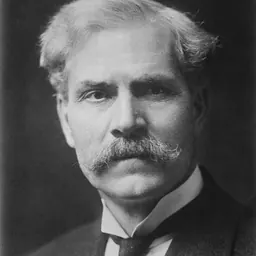
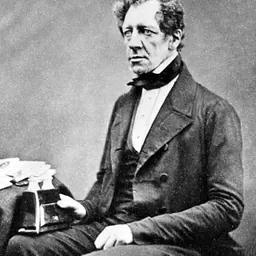
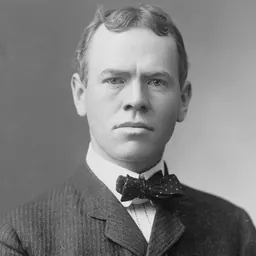

Related people
Same field, nearest in time
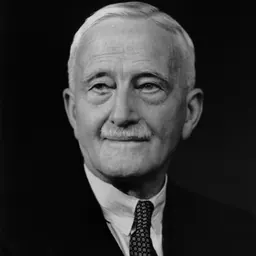


Contemporaries
People whose lives overlapped William Walker's



Frequently asked questions
Who was William Walker?
trade unionist, born 1871
When was William Walker born?
William Walker was born on 9 January 1871 in Belfast.
When did William Walker die?
William Walker died on 23 November 1918 in Belfast.
What was William Walker's occupation?
William Walker was a trade unionist, joiner, politician and union member.
What nationality was William Walker?
William Walker was British and Irish.
Sources & further reading
· DBpedia: William Walker (trade unionist)
Cite this page
APA: Biography.guide. (2026). William Walker. https://biography.guide/william-walker-trade-unionist/
MLA: "William Walker." Biography.guide, https://biography.guide/william-walker-trade-unionist/.
Chicago: "William Walker." Biography.guide. https://biography.guide/william-walker-trade-unionist/.
Data last updated: 2026-09-22 · Spot an error? Report a correction.
Page generated 2026-09-27 05:28 UTC