
About William V, Duke of Aquitaine
Lived 969 – 1030 (aged 60–61). William V, Duke of Aquitaine was a French feudatory and author.
William the Great (; 969 – 31 January 1030) was duke of Aquitaine (as ) and count of Poitou from 990 until his death. Upon the death of the emperor Henry II, he was offered the kingdom of Italy but declined to contest the title against Conrad II.
Life William was the son and successor of William IV by his wife Emma of Blois, daughter of Theobald I of Blois. He seems to have taken after his formidable mother, who ruled Aquitaine as regent until 1004. He was a friend to Bishop Fulbert of Chartres, who found in him another Maecenas, and founded a cathedral school at Poitiers. He himself was very well educated, a collector of books, and turned the prosperous court of Aquitaine into the learning centre of Southern France.
Though a cultivated prince, William was a failure in the field. He called upon his suzerain Robert II of France to aid in subduing his vassal, Boso of La Marche. Initially unsuccessful, Boso was eventually chased from the duchy. He had to contain Vikings who continually threatened his coast. In 1006, he was defeated by Viking invaders. He lost the Loudunais and Mirebalais to Fulk Nerra, count of Anjou. He had to give up Confolens, Ruffec, and Chabanais to compensate William II of Angoulême, but Fulbert negotiated a treaty (1020) outlining the reciprocal obligations of vassal and suzerain.
However, William's court was a centre of artistic endeavour and he its surest patron. His piety and culture brought peace to his vast territories, and he tried to stem the tide of feudal warfare then destroying the unity of many European nations by supporting the current Peace and Truce of God movements initiated by Pope and Church. He founded Maillezais Abbey (1010) and Bourgueil Abbey. After a fire in Poitier, he rebuilt the cathedral and many other religious structures. He travelled widely in Europe, annually visiting Rome or Spain as a pilgrim. Everywhere he was greeted with royal pomp. His court was of an international flavour, receiving ambassadors from the Emperor Henry II, Alfonso V of León, Canute the Great, and even his suzerain, Robert of France.
Upon the death of Henry II without an obvious heir, some of the nobles of the kingdom of Italy looked for a separate candidate to elect rather than maintain their union with Germany by accepting its election of Conrad II. An embassy led by Ulric Manfred, the marquis of Susa, came to France in 1024 and remained for a year, attempting to interest Robert's son Hugh Magnus and then (after Robert's refusal to permit this) William, whose character and court impressed many. William considered the proposal seriously but, upon visiting Italy himself, he found the political situation so unfavorable that he renounced the crown for himself and his heirs. Most of his surviving six letters deal with the Italian proposal.
William's reign ended in peace and he died on the last (or second to last) day of January 1030 at Maillezais Abbey, which he founded and where he is buried.
The principal source of information on William's reign is the panegyric of Adhemar of Chabannes. His relations with his vassal, Hugh IV of Lusignan, are the subject of the Conventum.
Family William was married at least 3 times. His first wife was Adalemode of Limoges, widow of Adalbert I of La Marche. They had:
William VI, his successor
William's second wife was Brisque(or Brisca) of Gascony, daughter of Duke William Sánchez of Gascony and sister of Duke Sancho VI William. She was dead by 1018. They had:
Odo, later duke of Gascony
William's third wife was Agnes of Burgundy, daughter of Otto-William, Duke of Burgundy. Her second husband was Geoffrey II of Anjou. They had:
Peter William, later duke as William VII Guy Geoffrey, later duke as William VIII Agnes (or Ala), married Henry III, Holy Roman Emperor (1043)
Don’t just read it —
keep it.
Full-length biographies made to live with: read them, listen on the way to work, watch them tonight.
- E-book
- Audio
- Video
Instant download · yours to keep · every purchase keeps this site free
Important facts
People in William V, Duke of Aquitaine's life
Named in this biography and alive at the same time


Related people
Same field, nearest in time

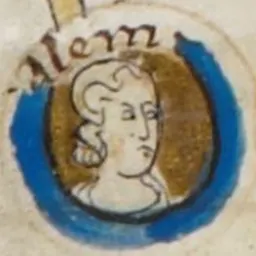
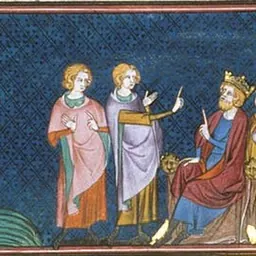
Contemporaries
People whose lives overlapped William V, Duke of Aquitaine's



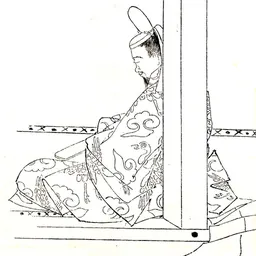
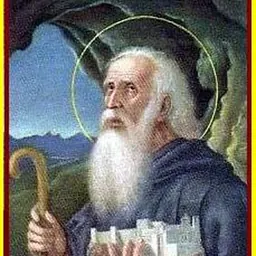

Frequently asked questions
Who was William V, Duke of Aquitaine?
Duke of Aquitaine and Count of Poitou from 990 to 1030
When was William V, Duke of Aquitaine born?
William V, Duke of Aquitaine was born in 969 in Poitiers.
When did William V, Duke of Aquitaine die?
William V, Duke of Aquitaine died on 31 January 1030 in Maillezais Cathedral.
What was William V, Duke of Aquitaine's occupation?
William V, Duke of Aquitaine was a feudatory and author.
What nationality was William V, Duke of Aquitaine?
William V, Duke of Aquitaine was French.
Sources & further reading
· Wikipedia: William V, Duke of Aquitaine
· DBpedia: William V of Aquitaine
Cite this page
APA: Biography.guide. (2026). William V, Duke of Aquitaine. https://biography.guide/william-v-duke-of-aquitaine/
MLA: "William V, Duke of Aquitaine." Biography.guide, https://biography.guide/william-v-duke-of-aquitaine/.
Chicago: "William V, Duke of Aquitaine." Biography.guide. https://biography.guide/william-v-duke-of-aquitaine/.
Data last updated: 2026-09-20 · Spot an error? Report a correction.
Page generated 2026-09-27 05:02 UTC