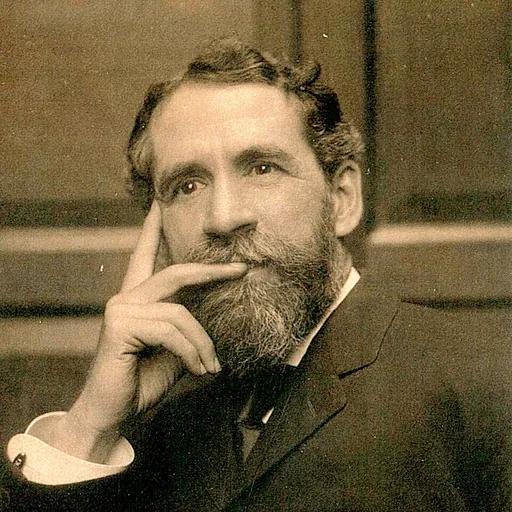
About William Tubby
Lived 1858 – 1944 (aged 85–86). William Tubby was an American architect, known for Old Nassau County Courthouse (New York) and Pratt Institute.
House designed by Tubby for William H. Childs (inventor of Bon Ami Cleaning Powder) on Prospect Park West in Brooklyn New York. Now an Ethical Culture Society building.
William Bunker Tubby (21 August 1858 – 1944) was an American architect who was particularly notable for his work in New York City.
Tubby was born in Des Moines, Iowa, and graduated from Brooklyn Polytechnic Institute in 1875. He worked in the architectural offices of Ebenezer L. Roberts until beginning his own firm in 1883. Continuing this practice until his retirement in 1942, Tubby became a major New York architect. He created important buildings in a variety of styles, and was especially known for his Romanesque and Dutch Revival-style designs.
The house that Tubby designed for Charles Millard Pratt at 241 Clinton Avenue (1893, located in Brooklyn's Clinton Hill Historic District) is one of the city's finest examples of Romanesque Revival architecture. His creativity and expertise can also be seen in several other Brooklyn homes: the neo-Jacobean Brooklyn Society for Ethical Culture Meeting House, the Romanesque Revival style home at 234 Lincoln Place, the Queen Anne style row at 864-872 Carroll Street, the residences of Brooklyn mayors at 405 Clinton Avenue, and the Dutch Revival house at 43 Willow Street, which Tubby himself occupied.
His institutional designs include Pratt Institute's Student Union from 1887, the Romanesque Revival style South Hall for Pratt Institute in 1892 (designated New York City Landmark), the Renaissance Revival style library building for the Pratt Institute (1896, a designated New York City Landmark), the Romanesque Revival style 83rd Police Precinct House in Brooklyn (1894–95), a designated New York Landmark) and the Flemish Revival style Wallabout Market (demolished) which was once the second-largest market in the world. As a member of the Architects' Advisory Commission for the Brooklyn Carnegie Libraries, Tubby designed five library buildings.
Outside of New York City, Tubby created designs for banks, churches, libraries, hospitals and large estates throughout the Northeast, including Waveny House and Orchard's End Estate in New Canaan, Connecticut, and Dunnellen Hall in Greenwich, Connecticut. The Roslyn National Bank and Trust Company Building at Roslyn, New York, was built in 1931.
Tubby lived in Brooklyn Heights at 43 Willow Street before retiring to Greenwich in his later life. A member of the Brooklyn Guild Association, he taught architecture at the Brooklyn Polytechnic Institute.
List of works The following table presents an incomplete list of buildings designed by William Tubby, focusing on those that are extant or for which there is adequate documentation of their style. Note that most addresses link to Google Street View images of the buildings.
Don’t just read it —
keep it.
Full-length biographies made to live with: read them, listen on the way to work, watch them tonight.
- E-book
- Audio
- Video
Instant download · yours to keep · every purchase keeps this site free
Important facts
People in William Tubby's life
Named in this biography and alive at the same time

Related people
Same field, nearest in time




Contemporaries
People whose lives overlapped William Tubby's


Frequently asked questions
Who was William Tubby?
American architect
When was William Tubby born?
William Tubby was born on 21 August 1858 in Des Moines.
When did William Tubby die?
William Tubby died in 1944.
What was William Tubby's occupation?
William Tubby was an architect.
What was William Tubby known for?
William Tubby was known for Old Nassau County Courthouse (New York) and Pratt Institute.
What nationality was William Tubby?
William Tubby was American.
Sources & further reading
Cite this page
APA: Biography.guide. (2026). William Tubby. https://biography.guide/william-tubby/
MLA: "William Tubby." Biography.guide, https://biography.guide/william-tubby/.
Chicago: "William Tubby." Biography.guide. https://biography.guide/william-tubby/.
Data last updated: 2026-09-23 · Spot an error? Report a correction.
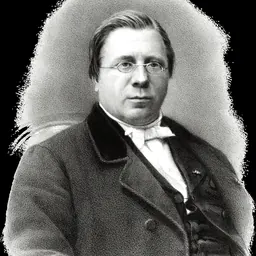
Portrait: Wikimedia Commons · author & licence
Page generated 2026-09-27 05:07 UTC