
About William Torrey Harris
Lived 1835 – 1909 (aged 74). William Torrey Harris was an American lexicographer, linguist, philosopher, teacher, writer and pedagogue.
William Torrey Harris (September 10, 1835 – November 5, 1909) was an American educator, philosopher, and lexicographer.
Harris died on November 5, 1909, in Providence, Rhode Island.
Honors
Harris was awarded the honorary degree of LL.D. from various American and foreign universities, as he had an international reputation.
In 1906 the Carnegie Foundation for the Advancement of Teaching conferred upon him "as the first man to whom such recognition for meritorious service is given, the highest retiring allowance which our rules will allow, an annual income of $3000."
Public issues
According to biographer Carl Byerly, Harris argued that the purpose of education In a democracy was:
To achieve equality of opportunity Self-preservation of the state To teach morality and self-discipline To awaken powers of self-activity To develop directive power To maintain mobility of population To preserve and create property To give technical training To remain responsive to social change
Harris was a strong proponent of the American colonial projects in Cuba, Puerto Rico and the Philippines following the Spanish–American War. In an article entitled "An Educational Policy for Our New Possessions", Harris wrote: If the other people of the world to the number of some fourteen hundred millions are united under the five great powers of Europe, while we in turn have only one hundred millions, our national idea will be threatened abroad and have more dangers than ever at home....We must accept the charge of as many of these colonies as come to our hand. We must seek to give them civilization in the highest sense that we can conceive of it....The highest ideal of a civilization is that of a civilization that is engaged constantly in elevating lower classes of people into participation of all that is good and reasonable and perpetually increasing at the same time their self-activity. Such a civilization we have a right to enforce on this earth.
Achievements
He was also assistant editor of Johnson’s New Universal Cyclopaedia and editor of Appletons' International Education Series. He expanded the United States Bureau of Education and started graphic exhibits of the United States in international expositions.
He was responsible for introducing reindeer into Alaska so that the native whalers and trappers would have another livelihood, before they brought other species to extinction.
Harris was one of the 30 founding members of the Simplified Spelling Board, founded in 1906 by Andrew Carnegie to make English easier to learn and understand through changes in the orthography of the English language.
As editor-in-chief of Webster's New International Dictionary (1909), he originated the divided page.
In the book The Educational Philosophy of William T. Harris by Richard D. Mosier, it is stated that Harris forms the bridge between the mechanism, associationism, and utilitarianism of the 18th century and the pragmatism, experimentalism, and instrumentalism of the 20th century.
William Torrey Harris took Bacon’s original ideas on the organization of information for libraries and modernized them to be applied in the United States by the second half of the 1800s. William Harris, who worked creating a library catalog for the Public Library School of St. Louis, wrote an essay on creating an organization system for libraries. It wasn’t the first one in America (see for example ) but it was a scheme that gained international reputation rapidly. Harris used a deductive hierarchy and created a structure better adapted to the interrelation of knowledge, which facilitated its application in libraries’ catalogs. Harris proposed a practical system of rules for the classification going from the generic to the specific. Those rules included main divisions, ultimate divisions, appendixes, and hybrids. The problem with Bacon’s approach was the difficulty to limit all knowledge within a restricted classification. Conversely, Harris suggested that content is predominant in minor divisions and sections, while form is the “guiding principle ” in the main divisions.
Works
Besides voluminous reports on educational matters, many papers contributed to the Proceedings of the American Social Science Association, and various compilations edited by him, his publications include: Introduction to the Study of Philosophy (1889) The Spiritual Sense of Dante's Divina Commedia (1889) Hegel's Logic: a Critical Exposition (1890) A. Bronson Alcott, his Life and Philosophy (with F. B. Sanborn) (1893) Psychologic Foundations of Education (1898) Elementary Education (Monographs on Education in the United States; vol. 1.) (1900; second edition, 1904) The School City (1906) The Philosophy of Education (1906)
Legacy
Harris–Stowe State University in St. Louis is named for Harris, and author Harriet Beecher Stowe.
Public School 11 in New York City was named the William T. Harris School but was renamed the Sarah J. Garnet School in 2022.
Don’t just read it —
keep it.
Full-length biographies made to live with: read them, listen on the way to work, watch them tonight.
- E-book
- Audio
- Video
Instant download · yours to keep · every purchase keeps this site free
Important facts
People in William Torrey Harris's life
Named in this biography and alive at the same time
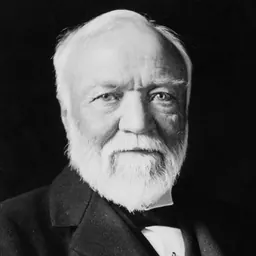

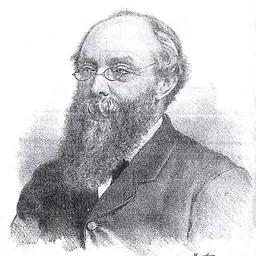
Related people
Same field, nearest in time
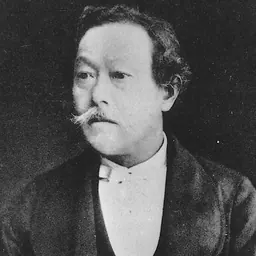
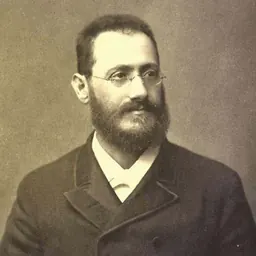


Contemporaries
People whose lives overlapped William Torrey Harris's



Frequently asked questions
Who was William Torrey Harris?
American philosopher (1835–1909)
When was William Torrey Harris born?
William Torrey Harris was born on 10 September 1835 in Killingly.
When did William Torrey Harris die?
William Torrey Harris died on 5 November 1909 in Providence.
What was William Torrey Harris's occupation?
William Torrey Harris was a lexicographer, linguist, philosopher, teacher, writer and pedagogue.
What nationality was William Torrey Harris?
William Torrey Harris was American.
Sources & further reading
· Wikipedia: William Torrey Harris
· DBpedia: William Torrey Harris
Cite this page
APA: Biography.guide. (2026). William Torrey Harris. https://biography.guide/william-torrey-harris/
MLA: "William Torrey Harris." Biography.guide, https://biography.guide/william-torrey-harris/.
Chicago: "William Torrey Harris." Biography.guide. https://biography.guide/william-torrey-harris/.
Data last updated: 2026-09-20 · Spot an error? Report a correction.
Page generated 2026-09-27 05:25 UTC