
About William Thomas Sampson
Lived 1840 – 1902 (aged 62). William Thomas Sampson was an American military officer, army officer and konteradmiral.
William Thomas Sampson (February 9, 1840 – May 6, 1902) was a United States Navy rear admiral known for his victory in the Battle of Santiago de Cuba during the Spanish–American War.
Biography He was born in Palmyra, New York, and entered the United States Naval Academy on September 24, 1857. After graduating first in his class four years later, he served as an instructor at the academy, teaching physics. Admiral Sampson sent a note to the U.S. Navy Department stating that although Morgan had the professional and technical abilities for promotion, he lacked the "social advantages" necessary for promotion. Sampson's comments were upbraided in the U.S. Senate by Senator William V. Allen of Nebraska, who referred to Sampson as a "conceited ass" and endorsing a "snobbish aristocracy". An oversized Abraham Lincoln, holding an ax, addresses a diminutive Rear Admiral William T. Sampson regarding the case of Gunner Charles Morgan’s efforts toward advancement in rank in the U.S. Navy. Caption: “Don’t you think, Sonny, that your ‘five o’clock tea’ rule might shut out some good men?”
Later Life & Death Sampson was a companion of the Military Order of the Loyal Legion of the United States and the Military Order of Foreign Wars. He was awarded an honorary doctorate (LL.D.) by Yale University in October 1901, during celebrations for the bicentenary of the university.
Awards Civil War Campaign Medal Sampson Medal Spanish Campaign Medal
Dates of rank Acting Midshipman – September 24, 1857 Midshipman – June 1, 1861 Lieutenant – July 16, 1862 Lieutenant Commander – July 25, 1866 Commander – August 9, 1874 Captain – March 26, 1889 Temporary Rear Admiral – March 26, 1898 Commodore – July 3, 1898 Rear Admiral – March 3, 1899 Retired List – February 9, 1902
Namesakes Four destroyers of the Navy have been named in his honor. The United States Naval Academy's Sampson Hall, which houses the English and History departments, is named in his honor. The United States Navy also authorized a service medal, officially named the West Indies Naval Campaign Medal but better known as the Sampson Medal, to recognize those who had served under his command during the Spanish–American War. The obverse of the medal bears Sampson's image and, thus, Sampson was one of only four Americans in history entitled to wear an official medal with their own image on it. (The others were Admiral George Dewey, General John J. Pershing and Admiral Richard E. Byrd.) The former Sampson Naval Training Base, that became the Sampson Air Force Base and is now a New York State Park on the eastern shore of Seneca Lake were named in his honor. Approved by President Roosevelt in 1942, 498 buildings were constructed on of farmland in the Finger Lakes near Palmyra, New York by 15,500 workers in 270 days so that 411,000 sailors could be trained before the facility closed in 1946. The facility was converted to the Sampson Air Force Base for the Korean War and between 1950 and 1956 over 300,000 airmen had their basic training there. Even though the facility is now the Sampson State Park, known for its herd of white deer, it has returned to military duty now that the Sampson Veterans Memorial Cemetery has been completed. A Brooklyn, New York elementary school, PS 160, was named in his honor. The steamship was named in his honor. It was built in 1898 and sank in Puget Sound in 1914. W.T. Sampson Elementary/High School at Naval Station Guantanamo Bay is named in his honor.
In 1882, Sampson married Elizabeth Susan Burling.
In 1916, Sampson's daughter Margaret Aldrich Smith became the First Lady of Guam until 1918.
Sampson's granddaughter Marjorie Sampson Smith became a sponsor of USS Sampson on March 4, 1916.
Admiral Sampson died of a cerebral hemorrhage on May 6, 1902, in Washington, D.C., and is buried in Arlington National Cemetery.
Don’t just read it —
keep it.
Full-length biographies made to live with: read them, listen on the way to work, watch them tonight.
- E-book
- Audio
- Video
Instant download · yours to keep · every purchase keeps this site free
Important facts
People in William Thomas Sampson's life
Named in this biography and alive at the same time

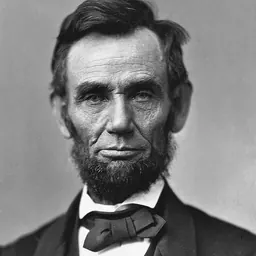
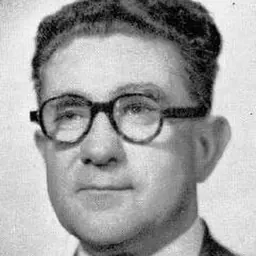
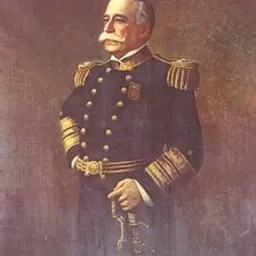

Related people
Same field, nearest in time

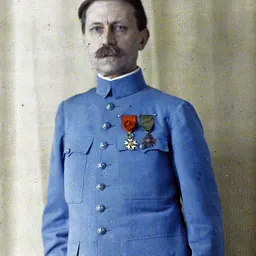


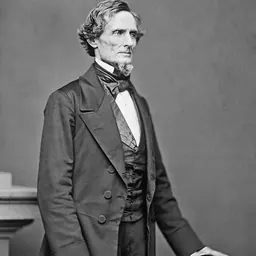

Contemporaries
People whose lives overlapped William Thomas Sampson's
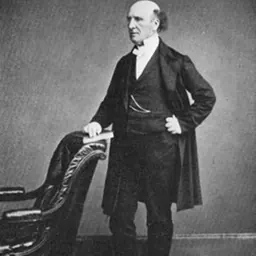
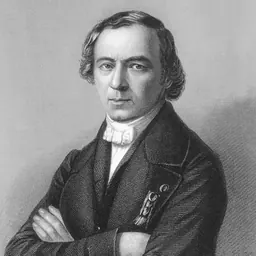

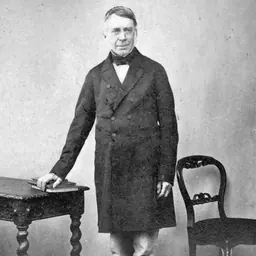
Frequently asked questions
Who was William Thomas Sampson?
US naval officer (1840-1902)
When was William Thomas Sampson born?
William Thomas Sampson was born on 9 February 1840 in Wayne County.
When did William Thomas Sampson die?
William Thomas Sampson died on 6 May 1902 in Washington, D.C..
What was William Thomas Sampson's occupation?
William Thomas Sampson was a military officer, army officer and konteradmiral.
What nationality was William Thomas Sampson?
William Thomas Sampson was American.
Sources & further reading
· Wikipedia: William Thomas Sampson
Cite this page
APA: Biography.guide. (2026). William Thomas Sampson. https://biography.guide/william-thomas-sampson/
MLA: "William Thomas Sampson." Biography.guide, https://biography.guide/william-thomas-sampson/.
Chicago: "William Thomas Sampson." Biography.guide. https://biography.guide/william-thomas-sampson/.
Data last updated: 2026-09-20 · Spot an error? Report a correction.
Page generated 2026-09-27 05:27 UTC