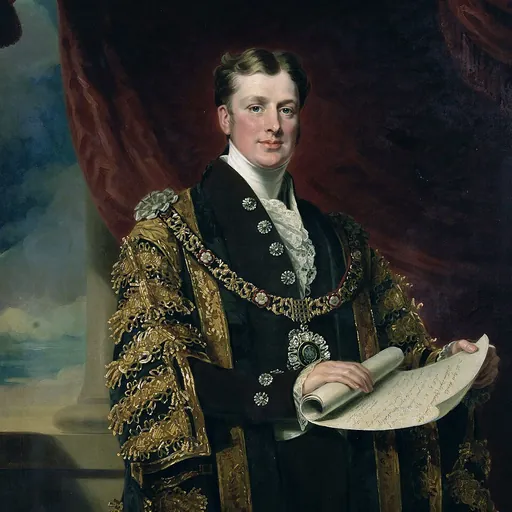
About William Taylor Copeland
Lived 1797 – 1868 (aged 70–71). William Taylor Copeland was a British alderman, politician and industrialist.
William Taylor Copeland, MP, Alderman (1797 – 12 April 1868) was a British businessman and politician who served as Lord Mayor of London and a Member of Parliament.
Pottery business William Taylor Copeland was the only son of William Copeland, partner of Josiah Spode II in the Stoke Potteries, and his wife Mary Fowler. He succeeded his father in 1827 as head of the porcelain firm in Portugal Street, London and eventually bought out the interests of the Spode family in the business in the Potteries and London. He ran the business in partnership with Thomas Garrett, formerly manager of the Spode works at Stoke-on-Trent, between 1833 and 1847. Art director to the company was Thomas Battam. Battam claimed he was the originator. There was a priority dispute with Mintons, who introduced the "Parian" term for what the Copeland factory called "statuary porcelain"; but Robert Hunt Handbook to the Great Exhibition upheld Battam's claim.
In 1866 Copeland was appointed china and glass manufacturer to the Prince of Wales. In the 1840s he was running the Berry Hill Colliery near Botteslow, to the north of Fenton.
Local politics and positions Copeland was active in the civic life of the City of London. He served as Sheriff of London and Middlesex in 1828–29; In 1835 he was elected Lord Mayor of London (the third youngest man to hold that office) for 1835–36.
National politics Copeland was active in Ireland as a Whig politician. He contested the Irish UK parliament constituency of Coleraine at the 1831 and 1832 general elections.
In 1831 the sitting member was Sir John William Head Brydges, opposed to the parliamentary reform Bill; Copeland stood as a Protestant reformer, introduced by the local shopkeeper James Gribben. In 1832 Copeland, with continuing support from the Irish Society, was in a contest with Sir John Beresford, 1st Baronet. On both occasions Copeland lost the initial poll, but was declared duly elected on petition. In 1834, as a dissident Whig, he supported for a time the Derby Dilly, but ultimately gave his vote to Lord John Russell.
In the 1835 general election Copeland was re-elected MP for Coleraine, defeating Henry Richardson, by a majority of five. He sat for the borough until 1837.
Copeland then contested the Stoke-upon-Trent constituency in England, as a Conservative candidate. He sat for that seat between 1837 and 1852 (when he was defeated) and again from 1857 until he retired in 1865. He had a period as a Peelite, and voted for the repeal of the Corn Laws, but after 1850 he was a Conservative follower of Lord Stanley (from 1851 the Earl of Derby).
Family The family claimed descent from John of Copeland, also referred to as John de Coupland, who in 1346 captured King David II of Scotland at the Battle of Neville's Cross.
Copeland married in 1826 Sarah Yates. The couple had ten children, of whom a daughter and four sons survived their father. The sons were William Fowler Mountford Copeland (1828–1908), Edward Capper Copeland (1835–1875), Alfred James Copeland (1837–1921), and Richard Pirie Copeland (1841–1913).
Legacy J. F. Herring. The Hunt, initial painting in a series commissioned by W. T. Copeland During the 1830s, the noted sporting artist John Frederick Herring Sr., then living in Camberwell, was given financial support by Copeland to clear debts. Herring produced paintings for Copeland, and some were used to decorate porcelain collections.
Don’t just read it —
keep it.
Full-length biographies made to live with: read them, listen on the way to work, watch them tonight.
- E-book
- Audio
- Video
Instant download · yours to keep · every purchase keeps this site free
Important facts
People in William Taylor Copeland's life
Named in this biography and alive at the same time

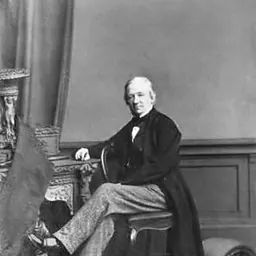
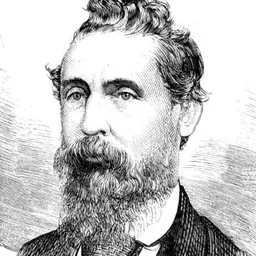

Related people
Same field, nearest in time




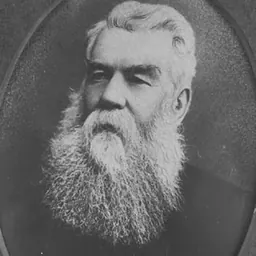
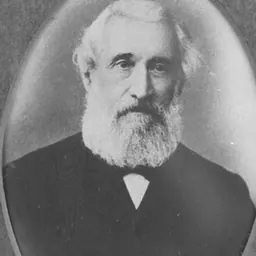
Contemporaries
People whose lives overlapped William Taylor Copeland's





Frequently asked questions
Who was William Taylor Copeland?
Lord Mayor of London
When was William Taylor Copeland born?
William Taylor Copeland was born in 1797 in London.
When did William Taylor Copeland die?
William Taylor Copeland died on 12 April 1868.
What was William Taylor Copeland's occupation?
William Taylor Copeland was an alderman, politician and industrialist.
What nationality was William Taylor Copeland?
William Taylor Copeland was British.
Sources & further reading
· Wikipedia: William Taylor Copeland
· DBpedia: William Taylor Copeland
Cite this page
APA: Biography.guide. (2026). William Taylor Copeland. https://biography.guide/william-taylor-copeland/
MLA: "William Taylor Copeland." Biography.guide, https://biography.guide/william-taylor-copeland/.
Chicago: "William Taylor Copeland." Biography.guide. https://biography.guide/william-taylor-copeland/.
Data last updated: 2026-09-24 · Spot an error? Report a correction.
Portrait: Wikimedia Commons · author & licence
Page generated 2026-09-27 05:08 UTC