
About William T. Pecora
Lived 1913 – 1972 (aged 59). William T. Pecora was an American fencer, geologist, mineralogist and scientist.
William Thomas Pecora II (February 1, 1913 – July 19, 1972) was an American geologist who served as the eighth director of the U.S. Geological Survey and later as Under Secretary of the Interior. Pecora had a successful career in both scientific and athletic spheres: he competed in fencing at the 1936 Summer Olympics, and during his lifetime was elected to both the American Academy of Arts and Sciences and the National Academy of Sciences. He was an early figure in what is now the Landsat program, and the William T. Pecora Award for remote sensing is named after him.
Life and career William Thomas Pecora II was born on February 1, 1913, in Belleville, New Jersey, the son of Cono and Anna Pecora . Both parents were immigrants from Sant'Arsenio, in southern Italy. Pecora was the ninth of 10 children, four boys and six girls. In 1929, the year he graduated from Barringer High School in Newark, he was awarded a Charles Halsey Scholarship providing $1,000 annually towards education at Princeton University, where he majored in geology; he was awarded a Bachelor of Science in Engineering degree in 1933. After graduating, he stayed at Princeton for two years as a geology tutor. In 1933, while a student at Princeton, he won the intercollegiate fencing competition. He was a member of the American team to the 1936 Summer Olympics in Berlin, where he competed in the individual and team foil.
In the summer of 1934, Pecora worked as a field assistant to Erling Dorf, studying stratigraphy in Montana and at the Beartooth Butte Formation. Pecora started graduate studies at Harvard University in 1935, concentrating on optical mineralogy and petrography under the professor Esper S. Larsen, Jr. Larsen encouraged Pecora to look for a thesis study area in the vicinity of the Bearpaw Mountains; Pecora received a grant from the Holden Fund to finance field work in 1937 and 1939 on the range's western fringe. His doctoral thesis was a petrologic study of the Boxelder laccolith.
After joining the USGS, his first assignment was in 1940—D. Foster Hewett, head of the metals section at the USGS, frequently visited Harvard until the outbreak of World War II. Hewett established the Strategic Minerals Program and recruited Pecora, who was assigned to study nickeliferous deposits in the western United States and in Brazil, among other locations in North and South America. In total, Pecora and his colleagues described nine new minerals, including whewellite. The significance of this work was described in a memorial to Pecora by Charles A. Anderson: Pecora was USGS director when the Astrogeology Research Program began in 1963.
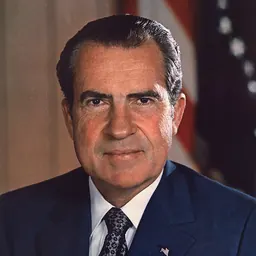
Pecora also addressed the discovery of large reserves of oil and gas on the north coast of Alaska in 1968. Under his direction, the Geological Survey made a careful study of the geologic aspects of a proposed pipeline route. From 1947 to 1967 he was a member of the United States Civil Service Commission's Board of Examiners for Geology, concerned with the development and maintenance of standards in the selection of geologists for federal employment. He was an active member of the Survey's Pick and Hammer shows, which were presented annually to make fun of top survey managers. In 1970, Pecora expressed his opposition to burying the Trans-Alaska Pipeline System, reasoning it would be unsafe to place an underground pipeline in Arctic land. He was appointed to serve as Under Secretary of the Interior in the Department of the Interior by President Richard Nixon on April 1, 1971.
Pecora died on July 19, 1972, aged 59, at George Washington University Hospital after having surgery for diverticulitis the previous month. A statement from President Nixon called him "a remarkable civil servant and an internationally respected figure in the scientific community".
Awards and honors 1964 – President, Geological Society of Washington 1965 – Member, American Academy of Arts and Sciences 1965 – Member, United States National Academy of Sciences 1968 – President, Cosmos Club 1970 – Doctorate of Engineering, Colorado School of Mines 1972 – Public Service Award, American Association of Petroleum Geologists 1973 – a 6,000 foot ridge in the Bear Paw Mountains was named Pecora Ridge in honor of Pecora Fellow and Councilor, Geological Society of America Fellow and Councilor, Mineralogical Society of America A Conference and Award are named in his honor.
Don’t just read it —
keep it.
Full-length biographies made to live with: read them, listen on the way to work, watch them tonight.
- E-book
- Audio
- Video
Instant download · yours to keep · every purchase keeps this site free
Important facts
People in William T. Pecora's life
Named in this biography and alive at the same time



Related people
Same field, nearest in time



Contemporaries
People whose lives overlapped William T. Pecora's




Frequently asked questions
Who was William T. Pecora?
American geologist, director of USGS
When was William T. Pecora born?
William T. Pecora was born on 1 February 1913 in Belleville.
When did William T. Pecora die?
William T. Pecora died on 19 July 1972 in George Washington University Hospital, Washington, D.C..
What was William T. Pecora's occupation?
William T. Pecora was a fencer, geologist, mineralogist and scientist.
What nationality was William T. Pecora?
William T. Pecora was American.
Sources & further reading
· Wikipedia: William T. Pecora
· DBpedia: William Thomas Pecora
Cite this page
APA: Biography.guide. (2026). William T. Pecora. https://biography.guide/william-t-pecora/
MLA: "William T. Pecora." Biography.guide, https://biography.guide/william-t-pecora/.
Chicago: "William T. Pecora." Biography.guide. https://biography.guide/william-t-pecora/.
Data last updated: 2026-09-20 · Spot an error? Report a correction.
Page generated 2026-09-27 05:23 UTC