
About William Rudolph Smith
Lived 1787 – 1868 (aged 80). William Rudolph Smith was an American lawyer and politician.
William Rudolph Smith (August 31, 1787 – August 22, 1868) was an American lawyer, politician, pioneer, and historian from Pennsylvania who served as the 5th Attorney General of Wisconsin, the first President of the Wisconsin Historical Society, and the first Adjutant General of Wisconsin.
Earlier, while living in Pennsylvania, he served as a Federalist member of the Pennsylvania House of Representatives and Senate, and served for many years in the Pennsylvania Militia, including service as Colonel of the 62nd Pennsylvania Reserves in the War of 1812.
Early life Smith was born on August 31, 1787, in Trappe, Pennsylvania. He moved with his father to Philadelphia in 1792 and was educated in a prestigious preparatory school there. In 1799, he entered Latin school, but soon his education was taken over by his paternal grandfather, Reverend William Smith—who had been the first provost of the College of Philadelphia. In 1803, his father, William Moore Smith, was appointed one of the commissioners to England to negotiate the ongoing adjustments and claims related to the "Jay Treaty" of 1795. The 16-year-old Smith was then employed by his father as a private secretary and accompanied him on his mission to the United Kingdom.
He returned to the United States in 1805 and studied law. In 1808, he was admitted to the Pennsylvania Bar and moved to Huntingdon, Pennsylvania—a town that had been laid out by his grandfather—where he started his legal practice. In 1811, he was appointed Deputy Attorney General for nearby Cambria County. In 1823, he was elected to the Pennsylvania Senate to fill the last year of the term of William Davidson, who had resigned. His politics evolved after his senate term, where he had served as a member of the Federalist Party. He became a Jeffersonian democrat and, in 1836, was a presidential elector for Martin Van Buren in the presidential election. That same year, as he continued his legal career, he was admitted to the bar of the Supreme Court of the United States. He arrived too late; Dodge had already single-handedly wrested old growth pine and millsites in the future east central Minnesota and central Wisconsin from the assembled Ojibwe by a treaty negotiated at Fort Snelling in late July 1837. In 1838 Smith published his travel notes as Observations on the Wisconsin Territory: Chiefly on That Part Called the Wisconsin Land District: With a Map, Exhibiting the Settled Parts of the Territory. As laid off in Counties by Act of the Legislature in 1837.
Following the treaty, Smith remained in the Wisconsin Territory, and, in 1839, was appointed adjutant general of the Wisconsin Territorial militia. He retained this office by a vote of the Legislature after Wisconsin achieved statehood in 1848, relinquishing it in 1852 after nearly 13 years in command of the Wisconsin Militia. The constitution produced by this convention was ultimately rejected by the voters and another attempt was made in 1848, which produced the Constitution of Wisconsin.
After Wisconsin achieved statehood, in the 2nd session of the Wisconsin State Senate (1849), the members elected Smith as Chief Clerk of the Senate. He was re-elected for another term in the 3rd Legislature (1850). In 1852, Smith was commissioned by the Legislature to compose a documentary history of Wisconsin and, at the creation of the Wisconsin Historical Society, Smith was appointed the first President of the organization. He ultimately produced two volumes of a planned three volume history.
In 1855, Smith was elected the 5th Attorney General of Wisconsin, in the first statewide elections after the creation of the Republican Party. Smith defeated Republican candidate Alexander Randall, who, two years later, would be elected Governor. Immediately after taking office, Smith was confronted by the controversy over the disputed results of the 1855 Wisconsin gubernatorial election—in which both Republican candidate, Coles Bashford, and Democratic candidate, William A. Barstow, claimed victory. Smith ultimately referred the matter to the Wisconsin Supreme Court on the information provided by Bashford that Barstow's majority relied on fraudulent returns. The Supreme Court ruled in favor of Bashford and he was ultimately installed as Governor.
After leaving office in 1857, Smith largely retired from public affairs.
With his second wife, Smith had at least four children: Penelope "Nellie" Smith married William T. Henry and moved to Sacramento, California, dying at age 22. Richard Moore Smith served one term in the Wisconsin State Assembly in 1856. John Montgomery Smith also served one term in the Wisconsin State Assembly, in 1892. Maria Letitia Smith died of a lung disease at age 16.
In addition to his political interests, Smith was active in the masonic organizations of Pennsylvania and Wisconsin and had served as Grand Master of both state organizations. He died on August 22, 1868, while visiting one of his daughters living in Quincy, Illinois. He was interred at Graceland Cemetery in Mineral Point. Sources indicate Smith had eight children still living at the time of his death.
Works
Don’t just read it —
keep it.
Full-length biographies made to live with: read them, listen on the way to work, watch them tonight.
- E-book
- Audio
- Video
Instant download · yours to keep · every purchase keeps this site free
Important facts
Family & relationships
People in William Rudolph Smith's life
Named in this biography and alive at the same time

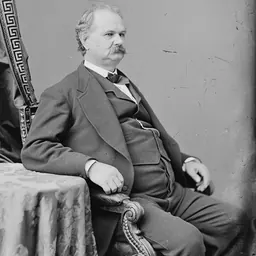

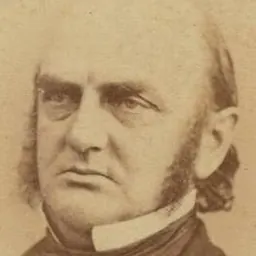
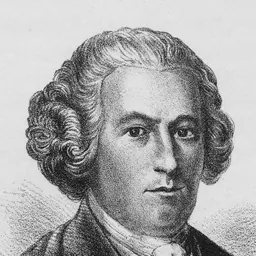


Related people
Same field, nearest in time




Contemporaries
People whose lives overlapped William Rudolph Smith's

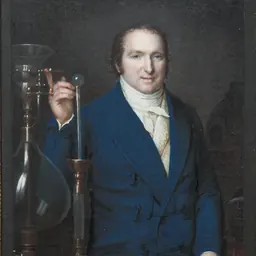
Frequently asked questions
Who was William Rudolph Smith?
American politician
When was William Rudolph Smith born?
William Rudolph Smith was born on 31 August 1787 in Trappe.
When did William Rudolph Smith die?
William Rudolph Smith died on 22 August 1868 in Quincy, Illinois.
What was William Rudolph Smith's occupation?
William Rudolph Smith was a lawyer and politician.
What nationality was William Rudolph Smith?
William Rudolph Smith was American.
Sources & further reading
· Wikipedia: William Rudolph Smith
· DBpedia: William Rudolph Smith
Cite this page
APA: Biography.guide. (2026). William Rudolph Smith. https://biography.guide/william-rudolph-smith/
MLA: "William Rudolph Smith." Biography.guide, https://biography.guide/william-rudolph-smith/.
Chicago: "William Rudolph Smith." Biography.guide. https://biography.guide/william-rudolph-smith/.
Data last updated: 2026-09-20 · Spot an error? Report a correction.
Page generated 2026-09-27 05:27 UTC