
About William Ritter
Lived 1867 – 1955 (aged 87). William Ritter was a Swiss journalist, art critic, writer, visual artist, opinion journalist and art historian.
William François Marie Ritter (31 May 1867 – 19 March 1955) was a Swiss novelist, critic and painter.
Life Ritter was born in Neuchâtel, Switzerland on 31 May 1867, the son of Guillaume (also known as Wilhelm) Ritter (1835–1912), a French architect and hydraulic engineer from Soultz responsible for enabling a supply of fresh water to La Chaux-de-Fonds in 1887, and Josephine Ducrést, a Swiss woman from Berne. Ritter went to the Jesuit school in Dole, followed by the Collège latin in Neuchâtel from 1881, then in 1885 he enrolled in the Academy of Neuchâtel. In 1889, his friend the French architect Léon Bachelin invited him to Bucharest, the first of a ten-year-long series of repeated trips that Ritter undertook to the east and the Balkans. The next year Ritter went to Transylvania with Nicolae Grigorescu, the painter. Tours in Albania on horseback with his friend Marcel Montandon in 1893 and a traverse of the Carpathians in 1898 by foot followed.
In 1903, during a walking trip across Bohemia, Moravia and Slovakia, he met Janko Cádra, who became his companion and secretary until his death in 1927, and he lived with him variously in Prague (for a year between 1904 and 1905), Munich, Monruz (in Neuchâtel), Slovakia and Romania. Ritter was initially an opponent of Mahler, like many of Mahler's critics in Vienna, on racial and antisemitic grounds. Of a performance of Mahler's Symphony No. 4 in Munich on 1901 he wrote, "Jewish wit has invaded the Symphony, corroding it," and that the work was so "moist and persuasive, tantalizing and seductive" that it provoked "lewd glances in the concert halls, the salacious dribble at the corners of the mouths of some of the old men, and above all the ugly, whoring laughs of certain respectable women!". Ritter converted to the Mahler cause after seeing the composer conduct his own Symphony No. 3 in Prague on 2 February 1904 and in time he became one of the composer's staunchest advocates, writing glowing reviews of the premieres of Mahler's Symphony No. 7 (in Prague, 1908) and Symphony No. 8 (in Munich, 1910). Ritter viewed Mahler's music as symbolic of modern Vienna, in the same way as the architecture of Otto Wagner and the painting of Gustav Klimt and Koloman Moser.
As a keen Slavophile, Ritter also did much in the promotion of the music of Leoš Janáček. Ritter had first had dealings with Janáček in 1912, agreeing to be a judge in a Club of the Friends of Art competition, but they did not meet until 1923. Janáček replied to a letter from Ritter about the premiere with the words: "The way you write about my work makes me red-faced." Ritter planned to write a book on Janáček, possibly the reason for the frequent meetings that the two had in July 1928, but none was ever written.
Ritter's theory of culture had a profound influence on the thinking of the Swiss-French architect Le Corbusier, who was a friend of Ritter in Munich, where they both lived, Ritter being something of a "mentor" Ritter's notion that identity was a product of rootedness in a particular location (provoking his ancillary dislike of rootless Americans, city-dwelling Germans and Jews), together with his lifelong affection for Slavs, made a deep impression on Le Corbusier, and was a decisive influence on his journey through the Balkans during his trip to the east in 1911, during which he studied Balkan vernacular architecture.
Works Aegyptiacque (1891) Les dernières oeuvres de Johann Strauss (1892) Les chauves-souris du comte Robert de Montesquiou-Fezensac (1893) Âmes blanches (1893) La Jeunesse inaltérable et la vie éternelle, légende roumaine, illustrations de l'imagier Andhré des Gachons (1895) L'art en Suisse (1895) Fillette slovaque. Le cycle de la nationaliti (1903) Leurs lys et leurs roses (1903) La Passante des quatre saisons (1904) Études d'art étranger (1906) "Magyars, Roumains et Juifs", Demain (Lyon) Vol. 1, No. 19 (2 March 1906), pp. 10–13. Smetana, par William Ritter (1907) Chronique tchèque (1907) Smetana (1907) Chronique tchèque. M. Josef Suk et sa symphonie "Asrael" (1907) Chronique tchèque (1907) La VIIe Symphonie de Gustav Mahler (1908) L'Entêtement slovaque (1910) M. Richard Strauss (1910) Haydn et la musique populaire slave (1910) La VIIIe symphonie de Gustave Mahler (1910) Un maître de la symphonie. M. Gustav Mahler (1911) A propos du "Pierrot lunaire" d'Arnold Schönberg (1912) La "neuvième" de Gustave Mahler (1912) Recueil. Dossiers biographiques Boutillier du Retail. Documentation sur Louis III, roi de Bavière (1913) Article on L. Bakst in Czech (1913) Le Son lointain’‘ (Der ferne Klang), opéra de Franz Schreker (1914) Les Tendances de la musique en Tchécoslovaquie depuis la mort de Smetana (1921) Les Tendances de la musique en Allemagne et en Autriche depuis la mort de Wagner (1921) Texte (1923) Max Švabinský (1923) Max Švabinský, cent dessins. Texte de William Ritter (1923) La Moisson de Max Švabinský, histoire et esthétique d'un tableau (1929) La Moisson" de Max Švabinský, histoire et esthétique d'un tableau (1929) Jaroslav Votruba (1944) Notes (1976) Correspondance croisée, 1910–1955 (2014) Carnet de notes de voyage (2016)
Works on Ritter Tscherv, Josef, William Ritter, enfance et jeunesse, 1867–1889, Melida, 1958 Tscherv, Josef, William Ritter 1867–1955, Bellinzona, 1971 Rydlo, Jean-Marc, "Helvetus Peregrinus: William Ritter et la Slovaquie", Hispo (Bern), October 1989, pp. 7–20
Don’t just read it —
keep it.
Full-length biographies made to live with: read them, listen on the way to work, watch them tonight.
- E-book
- Audio
- Video
Instant download · yours to keep · every purchase keeps this site free
Important facts
People in William Ritter's life
Named in this biography and alive at the same time




Related people
Same field, nearest in time
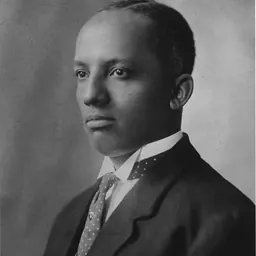

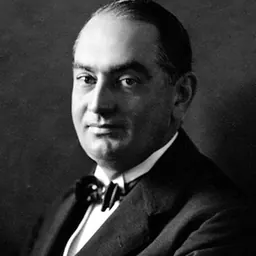

Contemporaries
People whose lives overlapped William Ritter's
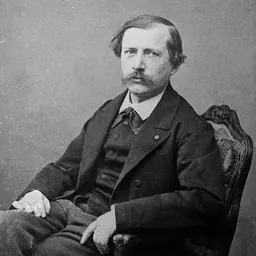

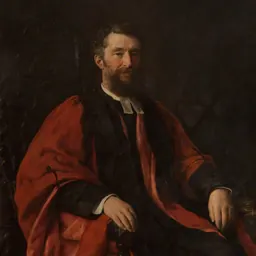

Frequently asked questions
Who was William Ritter?
Swiss journalist (1867–1955)
When was William Ritter born?
William Ritter was born on 31 May 1867 in Neuchâtel.
When did William Ritter die?
William Ritter died on 19 March 1955 in Melide.
What was William Ritter's occupation?
William Ritter was a journalist, art critic, writer, visual artist, opinion journalist and art historian.
What nationality was William Ritter?
William Ritter was Swiss.
Sources & further reading
· DBpedia: William Ritter (writer)
Cite this page
APA: Biography.guide. (2026). William Ritter. https://biography.guide/william-ritter/
MLA: "William Ritter." Biography.guide, https://biography.guide/william-ritter/.
Chicago: "William Ritter." Biography.guide. https://biography.guide/william-ritter/.
Data last updated: 2026-09-20 · Spot an error? Report a correction.
Page generated 2026-09-27 05:11 UTC