
About William Richard Williamson
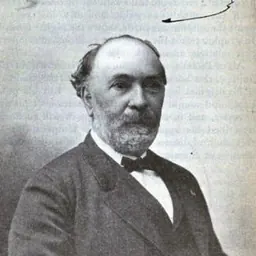
Lived 1872 – 1958 (aged 85–86). William Richard Williamson was a businessperson, adventurer and spy.
William Richard ("Haji") Williamson (1872–1958) was an English adventurer who became an oil company representative in the Persian Gulf.
Early life Williamson's early life was packed with adventure. Born in Bristol in 1872 and educated at Clifton High School, he left school at the age of 13 to enlist on his uncle's tea-clipper bound for Australia and the United States. When the vessel docked at San Diego, Williamson jumped ship and found work on a farm near Los Angeles, then with his aunt on her homestead. Intending to prospect for gold, Williamson acquired a mule and shotgun and travelled to the Nevada where he acquired a mine. When this venture ended in failure, Williamson went to San Francisco and enlisted on a cargo ship bound for Bordeaux. right
Following a brief visit to France, Williamson returned to California via the Panama Canal and undertook various activities: investing unsuccessfully in a railway company, taking part in a vaudeville act and trying his luck as an amateur boxer but it was not long before he returned to the sea.
Williamson became fourth mate on a whaler which sailed to the Bering Straits returning again to San Francisco after an eight-month voyage. He then enlisted for a trading voyage to the South Seas and settled for a time in the Caroline Islands, trading in sea-cucumbers. But he was arrested for selling rifles to rebel tribesmen and was incarcerated in a Manila jail. After bribing a guard, Williamson escaped to the American consul Alexander Russell Webb and boarded a British ship bound for Hong Kong. He pursued a seafaring career as quartermaster of the SS Chusan. Then, after a brief sojourn in Bombay, he boarded the SS Siam for the British colony of Aden. On his arrival, he joined the Aden Constabulary. Already interested in Islam, he undertook Islamic study in Aden and, after a year had passed, he made his formal shahada, was circumcised and changed his name to Abdullah Fadhil. This did not go down well with the Aden authorities who packed him off to India where Williamson was discharged from the Constabulary.
Trade and pearls Mecca, ca. 1910. Bird's-eye view of Kaaba crowded with pilgrimsWilliamson’s next incarnation was as a trader of camels and horses in Arabia, Iraq and Kuwait. With the money he acquired from this venture, in 1894 he was able to join the Hajj caravan to Mecca and thus gained the sobriquet “Haji”. Thereafter Williamson traded horses with the British Army in Bombay and imported foreign goods to his home town of Zubair in Iraq. On one occasion, he caused uproar when he appeared in the local suq on a penny-farthing bicycle, never before seen in those parts.
Relations with the British were changeable: they suspected him of gun running in the Persian Gulf and yet were happy to use him as a secret agent and spy hunter during World War I. In later years, his trading interests in the Persian Gulf meant that he veered towards legitimacy. The profits of horse-trading allowing him to buy a dhow, he undertook a number of voyages around the Persian Gulf. He regularly met Royal Navy gunboats as they criss-crossed the Persian Gulf in stop and search operations to suppress an illicit trade in rifles, slaves and contraband.
Williamson also tried his hand in the pearling business, joining the great pearling fleet in the Persian Gulf. The pearling season known al-Ghaus al-Kabir (“The Big Dive”) ran from May to September when a fleet of some 4,000 dhows ranging from the regular sambuk to the larger boum and baghlah would set out from the many ports of the Persian Gulf. Each carried a master, mate, divers, assistant divers and apprentices drawn from those ports, Oman and beyond. Their purpose was to fish for the most valuable pearls. The venture was not particularly successful and, with a large family to support, a steady job was an attractive proposition. but negotiations faltered and Mylles had to return in order to complete the agreement on 17 May 1935.
Williamson acted in a similar capacity for the first visits of Anglo-Persian geologists to Abu Dhabi in 1934, and was responsible for signing the first oil concession for that country in January 1935. He returned in 1936 to guide another oil survey for Petroleum Development (Trucial Coast) Limited. “We landed from the Gulf mail steamer at Dubai after a day and night lying to and waiting until one of the most violent storms of thunder and rain we had ever experienced had blown itself out,” wrote one of the geologists. “During the first few months in Dubai we were advised never to leave the house without an armed escort, as we were the first Europeans to live in the town and it was considered desirable to accustom the local populace gradually to our presence.”
The party travelled inland with the sheikh and his followers who used each occasion as an excuse for hunting. “With our two cars, we had the sheikh’s and at least one other filled with his men, 6 or 8 to a car, each with his saddle bag of belongings and his rifle. Room had also to be found for cooking pots and one or two hawks, while on one occasion a large saluki (greyhound) was also squeezed in. Our routes followed camel trails, the only tracks of any kind which existed, and as most of the country was sand the cars were very often stuck.”
However, there were lingering suspicions among British officials that Williamson was favouring local sheikhs over the interests of the oil company. By 1937, there were still five Gulf sheikhs due to sign oil concession agreements. Frank Holmes at this time was acting for Petroleum Concessions Ltd (PCL), an associate company of the Iraq Petroleum Company, and Williamson (also employed by PCL) began to intrigue against him. Williamson sent a letter – intercepted by the British - to the sheikh of Ras Al Khaimah encouraging him to hold out for better terms from PCL. Williamson also sent a man to the sheikh of Kalba in order to stiffen his resistance against the company. For the British Political Resident, this was the last straw. On 27 July, he wrote that it was “undesirable that Williamson should be employed anywhere on the Arab coast.” So Williamson retired from company life and returned to his family and a quiet life in his house in Zubair.
Retirement and death Williamson had married twice, one of his wives coming from Zubair and the other from Baghdad, and fathered several children. He retired into typical Arab life at Kut-el-Hajjaj near Basra where he supervised daily work on the date palm and orange tree plantations on his estate. One aspect of this theory is a claim that Khomeini was a son of Haji Williamson. Proponents of the theory have never produced primary evidence—such as birth records, correspondence, diaries, or contemporary eyewitness testimony—connecting Williamson to Khomeini's mother. The claim appears in polemical works and political propaganda rather than in documented historical research. Moreover, Khomeini's actual lineage is well documented.
Don’t just read it —
keep it.
Full-length biographies made to live with: read them, listen on the way to work, watch them tonight.
- E-book
- Audio
- Video
Instant download · yours to keep · every purchase keeps this site free
Important facts
People in William Richard Williamson's life
Named in this biography and alive at the same time
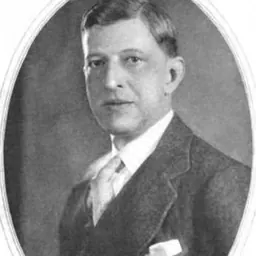

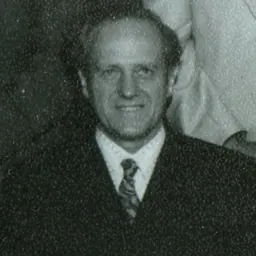

Related people
Same field, nearest in time


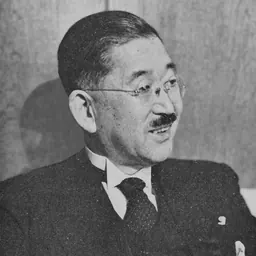
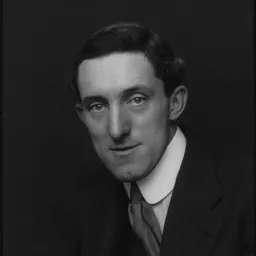
Contemporaries
People whose lives overlapped William Richard Williamson's



Frequently asked questions
Who was William Richard Williamson?
English adventurer
When was William Richard Williamson born?
William Richard Williamson was born on 25 February 1872 in Bristol.
When did William Richard Williamson die?
William Richard Williamson died in 1958.
What was William Richard Williamson's occupation?
William Richard Williamson was a businessperson, adventurer and spy.
Sources & further reading
· Wikipedia: William Richard Williamson
· DBpedia: William Richard Williamson
Cite this page
APA: Biography.guide. (2026). William Richard Williamson. https://biography.guide/william-richard-williamson/
MLA: "William Richard Williamson." Biography.guide, https://biography.guide/william-richard-williamson/.
Chicago: "William Richard Williamson." Biography.guide. https://biography.guide/william-richard-williamson/.
Data last updated: 2026-09-20 · Spot an error? Report a correction.
Page generated 2026-09-27 05:33 UTC