
About William R. Pogue
Lived 1930 – 2014 (aged 84). William R. Pogue was an American military officer, astronaut, autobiographer, aircraft pilot, mathematician and engineer.
William Reid Pogue (January 23, 1930 – March 3, 2014) was an American astronaut and pilot who served in the United States Air Force (USAF) as a fighter pilot and test pilot, and reached the rank of colonel. He was also a teacher, public speaker and author.
Born and educated in Oklahoma, Pogue graduated from Oklahoma Baptist University with a Bachelor of Science degree in Education and enlisted in the USAF in 1951 and served for 24 years. He flew combat during the Korean War and with the USAF Thunderbirds, then served as a flight instructor. Following graduation from Oklahoma State University with a Master of Science degree in 1960, he served as mathematics professor at the United States Air Force Academy, and after training at the Empire Test Pilots' School, he was a test pilot whose service included a two-years exchange with the Royal Air Force (RAF).
During his service as a flight instructor, Pogue was accepted as a trainee astronaut for NASA in 1966. His NASA career included one orbital mission as pilot of Skylab 4, whose crew conducted dozens of in-orbit research experiments and set a duration record of 84 days—the longest crewed flight—that was unbroken in NASA for over 20 years. The mission also had a dispute with ground control over schedule management that news media named The Skylab Mutiny. Pogue retired from the USAF and NASA a few months after he returned from Skylab, after which he taught and wrote about aviation and aeronautics in the U.S. and abroad. Pogue died in 2014, aged 84.
Early life and education William Pogue was born on January 23, 1930, in Okemah, Oklahoma, to Alex Wallis Pogue and Margaret Frances Pogue and he self-identifies as being of Choctaw descent. At 84 days, 1 hour and 15 minutes, it was the longest crewed flight to that date.
Personal life William Pogue married three times; his first marriage was in 1952 to Helen Juanita Dittmar, with whom he had three children.
In popular culture The 6139-6005 model Seiko watch which Pogue took on his Skylab mission as his personal watch is known to watch collectors as the "Pogue". It is of interest to collectors because it is the first automatic chronograph in space and unusual because NASA astronauts generally wore their NASA-issued Omega Speedmaster.
Special honors Pogue and his crew members received many awards. Pogue won the Johnson Space Center Superior Achievement Award in 1970.
Don’t just read it —
keep it.
Full-length biographies made to live with: read them, listen on the way to work, watch them tonight.
- E-book
- Audio
- Video
Instant download · yours to keep · every purchase keeps this site free
Important facts
People in William R. Pogue's life
Named in this biography and alive at the same time



Related people
Same field, nearest in time

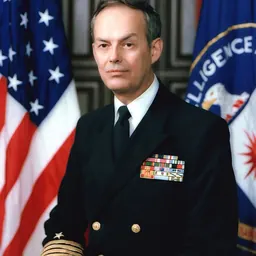

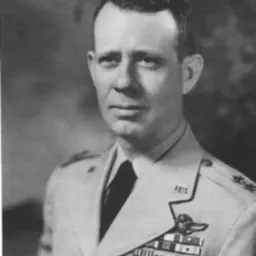
Contemporaries
People whose lives overlapped William R. Pogue's
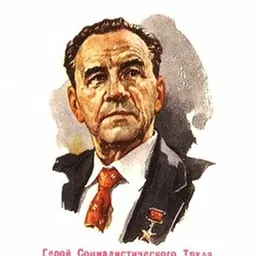
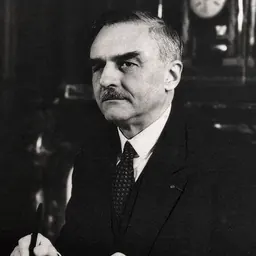

Frequently asked questions
Who was William R. Pogue?
American astronaut (1930-2014)
When was William R. Pogue born?
William R. Pogue was born on 23 January 1930 in Okemah.
When did William R. Pogue die?
William R. Pogue died on 3 March 2014 in Cocoa Beach.
What was William R. Pogue's occupation?
William R. Pogue was a military officer, astronaut, autobiographer, aircraft pilot, mathematician and engineer.
What nationality was William R. Pogue?
William R. Pogue was American.
Sources & further reading
Cite this page
APA: Biography.guide. (2026). William R. Pogue. https://biography.guide/william-r-pogue/
MLA: "William R. Pogue." Biography.guide, https://biography.guide/william-r-pogue/.
Chicago: "William R. Pogue." Biography.guide. https://biography.guide/william-r-pogue/.
Data last updated: 2026-09-20 · Spot an error? Report a correction.
Page generated 2026-09-27 05:31 UTC