
About William R. Kane
Lived 1911 – 1957 (aged 45). William R. Kane was an american football player.
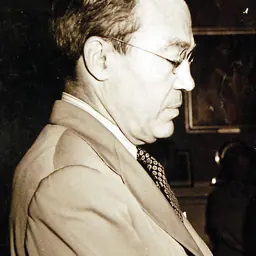
William Richard "Killer" Kane (4 June 1911 – 5 February 1957) was a United States Navy captain and World War II flying ace.
A 1932 graduate of the United States Naval Academy and standout athlete there, Kane served aboard ships of the Pacific Fleet before becoming a naval aviator. During World War II, Kane participated in multiple carrier battles, including the Battle of the Santa Cruz Islands and the Battle of the Philippine Sea. He become a flying ace with six aerial victories and commanded Fighting Squadron 10 (VF-10) and the USS Enterprise air group. Postwar, Kane served in a succession of staff assignments and graduated from the Air and Naval War Colleges. He became captain of the light carrier Saipan in 1956, but was killed less than a year later when the training aircraft he was flying crashed on a routine training flight.
Early life and prewar service
William Richard Kane was born on 4 June 1911 in the small town of San Rafael, California, the only son out of the three children of Sabin David and Ada Kane. His grandfather served as a fireman and policeman while his father was bandmaster of the San Rafael Military Academy and later became police chief. Kane grew up in San Rafael and attended the San Rafael Military Academy before transferring to San Rafael High School in sophomore year of high school, from which he graduated with five letters for baseball, basketball, swimming, football, and track.
Appointed to the United States Naval Academy Class of 1933, Kane entered the academy in June 1929. A boxer, wrestler, football tackle, baseball pitcher, and javelin throw competitor, Kane, nicknamed Killer for his athleticism, received the Navy Athletic Association Sword, presented to the graduate judged to be the best all-around athlete. In the football team's shutout loss in the 1932 Army–Navy Game, Kane garnered praise for his defensive performance at right tackle. Graduating 195th out of a class of 435, Kane was commissioned as an ensign. He served aboard the battleship New York between June 1933 and April 1934, then the heavy cruiser Astoria. While stationed aboard New York, homeported at Bremerton, Kane met local journalist Madeline Munns, whom he married on 14 June 1935.
After his marriage, he left for flight training at Naval Air Station Pensacola. Having completed his training and been designated a naval aviator in August 1936, Kane shipped out for Bombing Squadron 5 (VB-5B) aboard the carrier Lexington. Transferred to Fighting Squadron 2 (VF-2) on the same ship in June 1937, he returned to the Naval Academy on temporary duty as a physical training instructor and assistant football coach for the season between July and December 1938. After serving as a floatplane pilot aboard the heavy cruiser Wichita from January 1939, Kane arrived at Naval Air Station Pearl Harbor in July 1940 to serve as a flight test officer there. Bombing Squadron 10 (VB-10) commander James D. Ramage praised Kane for his leadership: "Killer was just great...he ran things very low-key but competently," as well as his radio discipline. Kane was also known for his nearsightedness but applied his "forceful personality" to remain on flight status. The Enterprise continued to launch strikes against Japanese forces in the Marshall and Caroline Islands and supported the Hollandia landing, between 20 February and 30 April. During strikes against Palau and Truk, Kane was credited with assisting in the downing of two Japanese aircraft. For his "skillful" leadership during these operations, Kane received a Gold Star to his Distinguished Flying Cross. He advocated for universal men's competitive athletics in the education system in order to ensure good physical condition, linking flying ability with the latter.
Postwar After the end of the war, Kane returned to the Naval Academy in December 1945 as executive officer of the Department of Physical Training and later became assistant director of Athletics there. After a stint as operations and air officer aboard the carrier Tarawa between January 1948 and June 1949, Kane graduated from the Air War College in June 1950. A return to the Pentagon to serve on the staff of the Deputy Chief of Naval Operations for Air followed and in February 1952 he became chief of staff of Heavy Attack Wing 1. Promoted to the rank of captain on 1 July 1952,
Awards and decorations
Naval Aviator Badge Navy Cross Distinguished Flying Crossw/ " Gold StarNavy Commendation MedalNavy Presidential Unit Citationw/ two " Bronze StarsNavy Unit CommendationChina Service Medalw/ " Bronze StarAmerican Defense Service Medal w/ Fleet claspAmerican Campaign MedalAsiatic-Pacific Campaign Medalw/ two " Silver Stars and two " Bronze StarsWorld War II Victory MedalNational Defense Service Medal
Navy Cross citation
Commander William Richard Kane U.S. Navy Date Of Action: June 11, 1944 to June 25, 1944 The President of the United States of America takes pleasure in presenting the Navy Cross to Commander William Richard Kane, United States Navy, for extraordinary heroism in operations against the enemy while serving as Pilot of a carrier-based Navy Fighter Plane and Commander of Air Group TEN (AG-10), attached to the USS Enterprise (CV-6), in action from 11 to 25 June 1944, in action against enemy Japanese forces in the vicinity of the Southern Mariana Islands, from 11 to 25 June 1944. Courageously leading his Air Group on numerous attacks, including fighter sweeps and bombardment missions, against strong enemy installations, Commander Kane inflicted serious and costly damage on enemy airfields, gun emplacements and beach positions, personally destroying one enemy fighter in aerial combat and damaging another. Despite a painful wound incurred when shot down on 16 June, he participated in the First Battle of the Philippine Sea on 20 June, serving as a fighter escort for several planes seeking the location of the main Japanese Fleet and shooting down a single-engined torpedo plane and a twin float aero-reconnaissance plane. Conducting a coordinated strike against the Japanese Fleet, he shot down an intercepting enemy ZERO in the ensuing battle and, directing his fighter planes in strafing dives on the decks of an enemy carrier, reduced the anti-aircraft opposition for his dive bombers and torpedo planes during their attacks which disabled or sunk the enemy vessel. Retiring with his group through darkness to base after this strenuous and protracted engagement, he effected a forced water landing, when unable to land on his carrier. By his brilliant airmanship, courageous initiative and daring leadership, Commander Kane contributed materially to the success of our operations in these historic actions, and his great personal valor in the face of grave peril was in keeping with the highest traditions of the United States Naval Service.
Don’t just read it —
keep it.
Full-length biographies made to live with: read them, listen on the way to work, watch them tonight.
- E-book
- Audio
- Video
Instant download · yours to keep · every purchase keeps this site free
Important facts
Related people
Same field, nearest in time




Contemporaries
People whose lives overlapped William R. Kane's






Frequently asked questions
Who was William R. Kane?
United States Navy Captain and Pilot
When was William R. Kane born?
William R. Kane was born on 4 June 1911.
When did William R. Kane die?
William R. Kane died on 5 February 1957.
What was William R. Kane's occupation?
William R. Kane was an american football player.
Sources & further reading
Cite this page
APA: Biography.guide. (2026). William R. Kane. https://biography.guide/william-r-kane/
MLA: "William R. Kane." Biography.guide, https://biography.guide/william-r-kane/.
Chicago: "William R. Kane." Biography.guide. https://biography.guide/william-r-kane/.
Data last updated: 2026-09-20 · Spot an error? Report a correction.
Page generated 2026-09-27 05:26 UTC