
About William Pitt Kīnau
Lived 1842 – 1859 (aged 16). William Pitt Kīnau was a politician.
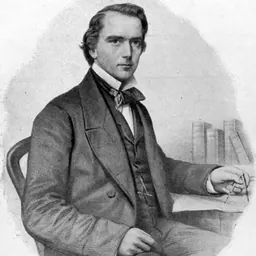
John William Pitt Kīnaʻu (December 21/27, 1842 – September 9, 1859) was a prince of the Kingdom of Hawaii and the only surviving son of High Chief William Pitt Leleiohoku I and Ruth Keʻelikōlani. As a descendant of King Kamehameha I, he was chosen to attend the Chiefs' Children's School (later renamed Royal School) taught by the American missionary Amos Starr Cooke and his wife, Juliette Montague Cooke, alongside fifteen of his royal cousins. At a young age, he inherited the landholdings of his father and his adoptive grandfather including Huliheʻe Palace, but the prince died under mysterious circumstances before his seventeenth birthday.
Early life and family Kīnaʻu was born December 21/27, 1842, Honolulu, on the island of Oahu.
In 1848 his father died of measles, followed by his classmate Moses Kekūāiwa and Liliʻuokalani's sister Kaʻiminaʻauao. Leleiohoku, the sixth-largest landholder after the Great Mahele, had inherited the estates of his biological father Kalanimoku and his hānai (adoptive) father Kuakini, two of the most power chiefs in the kingdom. Leleiohoku had received thirty-six ʻāina (land parcels), mainly on the island of Hawaiʻi and Maui from King Kamehameha III. Thus after Leleiohoku's death, Kīnaʻu became the heir to all his father's property, including Huliheʻe Palace in Kailua-Kona. His ample inheritance made him one of the wealthiest people in the kingdom.
Heartbroken over the loss of her husband and son, Keʻelikōlani kept his lead coffin in her house for weeks, with mourners chanting and reciting the traditional Hawaiian kanikau (poetic dirges) night and day. On November 24, the remains of the prince were transported back to Oahu, on board the schooler Kaluna, for a proper burial suited for his rank. The state funeral procession occurred on December 27, and was attended by thousands of natives, foreign residents and visitors including the royal family and members of the government. Russian traveler Aleksei Vysheslavtsev, who arrived in Honolulu days before, later wrote down a detailed account of the events in Ocherki perom i karandashom, iz krugosvetnogo plavaniya (Sketches in Pen and Pencil from a Voyage around the World). A contradictory report by Scottish traveling performer John Henry Anderson described an earlier funeral service for the prince which was held at Kawaiahaʻo Church on Sunday, November 6. The funeral was estimated to have cost at least $10,000. His mother's remains were also buried here after her death in 1883. In 1887, after the Mausoleum building became too crowded, the coffins belonging to members of the Kamehameha Dynasty including Kīnaʻu's were moved to the newly built Kamehameha Tomb. The name "W. P. Kinau" was inscribed on the mauka (mountainward) side of the monument above his final resting place.
Legacy His landholdings and properties along with Huliheʻe Palace were inherited by his mother; beside his estates, Keʻelikōlani also inherited much of her son's debt. These lands along with subsequent inheritances that Keʻelikōlani would receive over her lifetime later became part of the Bernice Pauahi Bishop Estate which funds the Kamehameha Schools to this day.
Historian Albert Pierce Taylor, calling him by the name of "Liliulani", gave this posthumous description of the prince: He was one of the most ambitious and promising of the young princes of the Kamehameha realm. It is believed by old Hawaiians today that had he lived he would have become a real and constructive leader of the Hawaiian people. He had a splendid physique and a magnetic personality. The glance of his eyes made him friends everywhere.
Don’t just read it —
keep it.
Full-length biographies made to live with: read them, listen on the way to work, watch them tonight.
- E-book
- Audio
- Video
Instant download · yours to keep · every purchase keeps this site free
Important facts
People in William Pitt Kīnau's life
Named in this biography and alive at the same time




Related people
Same field, nearest in time



Frequently asked questions
Who was William Pitt Kīnau?
Prince of the Kingdom of Hawaii
When was William Pitt Kīnau born?
William Pitt Kīnau was born on 21 December 1842 in Honolulu.
When did William Pitt Kīnau die?
William Pitt Kīnau died on 9 September 1859 in Kapaau.
What was William Pitt Kīnau's occupation?
William Pitt Kīnau was a politician.
What nationality was William Pitt Kīnau?
William Pitt Kīnau's recorded nationality: Kingdom of Hawaiʻi.
Sources & further reading
· Wikipedia: William Pitt Kīnau
· DBpedia: John William Pitt Kīnaʻu
Cite this page
APA: Biography.guide. (2026). William Pitt Kīnau. https://biography.guide/william-pitt-kinau/
MLA: "William Pitt Kīnau." Biography.guide, https://biography.guide/william-pitt-kinau/.
Chicago: "William Pitt Kīnau." Biography.guide. https://biography.guide/william-pitt-kinau/.
Data last updated: 2026-09-24 · Spot an error? Report a correction.
Page generated 2026-09-27 05:02 UTC