
About William Peters Hepburn
Lived 1833 – 1916 (aged 82). William Peters Hepburn was an American politician and lawyer.
William Peters Hepburn (November 4, 1833 – February 7, 1916) was an American Civil War officer and an eleven-term Republican congressman from Iowa's now-obsolete 8th congressional district, serving from 1881 to 1887, and from 1893 to 1909. According to historian Edmund Morris, "Hepburn was the House's best debater, admired for his strength of character and legal acumen." As chair of one of the most powerful committees in Congress, he guided or sponsored many statutes regulating businesses, including most notably the Hepburn Act of 1906. The Hepburn Act authorized the U.S. Interstate Commerce Commission to require railroads to charge "just and reasonable" rates.
Background Hepburn was born in Wellsville, Ohio and raised from the age of seven in Iowa City, Iowa. His schooling was limited to a few months in an Iowa City academy. The great-grandson of Revolutionary War officer, printer, and congressman Matthew Lyon, and the great-great-grandson of Thomas Chittenden, the first Governor of Vermont, he was first engaged as an apprentice printer, before studying law. He became prosecuting attorney of Marshall County in 1856 as well as serving as district attorney for the eleventh judicial district from 1856 to 1861. He was also the clerk to the Iowa House of Representatives.
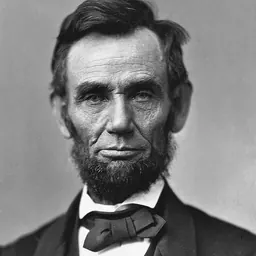
In May 1860, Hepburn was one of two delegates representing counties in the eleventh judicial district at the 1860 Republican National Convention, where Abraham Lincoln was nominated. The following March, when serving a brief term as a lobbyist for those counties in Washington D.C., Hepburn attended Lincoln's presidential inauguration. He participated in the final stage of the Battle of Island Number Ten near New Madrid, Missouri, and saw combat during the Siege of Corinth, the Battle of Iuka in northeastern Mississippi, and the Battle of Collierville, Tennessee. Historians have viewed Hepburn's defeat as a catalyst for authorization of a federal Interstate Commerce Commission, which became a higher priority for other congressman who hoped to avoid Hepburn's fate.
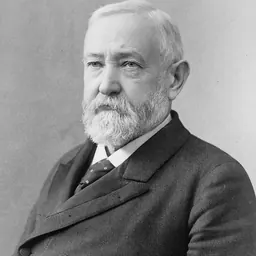
After the election of President Benjamin Harrison returned the White House to Republican hands in 1889, Hepburn served as Solicitor of the Treasury.
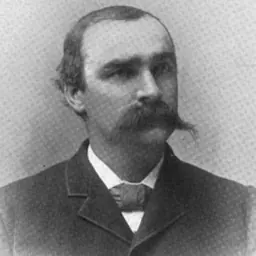
Return to Congress In 1892, after three terms away from Congress, Hepburn ran again for his former seat after Anderson's successor, Republican James Patton Flick, declined to run for a third term. Hepburn won his party's nomination and the general election, and was re-elected seven more times. During this period he served as Chairman of the Committee on Interstate and Foreign Commerce.
In 1894, Hepburn finished a distant second in the Republican caucus to nominate a successor to retiring U.S. Senator Wilson. but soon deferred to the successful candidacy of fellow Iowan and Civil War veteran David B. Henderson. Hepburn became notorious for his disdainful treatment on the House floor of newer members, prompting the New York Times to refer to him as the "House Terror." However, Hepburn was also an enduring but outspoken advocate to reform House rules that vested autocratic powers in Speakers of the House.
Even before the publication of Upton Sinclair's expose The Jungle, Hepburn led efforts to adopt federal laws regulating food quality. In 1902 the Hepburn Pure Food Act passed the House (but not the Senate). When such a bill finally passed both houses as the Pure Food and Drug Act of 1906 (following the publication of Sinclair's book), Hepburn was the bill's floor manager.
Hepburn was also instrumental in appropriating funds for a canal connecting the Atlantic and Pacific oceans. Hepburn initially preferred a route through Nicaragua over a route through Panama, but ultimately became a key House sponsor of appropriations measures necessary for completion of the canal through Panama.
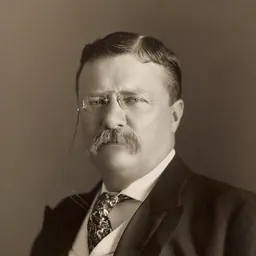
Hepburn Act of 1906 He also sponsored the Hepburn Act of 1906, a major priority in the second term of President Theodore Roosevelt. Hepburn's loss was attributed to "purely local conditions and local strife," such as anger over bank failures and Hepburn's choices for local postmasters.
After his defeat but before his final term ended, he became the chairman of a 25-member group seeking once again to reform House rules that allowed Speaker Joe Cannon to amass even greater powers. This time, Hepburn's reform efforts succeeded; Speaker Cannon was forced to surrender the power to block bills he did not like from coming to the floor once they received committee support.
After Congress Hepburn returned to the practice of law, first in Washington, D.C., then in Clarinda. He died on February 7, 1916.
Honors The small town of Hepburn, Iowa, a few miles north of Clarinda, was named in his honor.
His home in Clarinda, known as the William P. Hepburn House, is a National Historic Landmark.
Don’t just read it —
keep it.
Full-length biographies made to live with: read them, listen on the way to work, watch them tonight.
- E-book
- Audio
- Video
Instant download · yours to keep · every purchase keeps this site free
Important facts
People in William Peters Hepburn's life
Named in this biography and alive at the same time




Related people
Same field, nearest in time

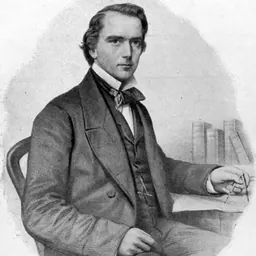



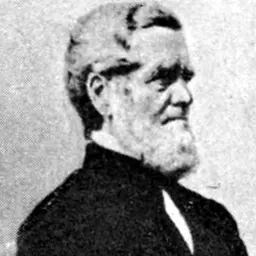
Contemporaries
People whose lives overlapped William Peters Hepburn's
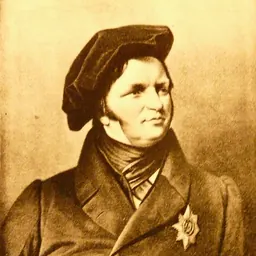
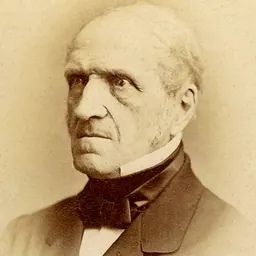


Frequently asked questions
Who was William Peters Hepburn?
American politician (1833–1916)
When was William Peters Hepburn born?
William Peters Hepburn was born on 4 November 1833 in Wellsville.
When did William Peters Hepburn die?
William Peters Hepburn died on 7 February 1916.
What was William Peters Hepburn's occupation?
William Peters Hepburn was a politician and lawyer.
What nationality was William Peters Hepburn?
William Peters Hepburn was American.
Sources & further reading
· Wikipedia: William Peters Hepburn
Cite this page
APA: Biography.guide. (2026). William Peters Hepburn. https://biography.guide/william-peters-hepburn/
MLA: "William Peters Hepburn." Biography.guide, https://biography.guide/william-peters-hepburn/.
Chicago: "William Peters Hepburn." Biography.guide. https://biography.guide/william-peters-hepburn/.
Data last updated: 2026-09-20 · Spot an error? Report a correction.
Page generated 2026-09-27 05:21 UTC