
About William Peel, 1st Earl Peel
Lived 1867 – 1937 (aged 70). William Peel, 1st Earl Peel was a British politician, jurist and war correspondent.
William Robert Wellesley Peel, 1st Earl Peel (7 January 1867 – 28 September 1937), styled 2nd Viscount Peel from 1912 to 1929, was a British politician who was a local councillor, a Member of Parliament and a member of the House of Lords. After an early career as a barrister and a journalist, he entered first local and then national politics. He rose to hold a number of ministerial positions but is probably best remembered for chairing the Peel Commission in 1936–1937, which recommended for the first time the partition of the British Mandate of Palestine into separate Jewish and Arab states. where he was secretary of the Oxford Union.
In 1893, he was called to the bar at the Inner Temple and practised as a barrister before taking the position of special correspondent for the Daily Telegraph during the Greco-Turkish War of 1897.
Political career In 1900, Peel was appointed a member of the Royal Commission that was formed to inquire into the operation of the Port of London. In February the same year, he began his political career when he was elected in a by-election to fill a vacant seat for Woolwich in the London County Council to which he was re-elected in the ordinary election the following year. He was a member of the Moderate pro-Conservative grouping on the council that became the Municipal Reform Party. He was leader of the party from 1908 to 1910 and chairman of the county council from 1914 to 1916. and lieutenant-colonel of the Bedfordshire Yeomanry in 1912 and, at the outbreak of the First World War moved to France with his regiment, but ill health made him return to Britain in 1915. In 1918, he received his first government post as Joint Parliamentary Secretary at the Department of National Service in the coalition government of David Lloyd George. In 1919, Peel became Under-Secretary of State for War and a member of the Privy Council.
He entered the cabinet in 1922 as Secretary of State for India, and, after the downfall of Lloyd George's coalition, continued to hold the post during the premierships of Andrew Bonar Law and Stanley Baldwin. The latter's government fell in January 1924, but after a brief spell in opposition, it was returned to power at the 1924 general election. Peel was appointed First Commissioner of Works in the Conservative administration formed by Baldwin. In 1928, Peel briefly returned to the India Office, but the Conservatives lost power by the 1929 general election. and that same year served as chairman of the Wheat Commission, and in 1934, he chaired the Royal Commission on the Common Law. In 1936–1937, he chaired the Peel Commission, which recommended for the first time the partition of the British Mandate of Palestine into separate Jewish and Arab states. –1983), who married in 1927 Colonel Stewart Blacker (1887–1964), and had four children. She was a Justice of the Peace for the County of London in 1939, and for Sussex in 1948. Arthur Peel, 2nd Earl Peel (1901–1969)
In 1929, Ashton died, and Peel succeeded him as chairman of James Williamson and Company. He was a director of Barclays Bank and of the Great Northern Railway.
Death Lord Peel died at 70 in his home in East Meon, near Petersfield, Hampshire, in 1937 after a long illness. He was succeeded in his titles by his son, Arthur.
Don’t just read it —
keep it.
Full-length biographies made to live with: read them, listen on the way to work, watch them tonight.
- E-book
- Audio
- Video
Instant download · yours to keep · every purchase keeps this site free
Important facts
People in William Peel, 1st Earl Peel's life
Named in this biography and alive at the same time
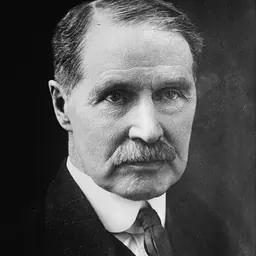



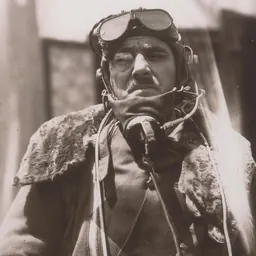
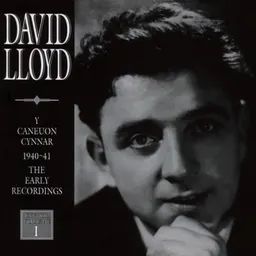
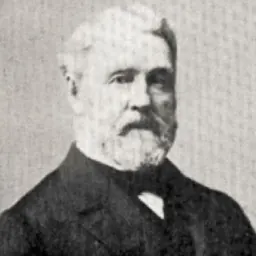
Related people
Same field, nearest in time




Contemporaries
People whose lives overlapped William Peel, 1st Earl Peel's


Frequently asked questions
Who was William Peel, 1st Earl Peel?
British politician (1867-1937)
When was William Peel, 1st Earl Peel born?
William Peel, 1st Earl Peel was born on 7 January 1867 in London.
When did William Peel, 1st Earl Peel die?
William Peel, 1st Earl Peel died on 28 September 1937 in East Meon.
What was William Peel, 1st Earl Peel's occupation?
William Peel, 1st Earl Peel was a politician, jurist and war correspondent.
What nationality was William Peel, 1st Earl Peel?
William Peel, 1st Earl Peel was British.
Sources & further reading
· Wikipedia: William Peel, 1st Earl Peel
· DBpedia: William Peel, 1st Earl Peel
Cite this page
APA: Biography.guide. (2026). William Peel, 1st Earl Peel. https://biography.guide/william-peel-1st-earl-peel/
MLA: "William Peel, 1st Earl Peel." Biography.guide, https://biography.guide/william-peel-1st-earl-peel/.
Chicago: "William Peel, 1st Earl Peel." Biography.guide. https://biography.guide/william-peel-1st-earl-peel/.
Data last updated: 2026-09-20 · Spot an error? Report a correction.
Page generated 2026-09-27 05:31 UTC