
About William Osler Abbott
Lived 1902 – 1943 (aged 41). William Osler Abbott was an American physician, known for Abbott Rawson tube and Miller-Abbott tube.
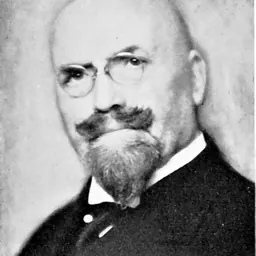
William Osler Abbott (1902–1943) was a United States physician, son of Alexander C. Abbott and Georgina Osler. His most notable contribution to the field of medicine was his part in the development of the Miller-Abbott tube, used in decompression and stenting of the small intestine, alongside Thomas Grier Miller, and also for devising the Abbot Rawson tube. Abbot received his MD in 1928 from the University of Pennsylvania. He died of myelogenous leukemia in Waquoit, Massachusetts on September 10, 1943.
Personal life William Osler Abbott was born July 26, 1902, in New Bedford, Massachusetts. He was given the nickname "Pete" growing up. In the midst of being part-time with the Department of Pharmacology, Abbott was working his way up the ladder at Penn. He Joined the Gastro Intestinal clinic at Penn and was first recognized as a Medical fellow from 1930 to 1931. From 1931 to 1937 he was known as an instructor at University of Pennsylvania. In the year 1937, Abbott worked with a man named Arthur Joy Rawson creating the Abbott Rawson Tube, which is a double barreled Gastroenterostomy tube for use in postoperative care. After fabricating his double lumen tube, Abbott would initially swallow the tube in the morning at his home on the Main Line outside of Philadelphia, ride to work on the train with the proximal end exiting his nose and curled around his ear or leaving his mouth beside a pipe and residing in a coat pocket. Once in the hospital the intubation continued under fluoroscopic guidance. With the fundamentals of a practical technique of intubation established, he began his investigations of the absorptive capacity of the gut and the effect of drugs on the intestine in December 1932. On May 15, 1942, Abbott, a major in the United States Army Medical Corps, left Philadelphia with the 20th General Hospital for Camp Claiborne, Louisiana. Eight days later while undergoing a physical examination a large spleen was detected and blood studies led to a diagnosis of Myelogenous leukemia. Still largely unchanged in 2011, once this instrument weaves down the esophagus and into the stomach, the tube is capable of a handful of jobs at this point, from suctioning gastric juices for testing and irrigation to ballooning open the entryway to the small intestine, called the duodenum, for clearer radiology testing and easier removal of many intestinal blockages. With the instrument having its double-barreled design, one of the pipes, called a lumen, is responsible for pumping up a thin balloon at the tip for easy exploration into the intestines at the duodenum. The other lumen tube can then suction fluids out or pump fluids in, depending on the procedure. For radiology, a barium solution can be pumped into the duodenum to isolate potential damage and produce clear images of it. Allowing the tube to proceed into the intestines also might help dislodge identified blockages causing pain or digestive disorders. In 2011, the Miller-Abbott tube might be accompanied by another, called a laparoscope. This latter tube combines a light and camera to give physicians a three-dimensional, colored view of whatever blockage is occurring. It can also help the doctor know exactly when the Miller-Abbott tube's balloon is at the perfect location in the duodenum — a process that depends on the slow and steady peristaltic contractions of the digestive tract. Although many uses beyond that for which it was first employed have been developed, it remains a much neglected surgical adjunct. For a time after it was described in 1937, the device was widely used for the emptying of the gastrointestinal tract at times of surgical stress. Now it is described in only one textbook on surgery.
Death In September of May 1942, Abbott was honorably discharged from the army because of a physical disability and died of myelogenous leukemia. Abbott spent the remaining months before he died doing leukemia research. It is believed this happened following the excess X-ray exposure he received in screening the position of the tube in volunteers and patients he was investigating.
Years after death A small 5 series collection about William Osler Abbott was assembled by Catharine G. Leeke, his secretary at the Gastro Intestinal Clinic at the Hospital of the University of Pennsylvania. It contains personal information, a summary of his professional work, and information on his final years. On June 7, 1972, the collection was donated by Thomas A. Urbine, Jr. on behalf of Catharine Leeke to the Historical Society of Pennsylvania and then transferred to the College of Physicians.
Don’t just read it —
keep it.
Full-length biographies made to live with: read them, listen on the way to work, watch them tonight.
- E-book
- Audio
- Video
Instant download · yours to keep · every purchase keeps this site free
Important facts
People in William Osler Abbott's life
Named in this biography and alive at the same time
Related people
Same field, nearest in time


Contemporaries
People whose lives overlapped William Osler Abbott's




Frequently asked questions
Who was William Osler Abbott?
American physician (1902-1943)
When was William Osler Abbott born?
William Osler Abbott was born on 26 July 1902 in New Bedford.
When did William Osler Abbott die?
William Osler Abbott died on 10 September 1943.
What was William Osler Abbott's occupation?
William Osler Abbott was a physician.
What was William Osler Abbott known for?
William Osler Abbott was known for Abbott Rawson tube and Miller-Abbott tube.
What nationality was William Osler Abbott?
William Osler Abbott was American.
Sources & further reading
· Wikipedia: William Osler Abbott
· DBpedia: William Osler Abbott
Cite this page
APA: Biography.guide. (2026). William Osler Abbott. https://biography.guide/william-osler-abbott/
MLA: "William Osler Abbott." Biography.guide, https://biography.guide/william-osler-abbott/.
Chicago: "William Osler Abbott." Biography.guide. https://biography.guide/william-osler-abbott/.
Data last updated: 2026-09-26 · Spot an error? Report a correction.
Page generated 2026-09-27 05:15 UTC