
William Mompesson
English clergyman
About William Mompesson
Lived 1639 – 1709 (aged 69–70).
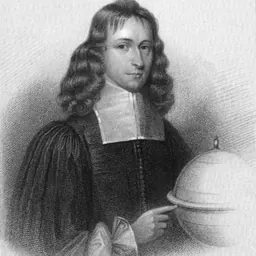
William Mompesson (1639 – 7 March 1709) was a Church of England priest whose decisive action when his Derbyshire parish, Eyam, became infected with the plague in the 17th century averted more widespread catastrophe.
The earliest reference to him is in Alumni Cantabrigienses; he was baptized at Collingham, West Yorkshire on 28 April 1639, attended school in Sherburn and went to Peterhouse, Cambridge University, in 1655, graduating BA 1659 and MA 1662. He was ordained in 1660. After a period of service as chaplain to Sir George Saville, later (1679) Lord Halifax, he came as Rector to Eyam in 1664, took the courageous decision to isolate the village. In all, 260 of the village's inhabitants, including Mompesson's wife Catherine, died before the plague claimed its last victim in December 1666. Mompesson became associated with the plague and was not universally welcomed at his next parish, Eakring, Nottinghamshire. In 1670 he remarried, his second wife being a widow, Elizabeth Newby. She was a relative of Mompesson's patron, Sir George Saville, and through Saville's patronage Mompesson eventually became Prebendary of Southwell, Nottinghamshire, although he declined the opportunity to be Dean of Lincoln Cathedral.
This historic episode, commemorated each year in Eyam, has been the subject of many books and plays, notably The Roses of Eyam by Don Taylor (1970). Recently academics have begun to question the key details of the story: for example the extent to which wealthier residents were able to circumvent the ban. For example, despite insisting all villagers should remain in Eyam, Mompesson had his own children sent away to Sheffield in June 1666, just before the quarantine was agreed. At this time he also wanted to send his wife Catherine with them but she refused to leave him, later succumbing to the plague.
Mompesson did many things to help the village during the plague including preventing its spread by filling pockets drilled in the Boundary Stone full of vinegar for trading. This helped stop the spread of the plague by sterilising any coins that came in or out of Eyam. "Mompesson's Well", listed at Grade II by Historic England, is a substantial well on the edge of the village and another site for the exchange of payment for food and other essentials left by neighbouring parishioners.
Don’t just read it —
keep it.
Full-length biographies made to live with: read them, listen on the way to work, watch them tonight.
- E-book
- Audio
- Video
Instant download · yours to keep · every purchase keeps this site free
Important facts
Contemporaries
People whose lives overlapped William Mompesson's





Frequently asked questions
Who was William Mompesson?
English clergyman
When was William Mompesson born?
William Mompesson was born in 1639.
When did William Mompesson die?
William Mompesson died in 1709 in Eakring.
Sources & further reading
· Wikipedia: William Mompesson
Cite this page
APA: Biography.guide. (2026). William Mompesson. https://biography.guide/william-mompesson/
MLA: "William Mompesson." Biography.guide, https://biography.guide/william-mompesson/.
Chicago: "William Mompesson." Biography.guide. https://biography.guide/william-mompesson/.
Data last updated: 2026-09-20 · Spot an error? Report a correction.
Page generated 2026-09-27 05:13 UTC