
About William Molesworth
Lived 1894 – 1955 (aged 61). William Molesworth was a British military personnel.
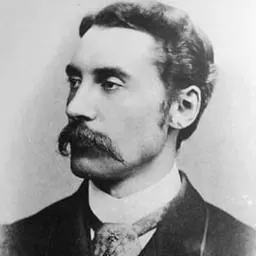
Lieutenant Colonel William Earle Molesworth (14 March 1894 – 22 October 1955) was a British First World War flying ace credited with eighteen aerial victories.
Biography Molesworth was born on 14 March 1894, the son of Lieutenant Colonel William Molesworth , of the Indian Medical Service, and Winifred Anne Weeks.
He attended Marlborough College from 1908 to 1912, then trained for an army career at the Royal Military College at Sandhurst, from 1912 to 1914.
From October 1914 Molesworth served in the trenches on the Western Front in France. later backdated to 30 August 1914. He was wounded in December, but returned to duty and served with the Fusiliers until March 1916. finally completing his flight training at Upavon's Central Flying School in February 1917. He was assigned to No. 60 Squadron RFC (60 Sqn), flying Nieuport 17s, and scored his first victory on 22 April. to lead "A" Flight.
On 20 October 1917, he returned to flying Nieuports when assigned to No. 29 Squadron RFC (29 Sqn) as a captain. He gained his first victories with them on 8 November 1917, setting an enemy reconnaissance two-seater and an Albatros D.V on fire. He then scored at a steady rate until his eighteenth and last victory on 18 March 1918.
He served as an instructor, with the temporary rank of major, at the Central Flying School between 26 June and 4 September 1918. He retained his temporary majority when appointed commander of No. 158 Squadron RAF on 3 September 1918. On 12 September, just two months before the armistice of 11 November 1918 which ended the war, he was awarded the Medaglia d'Argento al Valore Militare (Silver Medal of Military Valor) by Italy. He gave up command of his squadron being restored to the establishment of the Royal Munster Fusiliers.
The Royal Munster Fusiliers were disbanded on 31 July 1922, and Molesworth was serving as a Railway Traffic Officer, when on 13 September 1922 he was appointed a captain in the Royal Sussex Regiment, with seniority from 7 April 1917. On 13 February 1924 he was transferred to the Royal Tank Corps (later the Royal Tank Regiment), where he was promoted to the substantive rank of major on 28 February 1931.
He continued his military service into the Second World War, which began in September 1939, and was promoted to lieutenant colonel on 1 April 1940, before retiring from the army on 13 September 1941. He then worked at the Ministry of Supply, until his retirement in 1954.
Awards and citations Military Cross
Bar to the Military Cross
List of aerial victories +Combat record No.Date/TimeAircraft/Serial No.OpponentResultLocationNotes With No. 60 Squadron RFC1 22 April 1917@1720 Nieuport 17(B1569) Albatros D.III Driven down out of control Vitry 2 24 April 1917@1040 Nieuport 17(B1569) Balloon Destroyed Boiry-Notre-Dame 3 29 June 1917@1800 Nieuport 17(B1652) Albatros D.III Destroyed Douai—Estrées 4 11 July 1917@1410 Nieuport 17(B1652) Albatros D.III Driven down out of control Quéant 5 5 August 1917@2000 SE.5a(A4851) Albatros D.III Destroyed (on fire) Hendecourt Shared with Lieutenant Spencer B. Horn6 9 August 1917@0700 S.E.5a(A8932) Albatros D.V Destroyed Cagnicourt With No. 29 Squadron RFC7 8 November 1917@1515 Nieuport 17(B6812) Albatros D.V Destroyed (on fire) East of Westrozebeke 8 8 November 1917@1600 C Destroyed (on fire) Houthulst Forest 9 26 November 1917@1450 Nieuport 17(B6820) Albatros D.V Driven down out of control South-east of Houthulst 10 3 January 1918@1530 Nieuport 17(B6812) Albatros D.V Driven down out of control South of Moorslede 11 22 January 1918@1235 Nieuport 17(B6812) Albatros D.V Destroyed North-east of Staden 12 24 January 1918@1200 Nieuport 17(B6812) C Destroyed North-east of Roulers 13 24 January 1918@1310 C Destroyed North of Roulers 14 29 January 1918@1255 Nieuport 17(B6797) Albatros D.V Destroyed (on fire) East of Moorslede 15 5 February 1918@1020 Nieuport 17(B6812) C Driven down out of control Moorslede—Roulers 16 21 February 1918@1410 Nieuport 17(B6812) C Captured Ypres—Zonnebeke 17 26 February 1918@1100 Nieuport 17(B6812) C Destroyed South-east of Beselare 18 18 March 1918@1145 Nieuport 17(B6812) Pfalz D.III Destroyed South-east of Rumbeke
Don’t just read it —
keep it.
Full-length biographies made to live with: read them, listen on the way to work, watch them tonight.
- E-book
- Audio
- Video
Instant download · yours to keep · every purchase keeps this site free
Important facts
People in William Molesworth's life
Named in this biography and alive at the same time

Related people
Same field, nearest in time





Contemporaries
People whose lives overlapped William Molesworth's

Frequently asked questions
Who was William Molesworth?
British flying ace (1894-1955)
When was William Molesworth born?
William Molesworth was born on 14 March 1894 in Andaman Islands.
When did William Molesworth die?
William Molesworth died on 22 October 1955 in Reading.
What was William Molesworth's occupation?
William Molesworth was a military personnel.
What nationality was William Molesworth?
William Molesworth was British.
Sources & further reading
· Wikipedia: William Molesworth
· DBpedia: William Molesworth (British Army officer)
Cite this page
APA: Biography.guide. (2026). William Molesworth. https://biography.guide/william-molesworth/
MLA: "William Molesworth." Biography.guide, https://biography.guide/william-molesworth/.
Chicago: "William Molesworth." Biography.guide. https://biography.guide/william-molesworth/.
Data last updated: 2026-09-20 · Spot an error? Report a correction.
Page generated 2026-09-27 05:24 UTC