
William Martin Leake
British military man, diplomat and antiquary
About William Martin Leake
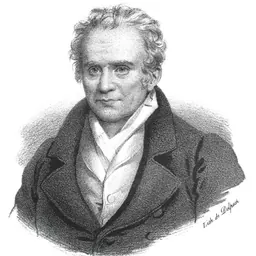
Lived 1777 – 1860 (aged 82). William Martin Leake was a British archaeologist, diplomat, military personnel, antiquarian, writer and explorer.
Colonel William Martin Leake, FRS (14 January 1777 6 January 1860) was a British Army officer, spy, topographer, diplomat, antiquarian and writer who served in the French Revolutionary and Napoleonic Wars. He spent much of his career in the British army in the Mediterranean seaports. Leake developed an interest in geography and culture of the regions visited, and authored a number of works, mainly about Greece.
Life
Leake was born in London to John Martin Leake and Mary Calvert Leake. Following a family tradition, he was commissioned into the British Army's Royal Artillery as an officer; he completed his training at the Royal Military Academy, Woolwich in 1794 and was commissioned as a second lieutenant. Having spent four years in the West Indies as lieutenant of marine artillery, he was promoted to captain, and was sent in 1799 by the government to Constantinople to train the forces of the Ottoman Empire in the use of artillery. The British Empire had decided to support the Ottoman in its defence against Napoleonic France. A journey through Asia Minor in 1800 to join the British fleet at Cyprus inspired him with an interest in antiquarian topography. In 1801, after travelling across the desert with the Ottoman army to Egypt, he was, on the expulsion of the French, employed in surveying the Nile valley as far as the cataracts; but having sailed with the ship engaged to convey the Elgin Marbles from Athens to England, he lost all his maps and observations when the vessel foundered off Cerigo in Greece.
For much of the first decade of the nineteenth century, Leake was employed by the Foreign Office to spy in Greece in the guise of a wandering tourist, with the intent of gathering topographical information which would be useful in the case of a French invasion. Shortly after his arrival in England, he was sent out to survey the coast of Albania and the Morea, with the view of assisting the Turks against attacks of the French from Italy, and of this he took advantage to form a valuable collection of coins and inscriptions and to explore ancient sites. In 1807, war having broken out between the Ottoman Empire and Britain, he was made prisoner at Salonica; but, obtaining his release the same year, he was sent on a diplomatic mission to Ali Pasha of Ioannina, whose confidence he completely won, and with whom he remained for more than a year as British representative. He was there in 1809 when Lord Byron visited Ali's court.
In 1810 he was granted a yearly sum of £600 for his services in Turkey. In 1815 he retired from the army, in which he held the rank of colonel, devoting the remainder of his life to topographical and antiquarian studies. He joined the learned Society of Dilettanti and became vice-president of the Royal Society of Literature. He was admitted a Fellow of the Royal Society on 13 April 1815.
He died in Steyning, Sussex on 6 January 1860. The marbles collected by him in Greece were presented to the British Museum; his bronzes, vases, gems and coins were purchased by the University of Cambridge after his death, and are now in the Fitzwilliam Museum. He was also elected as a Fellow of the Royal Geographical Society, received the honorary DCL at Oxford in 1816, and was a member of the Berlin Academy of Sciences and correspondent of the Institute of France.
Works He authored:
Researches in Greece (1814) The topography of Athens: With some remarks on its antiquities (1821) Journal of a tour in Asia Minor: with comparative remarks on the ancient and modern geography of that country (1824) Travels in the Morea: With a map and plans (1830), and a supplement, Peloponnesiaca (1846) Travels in Northern Greece (1835) Numismata Hellenica (1854), followed by a supplement in 1859
His Topography of Athens, the first attempt at a systematic treatment, long remained an authority.
Don’t just read it —
keep it.
Full-length biographies made to live with: read them, listen on the way to work, watch them tonight.
- E-book
- Audio
- Video
Instant download · yours to keep · every purchase keeps this site free
Important facts
People in William Martin Leake's life
Named in this biography and alive at the same time
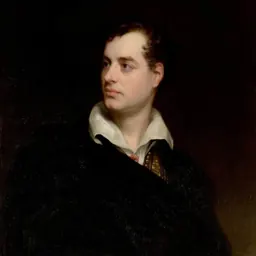


Related people
Same field, nearest in time



Contemporaries
People whose lives overlapped William Martin Leake's


Frequently asked questions
Who was William Martin Leake?
British military man, diplomat and antiquary (1777–1860)
When was William Martin Leake born?
William Martin Leake was born on 14 January 1777 in London.
When did William Martin Leake die?
William Martin Leake died on 6 January 1860 in Brighton.
What was William Martin Leake's occupation?
William Martin Leake was an archaeologist, diplomat, military personnel, antiquarian, writer and explorer.
What nationality was William Martin Leake?
William Martin Leake was British.
Sources & further reading
· Wikipedia: William Martin Leake
· DBpedia: William Martin Leake
Cite this page
APA: Biography.guide. (2026). William Martin Leake. https://biography.guide/william-martin-leake/
MLA: "William Martin Leake." Biography.guide, https://biography.guide/william-martin-leake/.
Chicago: "William Martin Leake." Biography.guide. https://biography.guide/william-martin-leake/.
Data last updated: 2026-09-27 · Spot an error? Report a correction.
Page generated 2026-09-27 05:17 UTC