
About William Longshaw
Lived 1836 – 1865 (aged 28). William Longshaw was an American military officer and military personnel.
William Longshaw Jr. (April 26, 1836 – January 15, 1865) was a medical doctor who volunteered for service in the United States Navy during the American Civil War. Longshaw obtained medical and pharmacy training in Boston, New York City, and New Orleans, receiving his medical degree from the University of Michigan. He was appointed acting assistant surgeon by the navy in 1862, serving aboard , , , , and finally his squadron's flagship .
On several occasions Longshaw's gallantry and courageous actions under direct enemy fire were mentioned in reports by flag-level superiors John Dahlgren and David Dixon Porter and the Secretary of the Navy Gideon Wells. Supporting the navy's amphibious landing in the Second Battle of Fort Fisher on January 15, 1865, Longshaw went onshore with the landing party and was active in tending to numerous wounded and dying during the assault. After rescuing an unconscious sailor in danger of drowning from the rising tide, Longshaw responded to the cry of a wounded marine and while treating him was shot in the head and died instantly.
After a 1913 plea for recognition by United States Navy medical director James Duncan Gatewood, in 1943 the navy commissioned a named in honor of the assistant surgeon. That vessel was lost to shore battery fire in the Battle of Okinawa and received nine battle stars for its World War II service.
Early life and training William Longshaw was born in Manchester, England, in April 1836, the eldest of two sons to William and Margaret (née Davies) Longshaw who had emigrated to the United States from England shortly after marriage. William's younger brother Luther M. (July 31, 1844 – May 27, 1921) was born in Lowell. William appears to have attended Lyman school and the English High School, completing his studies at Phillips Academy. Returning to East Boston in 1857, he joined the Maverick Congregational Church. At the age of 18, Longshaw traveled to New Orleans, working as a pharmacy clerk while attending lectures in pharmacology at the University of Louisiana (now Tulane).
While still in New Orleans, Longshaw assisted the local medical community in combating a summer Yellow fever epidemic. After further study at University of Michigan Medical School Longshaw received his medical degree in 1859. As a student, Longshaw was a clinical assistant to the professor of surgery; he was also granted "a special degree in chemistry, both qualitative and quantitative analysis." He reported that he and another crewman had witnessed the Solar eclipse of July 18, 1860.
Naval service USS Yankee Entering the Navy as an acting assistant surgeon June 25, 1862, Longshaw was described as a slim, fair-skinned fellow of average height with dark hair and gray eyes. While Longshaw was in service on Yankee, the little gunboat served on the James River flotilla, supporting McClellan's Peninsula campaign. In July, Longshaw participated in a nighttime raid that captured two ships without firing a shot. In August 1862 Yankee returned to the Potomac to guard approaches to the nation's capitol. Until March, Longshaw served as a medical officer of the Boston Navy Yard, where he would perform physical inspections of new recruits, returning sailors and officers, as well as treating injuries and illnesses of those in his charge.
USS Passaic
In March 1863, Longshaw was assigned to the South Atlantic Blockading Squadron under Samuel Francis Du Pont in Charleston Harbor. Longshaw's new vessel was , much like her predecessor , a shallow-draft, low-profile ironclad with a single raised turret in the center of the deck. In early April, Passaic and much of her squadron's ironclads attacked forts in Charleston Harbor. The ships were pounded by shot and shell. In a few hours, Passaic fired 13 shells and was struck 35 times, shots disabling one of its two guns, jamming its turret for a time and virtually ripping off the pilot-house atop the turret. However, Passaic reported no casualties; only one death was recorded in the nine ironclads that day.
USS Lehigh USS "Lehigh" on the James River, showing dents in the monitor's turret armor made by Confederate cannon (U.S. National Archives) On August 11, Longshaw was ordered to return to ironclad service on the newly built monitor , a sister ship of Passaic, under the command of Commander Andrew Bryson. Longshaw's status as medical officer prevented Dahlgren from offering him a field promotion. However, the navy's chief of the Bureau of Medicine and Surgery sent his recommendation to Secretary of the Navy Gideon Welles who did promote Longshaw, pending board examinations and completion of two years' service.
In late December, a land attack on the fort failed, causing the removal of the Union forces' commander. Another more coordinated assault was planned for January. The fort was to face massive bombardment from the sea, followed by a land assault from the north, timed to coincide with amphibious landing by 400 marines and 1600 sailors from the northeast. For the naval assault Minnesota would supply 51 marines, 189 sailors and officers, and Longshaw. Marines were armed with rifles; sailors with cutlass and pistols. Longshaw carried his medical bag.
The naval assault bogged down; the fort's walls were out of range of the sailors' pistols. Hundreds of marines and sailors were killed or wounded. One officer reported of Longshaw, "he was always near the front with instruments and tourniquets...". Another officer reported of "his great bravery and attention to the wounded under the hottest fire...". Thomas O. Selfridge, later recorded:
The next day, North Atlantic Blockading Squadron commanding officer Rear Admiral David D. Porter ordered to pick up Dr. Longshaw's body from Minnesota and to deliver it to the naval hospital at Gosport Navy Yard "without delay."
Legacy Dr. William Longshaw Jr. was buried in the Woodlawn Cemetery in Everett, Massachusetts. In 1943, the destroyer was named in his honor.
Don’t just read it —
keep it.
Full-length biographies made to live with: read them, listen on the way to work, watch them tonight.
- E-book
- Audio
- Video
Instant download · yours to keep · every purchase keeps this site free
Important facts
People in William Longshaw's life
Named in this biography and alive at the same time



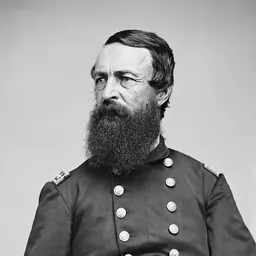
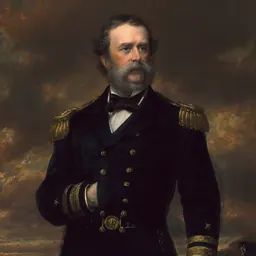

Related people
Same field, nearest in time


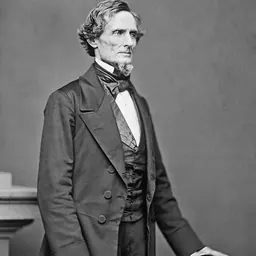
Contemporaries
People whose lives overlapped William Longshaw's



Frequently asked questions
Who was William Longshaw?
United States Navy officer (1836-1865)
When was William Longshaw born?
William Longshaw was born on 26 April 1836 in Manchester.
When did William Longshaw die?
William Longshaw died on 15 January 1865 in Fort Fisher.
What was William Longshaw's occupation?
William Longshaw was a military officer and military personnel.
What nationality was William Longshaw?
William Longshaw was American.
Sources & further reading
· DBpedia: William Longshaw Jr.
Cite this page
APA: Biography.guide. (2026). William Longshaw. https://biography.guide/william-longshaw/
MLA: "William Longshaw." Biography.guide, https://biography.guide/william-longshaw/.
Chicago: "William Longshaw." Biography.guide. https://biography.guide/william-longshaw/.
Data last updated: 2026-09-20 · Spot an error? Report a correction.
Page generated 2026-09-27 05:21 UTC