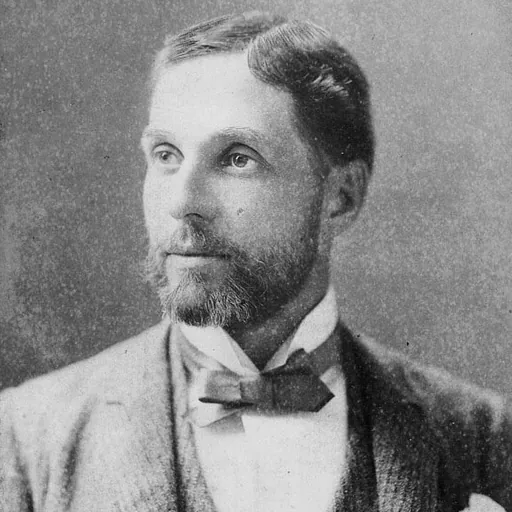
About William Lofland Dudley
Lived 1859 – 1914 (aged 55). William Lofland Dudley was an American chemist, known for 1890 Vanderbilt Commodores football team, Cincinnati and Dudley Field.
William Lofland Dudley (April 16, 1859 – September 8, 1914) was an American chemistry professor at both the University of Cincinnati and Vanderbilt University and an athletics pioneer during the Progressive Era. At Vanderbilt, he was appointed dean of its medical department. He was also once vice-president of the American Association for the Advancement of Science, and was notably director of affairs on the Tennessee Centennial Exposition executive committee.
Early in Dudley's career, he and John Holland developed a method for refining iridium that paved the way for commercial applications of the metal. Dudley also discovered that carbon monoxide was a major injurious component of tobacco smoke; and was one of the first to publish the physiological effects of X-rays with fellow Vanderbilt professor John Daniel.
He was instrumental in the establishment of the Southern Intercollegiate Athletic Association (SIAA), the first Southern athletics conference and forerunner of the Southern and Southeastern Conferences. Dudley was a part of the National Collegiate Athletic Association (NCAA) executive and football rules committees. Known as the "father of Vanderbilt football" he was the namesake of Dudley Field (the first dedicated Southern college football stadium).
Early years Dudley was born on April 16, 1859, in Covington, Kentucky, to George Reed Dudley and Emma Lofland. His father was a steamboat owner and manufacturer. Dudley's family was of English descent, and he was a lineal descendant of colonial Massachusetts governor Thomas Dudley.
Miami Medical College He became a demonstrator of chemistry at Miami Medical College in 1879. He was appointed professor of analytic chemistry at Miami in 1880, and received an honorary M.D. degree in 1885.
President Grover Cleveland appointed Dudley a member of the Assay Commission of 1887 to examine the weight and fineness of coins.
Achievements
Iridium In 1880, one John Holland of Cincinnati discovered the ability to melt and make castings of iridium by fusing the white-hot ore with phosphorus, and patented the process in the United States. He invoked the help of Dudley in getting rid of the phosphorus, who did so by repeated applications of lime at great heat. This was the first reported method of refining iridium. Dudley then found new applications for iridium, and formed the American Iridium Company with Holland.
Tobacco smoke Dudley was credited with discovering that a toxic component of tobacco smoke is carbon monoxide (which poisons the blood by interfering with oxygen's ability to bind to hemoglobin). Dudley rejected the popularly held opinion that cigarette smoke was harmful due to the adulteration of the tobacco, e. g. with opium. His experiments showed the toxic agent to be carbon monoxide, resulting alike from cigarette, pipe, or cigar.
X-rays Dudley was one of the first to publish the physiological effects of X-rays along with fellow Vanderbilt professor John Daniel. A child who had been shot in the head was brought to the Vanderbilt laboratory in 1896. Before trying to find the bullet, an experiment was attempted for which Dudley "with his characteristic devotion to science" volunteered. Daniel reported that 21 days after taking a picture of Dudley's skull (with an exposure time of one hour), he noticed a bald spot in diameter on the part of his head nearest the X-ray tube. His discovery prompted physicians to experiment with x-radiation as a method for hair removal - a method that became popular in the early 20th century, and was soon adopted by commercial practitioners (i.e. salon owners) as well.
Aurora borealis In 1909, Dudley hypothesized that the excitation of neon, at the time a recently discovered noble gas, was responsible for the appearance of the aurora borealis. While this was incorrect, his suggestion was widely reported by the media at the time.
Societies
Dudley was a member of the following: the German Chemical Society of Berlin, the Society of Chemical Industry of England, the Chemical Society of London, the American Chemical Society, the American Institute of Mining Engineers, the Engineering Association of the South and the American Association for the Advancement of Science. He was vice-president of the latter in 1889. "and handled it with such care that no deficit appeared at its end". For twenty five years, Dudley was president of the organization.
First football game Vanderbilt played its first-ever football game (against the University of Nashville) in 1890 at Nashville Athletic Park, winning 40–0. After Nashville challenged Vanderbilt to play a Thanksgiving Day football game, Dudley sent out for the Athletic Association to meet. (now the NCAA) and was primarily responsible for the formation of the Southern Intercollegiate Athletic Association (SIAA). In March 1888, the Vanderbilt Athletic Association tried to schedule a track meet at Vanderbilt with Southwestern Presbyterian University, Sewanee and Tennessee. Opposition from Sewanee prevented the initial meet, but on December 21, 1894, the SIAA was formed.
Football rules committee In 1907, Dudley replaced Homer Curtiss of the University of Texas on the Rules Committee. It was the first dedicated college football stadium in the South.
In the first game at the new stadium in 1922, against Michigan on October 14, the two teams played to a scoreless tie, which features prominently in the school's history. The stadium's dedication posthumously honored Dudley:
Death and legacy In the summer of 1914, Dudley was stricken with illness. Shortly after admittance to Clifton Springs Sanitarium in New York, he suffered a stroke which left him speechless. He recovered the use of his voice, but knew death was imminent, and started to travel back to Nashville where he wished to die. He died on September 8, 1914, before reaching Chicago. He was accompanied by his nephew, D. I. Miller. In 1919 the Dudley Fellowship in Chemistry was established in his memory.
List of publications
"A Theory of Dissolution" Scientific American (July 31, 1875) "Preliminary Notice of a New Volatile Alkaloid" J. Am. Chem Soc., 1 (1879), 286; and Am. Chem. J., 1, 154–55 "The Volatile Oil of Mustard" Scientific American 42, Issue 21 (May 1880) "A chart for the chemical examination of urine; also tables of the metric weights and measures, and rules for converting the apothecaries' weights and measures into metric terms. For the use of students." (Cincinnati, 1880) "On a Modification of Boettger's Test for Sugar" Am. Chem. J., 2, (1880), 47. "A New Test for Gallic Acid" Am. Chem. J. 2 (1880), p. 48 "Graphite From Ducktown, Tennessee" with F. W. Clarke Am. Chem. J. 2 (1881) p. 332 "Holland's Process For Melting Iridium" Scientific Proceedings of the Ohio Mechanics' Institute, Volumes 1–2 (May 1881) "The Poisonous Effects of Cigarette Smoking" Medical News (Philadelphia, 1883) p. 53 "Iridium" Mineral Resources of the United States (1883–84) p. 581 "The Iridium Industry" Transactions of the American Institute of Mining Engineers 12 (1884) p. 577 "Water of Crystallization" Science 4, No. 95 (Nov. 1884) p. 484 "Water Crystallization" Lecture given at Cincinnati Society of Natural History (Mar. 1885) "Detection of Arsenic in Animal Tissues" The Cincinnati Lancet and Clinic 16 (Dec. 1885) "A note on the Product of Catharsis by Means of Hypodermic Medication" (with C. H. Castle) Medical News, Nov 6. 1886 Lining for converters and furnaces Patented October 19, 1886 Removing fiber from cotton-seed Patented Dec. 14, 1886 "Report of the Committee on Weighing" (with committee) (1887) Process of depositing iridium and product of the same Patented May 3, 1887 "Poisonous Effects of Cigarette Smoking (with W. J. Pulley) Medical News, September 15, 1888 "Some Modifications of the Methods of Organic Analysis by Combustion" Am Chem. J. 10, No. 6. (1888) "The Nature of Amalgams" Address of W. L. Dudley, Proceedings of American Association for the Advancement of Science (Toronto, August 1889)
"The Pierce Process for the Production of Charcoal, Wood Alcohol, and Acetic Acid" J. Ana. and App. Chem. 5, No. 5 (May 1891) "Process for the Removal of Lint from Cotton Seed" J. Ana. and App. Chem. 6, p. 140. (1892) "The Colors and Absorption: Spectra of Thin Metallic and of Incandescent Vapors of the Metals, with Some Observations on Electrical Volatility" Am. Chem. J. 14 (1892), 185
"Nickelo-Nickelic Hydrate" The Chemical News and Journal of Physical Science 75 (1897) p. 65 Snuff tablet Patented December 19, 1899. Separable buckle Patented April 25, 1905. Spark-arrester Patented September 25, 1906.
"Researches In Electro-Metallurgy" "Researches In The Metallurgy Of Iridium" "New Method of Chemical Analysis of Organic Substances"
Don’t just read it —
keep it.
Full-length biographies made to live with: read them, listen on the way to work, watch them tonight.
- E-book
- Audio
- Video
Instant download · yours to keep · every purchase keeps this site free
Important facts
more
Tennessee Centennial ExpositionPeople in William Lofland Dudley's life
Named in this biography and alive at the same time



Related people
Same field, nearest in time



Contemporaries
People whose lives overlapped William Lofland Dudley's


Frequently asked questions
Who was William Lofland Dudley?
American chemistry professor (1859–1914)
When was William Lofland Dudley born?
William Lofland Dudley was born on 16 April 1859 in Covington.
When did William Lofland Dudley die?
William Lofland Dudley died on 8 September 1914 in Nashville, Cook County.
What was William Lofland Dudley's occupation?
William Lofland Dudley was a chemist.
What was William Lofland Dudley known for?
William Lofland Dudley was known for 1890 Vanderbilt Commodores football team, Cincinnati, Dudley Field, List of gridiron football rules, National Collegiate Athletic Association and Southern Intercollegiate Athletic Association.
What nationality was William Lofland Dudley?
William Lofland Dudley was American.
Sources & further reading
· Wikipedia: William Lofland Dudley
· DBpedia: William Lofland Dudley
Cite this page
APA: Biography.guide. (2026). William Lofland Dudley. https://biography.guide/william-lofland-dudley/
MLA: "William Lofland Dudley." Biography.guide, https://biography.guide/william-lofland-dudley/.
Chicago: "William Lofland Dudley." Biography.guide. https://biography.guide/william-lofland-dudley/.
Data last updated: 2026-09-21 · Spot an error? Report a correction.
Portrait: Wikimedia Commons · author & licence
Page generated 2026-09-27 04:59 UTC