
About William Leggett
Lived 1801 – 1839 (aged 38). William Leggett was an American journalist, writer, poet and prose writer.
William Leggett (April 30, 1801 – May 29, 1839) was an American poet, fiction writer, and journalist.
Life William Leggett's father was Major Abraham Leggett, who served in the Continental Army from 1776–1783. Modern-day Leggett Street in The Bronx is named after Abraham. William's mother, Catherine Wiley (1784–1839) of New Rochelle, was Major Leggett's second wife. The couple had 9 children, of which William was the 8th.
Leggett attended Georgetown College in 1815–16. In 1819, after his father's business failed, he moved with his family to Edwardsville, Illinois. In late 1822, he returned to New York to take up a naval commission as a midshipman. He served in the United States Navy in the West Indies and Mediterranean.
In January 1825, Leggett was imprisoned by his captain for dueling on duty. Several months later, a court martial convicted him of several offenses. His sentence of dismissal from the navy was reduced to time served, but he resigned his commission on April 17, 1826.
After his resignation, Leggett returned to New York to become a theater critic at the New York Mirror and assistant editor of the short-lived Merchants' Telegraph. In November 1828, he founded the Critic, a literary journal that lasted only until June 1829. In the summer of 1829, however, William Cullen Bryant invited Leggett to write for the New York Evening Post. There, in addition to literary and drama reviews, he began to write political editorials. Leggett became an owner and editor at the Post in 1831, eventually working as sole editor of the newspaper while Bryant traveled in Europe in 1834–5.
Leggett's political opinions proved highly controversial. He was a Jacksonian Democrat, but he often attacked fellow Andrew Jackson supporters for failing to carry their egalitarian principles far enough. He also became an outspoken opponent of slavery. Because the resulting struggles threatened both Leggett's health and the financial survival of the newspaper, Bryant returned from Europe, and Leggett left the Post. Leggett founded The Plaindealer in 1836 and the Examiner in 1837, but both publications lasted only a few months. Their failure left Leggett in poverty.
Leggett had suffered poor health since contracting yellow fever in the navy. He died at his home in New Rochelle, New York on May 29, 1839, just before he was due to begin serving as the American minister to Guatemala under Martin Van Buren. He is interred at New Rochelle's Trinity Church. His monument there was carved by John Frazee.
He was quoted as having said:
Positions He is best known as an unflinching advocate of laissez-faire, and a leader of the Loco-Focos faction of city Democrats. He insisted:
Governments have no right to interfere with the pursuits of individuals, as guaranteed by those general laws, by offering encouragements and granting privileges to any particular class of industry, or any select bodies of men, inasmuch as all classes of industry and all men are equally important to the general welfare, and equally entitled to protection.
Leggett was remarkable among the journalists of his day as an unflinching advocate of freedom of opinion for his political opponents as well as for his own party. Bryant wrote a poem to his memory, beginning "The earth may ring from shore to shore." Bryant describes Leggett as fond of study, delighting to trace principles to their remotest consequences, and having no fear of public opinion regarding the expression of his own convictions. It was the fiery Leggett that urged on Bryant to attack William Leete Stone, Sr., a brother editor, in Broadway. Soon afterward he fought a duel at Weehawken with Blake, the treasurer of the old Park Theatre. To the surprise of all New York, Leggett selected James Lawson, a peacefully disposed Scottish-American poet, who was slightly lame, as his second; and when asked after the bloodless duel for his reasons, he answered: "Blake's second, Berkeley, was lame, and I did not propose that the d--d Englishman should beat me in anything."
William Cullen Bryant, in his obituary, wrote:
Views on race and slavery
In an 1834 writing, Leggett defended African Americans and believed that they had rights but opposed Abolitionism in the United States. The 1834 writing is an article titled "RIOT AT THE CHATHAM-STREET CHAPEL" in which Leggett wrote that, "The morning papers contain accounts of a riot at Chatham-street chapel last evening, between a party of whites and a party of blacks. The story is told in the morning journals in very inflammatory language, and the whole blame is cast upon the negroes; yet it seems to us, from those very statements themselves, that, as usual, there was fault on both sides, and more especially on that of the whites." In the same article he wrote that, "we think readers of candid and temperate minds will perceive that the blame of this disgraceful transaction lies more with the white persons concerned in it, than with their coloured antagonists." In the 1834 article he also wrote, "That the whole scheme of immediate emancipation, and of promiscuous intermarriage of the two races, is preposterous, and revolting alike to common sense and common decency, we shall be ever ready, on all occasions, to maintain. Still, this furnishes no justification for invading the undoubted rights of the blacks, or violating the public peace" and later says "The plans of the Colonization Society are rational and practicable; those of the enthusiasts who advocate immediate and unconditional emancipation wholly wild and visionary" with Leggett seeming to be referring to the American Colonization Society.
In a later article in 1837, Leggett expressed more radical views on slavery:
Leggett also defended the rights of Irish Americans:
On the rights of Native Americans, "Leggett explicitly included blacks and women. Yet he did exclude Native Americans; in 'The Rifle' he allowed his narrator the belief that Illinois prairies and forests were found by the settlers in a 'primeval nature . . . whose silence has not often been broken by the voice of man.'" In an 1834 article titled "CHARACTER OF ANDREW JACKSON" Leggett praised Andrew Jackson for fighting in, "battles of his country against the Indians" and praised Jackson by writing, "Was he a tyrant and usurper in recommending that an ample district of country in the far west should be given to the poor Indians who were discontented with their situation within the limits of Georgia?" A major part of the Presidency of Andrew Jackson was the Trail of Tears.
Writings Leggett's writings include Leisure Hours at Sea (1825); Tales and Sketches of a Country School Master (1835); Naval Stories (1835); and Political Writings, edited, with a preface, by Theodore Sedgwick (1840). Tales and Sketches of a Country School Master includes "The Rifle" (originally in The Atlantic Souvenir, Christmas and New Year's Offering ), an early pre-Poe use of elements that would appear in detective fiction.
In "Reassessing Jacksonian Political Culture: William Leggett’s Egalitarianism" James Simeone wrote:
In 1834 he would publish Naval Stories. His writing to this point specialized in dramatic criticism, cautionary tales, and social commentary. The early writing does not cover the political scene per se, but it is filled with political opinions. He does not write as a Democrat on monetary policy, but his narrator condemns banks; he does not defend price graduation or donation of public lands, but his heroes embrace and thrive in the social equality of the frontier; he does not explicitly confront the rise of proslavery ideology, but his stories present Southerners as narrowly prejudiced and blacks as sympathetic and capable characters.
His main editorials have been collected as Democratick Editorials: Essays in Jacksonian Political Economy (1984)
In popular culture Leggett appears in the novel Burr by Gore Vidal as a mentor to the main character, aspiring journalist Charlie Schuyler. A poem was written by John Greenleaf Whittier commemorating "Leggett's Monument" as a symbol of his consistently outspoken nature and the callousness of society to his opinions.
Don’t just read it —
keep it.
Full-length biographies made to live with: read them, listen on the way to work, watch them tonight.
- E-book
- Audio
- Video
Instant download · yours to keep · every purchase keeps this site free
Important facts
People in William Leggett's life
Named in this biography and alive at the same time
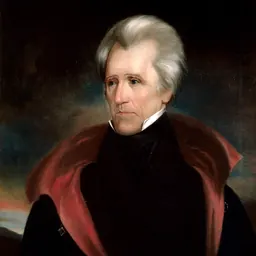

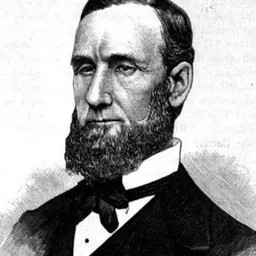



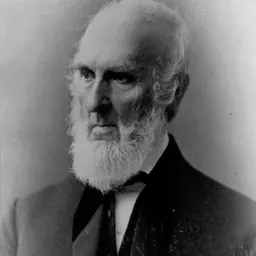
Related people
Same field, nearest in time

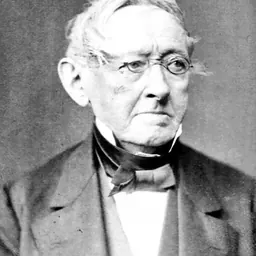

Contemporaries
People whose lives overlapped William Leggett's





Frequently asked questions
Who was William Leggett?
American writer (1801–1839)
When was William Leggett born?
William Leggett was born on 30 April 1801 in New York City.
When did William Leggett die?
William Leggett died on 29 May 1839 in New Rochelle.
What was William Leggett's occupation?
William Leggett was a journalist, writer, poet and prose writer.
What nationality was William Leggett?
William Leggett was American.
Sources & further reading
· DBpedia: William Leggett (writer)
Cite this page
APA: Biography.guide. (2026). William Leggett. https://biography.guide/william-leggett/
MLA: "William Leggett." Biography.guide, https://biography.guide/william-leggett/.
Chicago: "William Leggett." Biography.guide. https://biography.guide/william-leggett/.
Data last updated: 2026-09-26 · Spot an error? Report a correction.
Page generated 2026-09-27 05:13 UTC